Hampi: Inside the Vijayanagara Ruins That UNESCO Protects
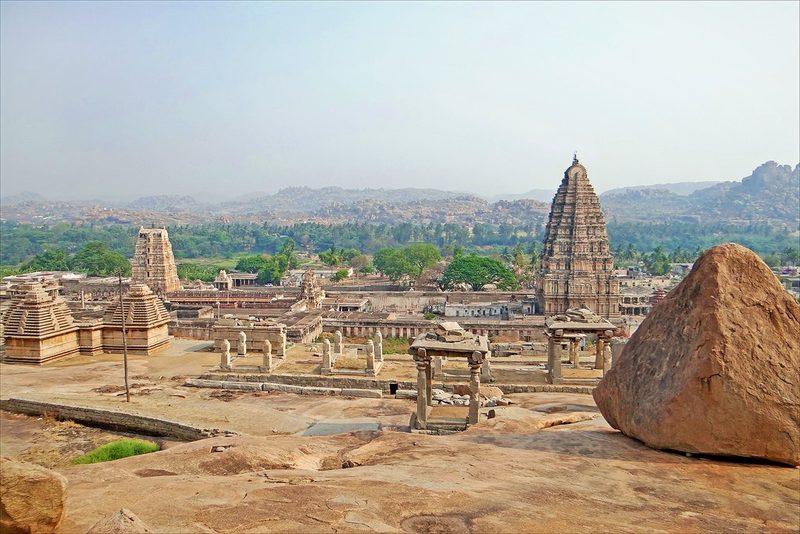
Across a surreal landscape of giant granite boulders in Karnataka, the ruins of Vijayanagara sprawl: the 14th-to-16th-century capital of an empire that dominated South India, its temples, palaces, and bazaars now a UNESCO World Heritage Site. Hampi, as the site is known, was once among the world’s great cities, its wealth legendary among Portuguese and Persian travellers; its destruction in 1565 left a magnificent ruin that has captivated visitors for centuries. This is inside the Vijayanagara ruins that UNESCO protects.
The empire and its capital
The Vijayanagara Empire, founded in 1336 by Harihara and Bukka, grew over two centuries into South India’s dominant power, controlling trade from the Arabian Sea to the Bay of Bengal and presiding over a renaissance of art, literature, and temple architecture. At its zenith under Krishnadevaraya in the early 1500s, the capital was described by foreign visitors as one of the world’s great metropolises, its bazaars filled with diamonds, its temples towering over processional streets. The empire’s end came at the Battle of Talikota in 1565, when a Deccan sultanate alliance defeated Vijayanagara’s armies; the capital was sacked and abandoned, its stone too heavy to loot but its wealth stripped. The ruins stood largely forgotten by history until 19th-century colonial surveys, and systematic archaeology in the 20th century, revealed their scale.
The monuments: temples, palaces, and bazaars
Hampi’s monuments divide into the sacred centre and the royal centre. The Virupaksha Temple, dedicated to Shiva, has been in continuous worship since before the empire and remains Hampi’s living heart, its gopuram visible for miles. The Vittala Temple complex, with its iconic stone chariot, now on the Rs. 50 note, and musical pillars that ring when struck, is the site’s artistic pinnacle. The royal centre holds the Lotus Mahal, the elephant stables with their domed chambers, the stepped tank, and the Mahanavami Dibba platform, each a masterpiece of Vijayanagara’s Indo-Islamic-inflected style. The ancient bazaar streets, like Hampi Bazaar before the Virupaksha Temple, evoke the city’s commercial glory. Scattered across the boulder landscape are hundreds of lesser shrines, gateways, and waterworks, the infrastructure of a city that housed, at its peak, perhaps half a million people.
UNESCO protection and the Hampi authority
UNESCO inscribed the Group of Monuments at Hampi as a World Heritage Site in 1986, recognising the site’s outstanding universal value. Protection is managed by the Archaeological Survey of India for the core monuments and the Hampi World Heritage Area Management Authority for the wider landscape, a division of labour that has produced both conservation successes and jurisdictional friction. The site’s World Heritage status has driven tourism growth, with Hampi becoming a fixture on global backpacker and cultural tourism circuits. Management challenges are significant: the 2019 demolition of unauthorised constructions on Virupapur Gadde island, across the river, following court orders, illustrated the tension between heritage protection and local livelihoods dependent on tourism. Balancing preservation, pilgrimage, the Virupaksha Temple is still active, and tourism in a living landscape remains the authority’s central task.
The boulder landscape and its myths
Hampi’s geology is part of its magic: the granite boulders, strewn as if by giants, are among the oldest rock formations on earth, and Hindu mythology weaves them into the Ramayana’s Kishkindha, the monkey kingdom where Rama met Hanuman. The Malyavant Hill, the Anjanadri Hill claimed as Hanuman’s birthplace, and the river Tungabhadra’s coracle boats complete a landscape where myth and geology merge. This mythic layer matters: for many Indian visitors, Hampi is simultaneously an archaeological site and a sacred landscape, and the site’s management must honour both registers. The annual Hampi Utsav, the state’s cultural festival of dance and music among the ruins, celebrates this synthesis, staging classical arts in the empire’s capital.
Why Hampi matters
Hampi matters as history: the most complete surviving imperial capital of pre-colonial South India, its ruins the primary document of Vijayanagara’s achievement. It matters as art: the temples represent the culmination of Dravidian architecture, and the site’s sculptures and urban planning repay endless study. And it matters as a living place: a pilgrimage centre, a tourist economy, a farming landscape, and a geological wonder coexisting in the boulders’ shade. UNESCO’s protection recognises the universal value; the visitors, scholars, pilgrims, and backpackers who fill its paths attest to the personal value. In Hampi, an empire’s ruins became a world’s heritage, and the stones, as travellers have said for five centuries, still speak.
FAQs
Where is Hampi? In Karnataka’s Vijayanagara district, on the Tungabhadra river, about 350 km from Bengaluru; the nearest railhead is Hospet.
What is the stone chariot? The iconic monolithic shrine in the Vittala Temple complex, shaped as a temple chariot, featured on India’s Rs. 50 note.
How many days do I need? Two to three days for the major monuments; longer for the wider landscape, Anegundi, and the river trails.
Hampi’s boulders hold an empire’s memory: temples that still ring, palaces open to the sky, and bazaars where diamonds were once sold like grain. UNESCO protects the stones; the landscape protects the wonder.
Compiled by the Khabar 24h Editorial Desk from publicly available sources.

Khabar 24h Editorial Desk — our explainers are prepared by the Khabar 24h editorial team using AI-assisted research tools, and every piece is reviewed by a human editor before publishing. We do not claim original reporting: our work is turning complex topics into simple, accurate summaries. Spotted an error? Write to contact@khabar24h.com — our corrections policy aims for same-day review.
More from this author →