GRAP Explained: How Delhi Decides to Ban Diesel Gensets, Trucks, and Construction
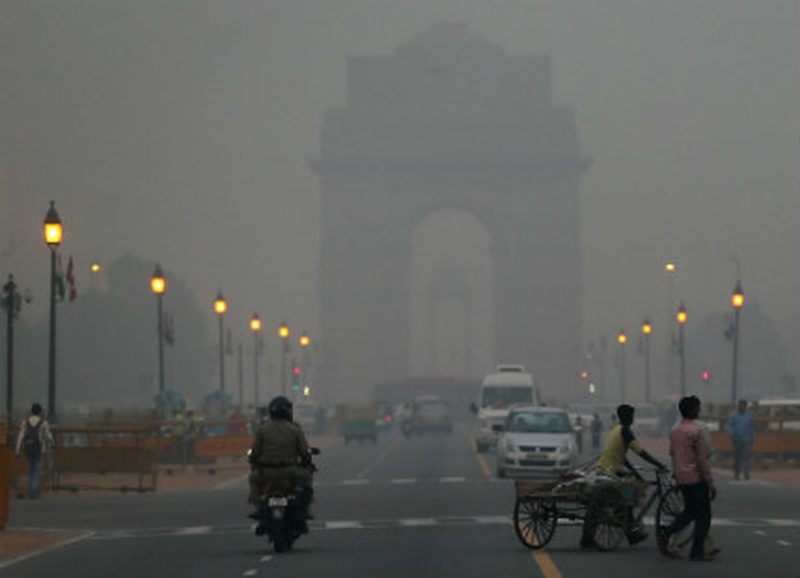
Every winter, Delhi’s air turns into a public health emergency, with PM2.5 levels climbing to multiples of safe limits. The Graded Response Action Plan, or GRAP, is the region’s institutional answer: a set of emergency measures, from dust control to bans on diesel generator sets, truck entry and construction, that kick in automatically as pollution worsens. Notified in 2017 and periodically strengthened, GRAP is invoked by the Commission for Air Quality Management based on the Air Quality Index. This explainer unpacks how GRAP works, what each stage bans, and whether emergency action can fix a structural problem.
How GRAP is triggered
GRAP has four stages tied to AQI bands: Stage 1 for “poor” air (AQI 201-300), Stage 2 for “very poor” (301-400), Stage 3 for “severe” (401-450), and Stage 4 for “severe plus” (above 450). The Commission for Air Quality Management, advised by a sub-committee tracking forecasts from the India Meteorological Department and SAFAR, invokes and revokes stages as conditions evolve. The staging matters: measures escalate from advisories and dust mitigation to sweeping bans, and each stage’s invocation is a public signal of how bad the air has become. The forecasts allow pre-emptive invocation before the air actually deteriorates, in theory.
What each stage does
Stage 1 focuses on dust: mechanised road sweeping, water sprinkling, and strict enforcement of construction dust norms. Stage 2 adds restrictions on diesel generator sets, already largely displaced by the push for cleaner backup power, and curbs on coal and firewood use in industry. Stage 3, the first truly disruptive stage, bans most construction and demolition activity, restricts the entry of diesel trucks into Delhi, and shifts schools to hybrid or online modes. Stage 4 is the emergency: a ban on truck entry except essentials, closure of most construction, work-from-home advisories, and possible odd-even vehicle schemes or school closures. Each stage is a balance between health protection and economic disruption.
Who enforces it
Enforcement is the plan’s weakest link. GRAP orders flow to multiple agencies: municipal corporations for construction and dust, transport departments for vehicles, state pollution boards for industry, and police for truck diversions. On the ground, compliance is patchy: construction bans are violated with impunity at countless sites, truck restrictions leak, and generator bans depend on inspections that cannot cover the region. The Commission can issue closure orders and penalties, and courts have pushed for stricter enforcement, but the gap between the order and the street remains wide. A plan is only as good as its enforcement, and GRAP’s enforcement is its perennial failure.
Does GRAP work?
GRAP unquestionably prevents the worst episodes from getting worse: studies suggest that without the bans, peak pollution days would see even higher levels. But GRAP is emergency medicine, not a cure. Delhi’s winter pollution is structural: stubble burning in neighbouring states, year-round vehicle emissions, road dust, industrial pollution, and the meteorology of a landlocked plain in winter. GRAP does nothing about these on the other 300 days of the year. Air quality experts broadly agree that the region needs year-round source apportionment and sustained emission cuts, with GRAP as the backstop for bad days, not the main strategy. The plan’s repeated invocation each winter is itself the indictment: the emergency has become routine.
The politics of bad air
GRAP’s stages are political events: Stage 3 and 4 announcements trigger blame games between Delhi and neighbouring states over stubble burning, between governments over enforcement, and public anger over disrupted lives. The odd-even scheme, periodically proposed under Stage 4, is the most politically charged measure of all. Courts have repeatedly intervened, demanding action plans and accountability. The politicisation obscures the technical consensus: no single source, no single state, and no single winter can explain Delhi’s air. GRAP manages the crisis; only sustained, multi-state, year-round action can end it.
FAQs
What is GRAP? The Graded Response Action Plan: staged emergency anti-pollution measures for Delhi-NCR, triggered by AQI levels and invoked by the Commission for Air Quality Management.
What happens under Stage 4? The strictest stage: truck entry bans, construction shutdowns, school closures or online classes, and possible vehicle rationing measures.
Who implements GRAP? Multiple agencies including municipal bodies, transport departments, pollution control boards and police, coordinated by the CAQM.
GRAP is Delhi’s fire extinguisher: essential when the air is burning, useless against the conditions that keep setting it alight. The city needs fewer emergencies and more prevention.
Compiled by the Khabar 24h Editorial Desk from publicly available sources.

Khabar 24h Editorial Desk — our explainers are prepared by the Khabar 24h editorial team using AI-assisted research tools, and every piece is reviewed by a human editor before publishing. We do not claim original reporting: our work is turning complex topics into simple, accurate summaries. Spotted an error? Write to contact@khabar24h.com — our corrections policy aims for same-day review.
More from this author →