Civil Defence in India: Sirens, Blackouts, and How Mock Drills Work
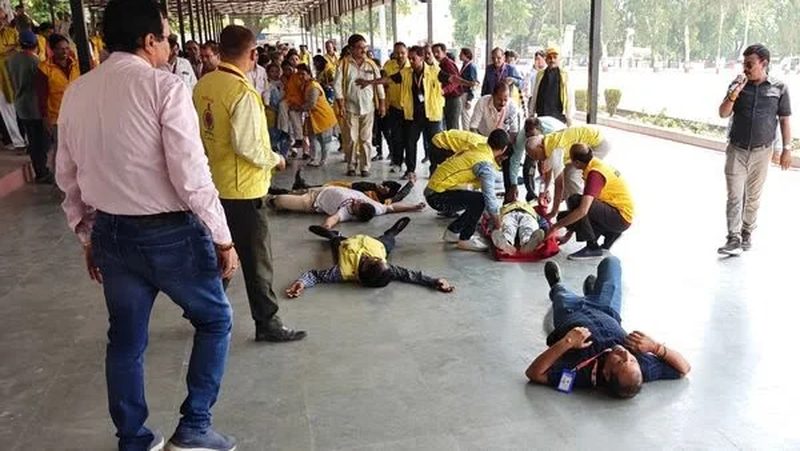
When tensions with Pakistan escalated in 2025, millions of Indians encountered something most had never seen: civil defence mock drills, sirens wailing in cities, blackout rehearsals, and volunteers in distinctive dress guiding evacuations. The exercises, ordered by the Union Home Ministry across states, revived an institution most Indians knew only from history books: Civil Defence, the volunteer organisation meant to protect civilians in wartime and disasters. This is how it works and why it was reactivated.
What Civil Defence is
Civil Defence in India is a volunteer-based organisation raised under the Civil Defence Act of 1968, drawing authority from a lineage that goes back to Air Raid Precautions in World War II. It exists to protect people and property from hostile attack and to assist in disaster response: air raid warnings, blackout enforcement, firefighting support, rescue, first aid, and evacuation management. The organisation is structured through states and districts: enrolled volunteers, trained in warden services, firefighting, rescue, and first aid, serve under district civil defence authorities headed by the District Magistrate. In peacetime, civil defence has often been dormant, a paper organisation in many districts; in crises, from wars to natural disasters, it has been activated to supplement the professional response. The 2025 drills were the largest peacetime activation in decades.
The 2025 mock drills
The Home Ministry’s 2025 directive ordered civil defence mock drills across states and Union Territories amid heightened tensions, and the exercises were striking in their retro character: air raid sirens tested in cities, crash blackout drills where localities switched off lights to simulate wartime conditions, evacuation rehearsals in schools and offices, and demonstrations of emergency response. For younger Indians, it was a first encounter with the grammar of total war preparedness; for older ones, it recalled the 1965 and 1971 wars, when blackouts were real and sirens wailed in earnest. The drills served multiple purposes: testing the actual readiness of sirens, communication networks, and volunteer mobilisation; familiarising the public with emergency procedures; and signalling resolve. Critics called them theatre; officials called them necessary prudence. Either way, they put Civil Defence back on the national map.
Sirens, blackouts, and warden services
The classic civil defence repertoire deserves explanation. Air raid sirens, a network maintained in cities, warn of incoming attack with distinctive wail patterns: the alert and the all-clear. Blackouts deny enemy aircraft navigational landmarks: during drills, households and streetlights switch off, vehicles dim lights, and wardens enforce compliance. Warden services are the human backbone: trained volunteers assigned to sectors who guide residents to shelters, enforce blackout discipline, report damage, and coordinate rescue. Firefighting and rescue training prepares volunteers to handle incendiary damage and collapsed structures before professional services arrive. First aid training creates a distributed medical reserve. The doctrine assumes that in war, professional services will be overwhelmed, and that trained civilians are the difference between chaos and managed response. It is a doctrine born of the Blitz and the Cold War, adapted to Indian cities.
Civil Defence and disaster management
In practice, civil defence’s most active role in recent decades has been disaster response rather than war: floods, earthquakes, and industrial accidents. Volunteers supplement the National and State Disaster Response Forces, bringing local knowledge and manpower. The institutional overlap is significant: the same district machinery, the same volunteers, often serve both functions, and training increasingly covers all hazards. Some experts argue the wartime framing is outdated and that civil defence should be fully merged into the disaster management architecture; others counter that the war role, however unlikely, requires distinct capabilities, sirens, blackouts, camouflage, that disaster management does not maintain. The 2025 drills suggested the government sees value in keeping both missions alive under the civil defence banner.
Preparedness as deterrence
The deeper logic of civil defence is psychological: a population that knows what to do in an emergency is less likely to panic, and an adversary that sees organised preparedness faces a less tempting target. Whether the 2025 drills achieved genuine readiness or merely its appearance is debated; reports suggested wide variation in drill quality across states, with some cities conducting elaborate exercises and others going through the motions. The lasting effect may be institutional: updated volunteer rolls, tested sirens, and a generation of officials who have now run a civil defence exercise. In an era of missile threats and hybrid warfare, the question of what civilian preparedness means is evolving, cyberattacks and disinformation do not respond to blackouts, but the core insight endures: resilience is built before the crisis, by volunteers, in peacetime.
FAQs
What is Civil Defence? A volunteer organisation under the Civil Defence Act, 1968, for protecting civilians in wartime and assisting in disasters, organised through district authorities.
What happens in a mock drill? Siren tests, blackout rehearsals, evacuation exercises, and demonstrations of rescue, first aid, and firefighting by volunteers.
Can I volunteer? Yes, enrolment is through district civil defence authorities; volunteers receive training in warden services, first aid, firefighting, and rescue.
Civil Defence is the citizen’s link in national security: ordinary people trained for extraordinary moments. The sirens of 2025 reminded India that preparedness, however retro its rituals, is a contemporary necessity.
Compiled by the Khabar 24h Editorial Desk from publicly available sources.

Khabar 24h Editorial Desk — our explainers are prepared by the Khabar 24h editorial team using AI-assisted research tools, and every piece is reviewed by a human editor before publishing. We do not claim original reporting: our work is turning complex topics into simple, accurate summaries. Spotted an error? Write to contact@khabar24h.com — our corrections policy aims for same-day review.
More from this author →