How Wildlife Documentaries Are Filmed in India’s National Parks
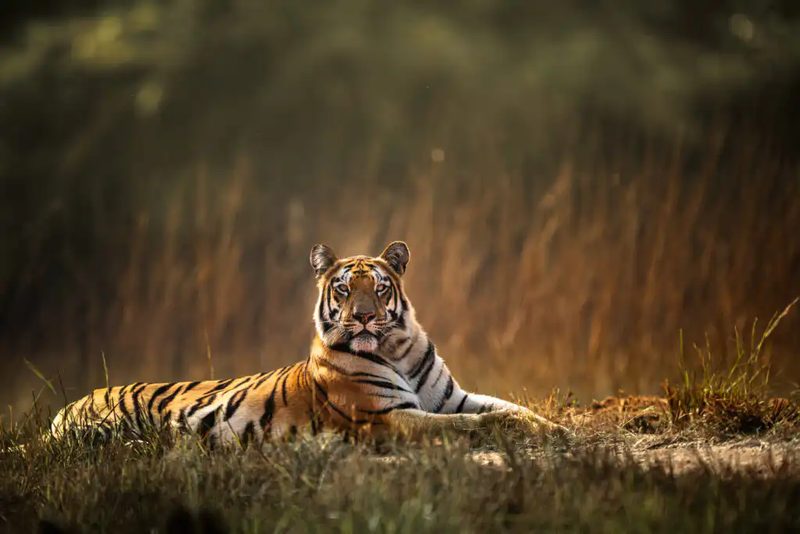
The tiger emerges from the tall grass at dawn, mist curling around its stripes, and a camera crew that has waited eleven days finally gets its thirty seconds. This is the reality behind wildlife documentaries filmed in India’s national parks: not the effortless magic of the finished film but months of patience, bureaucracy and technical ingenuity. How these documentaries get made is a story of permits and hides, of gypsies and camera traps, and of filmmakers who measure success in moments.
Permission first: filming in protected forests
Nothing happens without permits. India’s national parks and tiger reserves are strictly protected, and filming requires permissions from forest departments, sometimes at multiple levels, with conditions on zones, timings, crew size and behaviour. Commercial filming fees apply, and the rules are enforced by forest guards who accompany crews. The process takes months of advance planning, and sensitive zones may be entirely off-limits.
Ethical codes govern conduct: no baiting animals, no off-road driving, no disturbing wildlife for a shot. Reputable productions follow these strictly, not just from principle but pragmatism: a crew that harasses animals gets shut down, while one that behaves earns the cooperation of forest staff whose local knowledge is irreplaceable.
The craft of the wait
Wildlife filmmaking is 95 per cent waiting. Crews spend weeks in the field, rising before dawn for the morning safari window when predators are active, returning at dusk, reviewing footage at night. Local guides and trackers read pugmarks, alarm calls and scat to predict animal movement; the director of photography’s job is to be in the right place when the forest decides to perform.
- Camera traps: remotely triggered cameras capturing elusive nocturnal behaviour.
- Hides and machans: concealed positions near waterholes and trails for intimate shots.
- Long lenses and stabilisers: filming from distances that do not disturb the animals.
- Drones: used sparingly and only where permitted, for landscape context.
Technology has revolutionised the craft: low-light cameras that film in near darkness, high-speed cameras that slow a tiger’s charge to balletic grace, thermal imaging for night behaviour. But no technology replaces fieldcraft: understanding the animal is still the whole game.
India’s starring species
The tiger is the undisputed headliner, the animal international audiences pay to see, and Indian crews have filmed behaviour sequences, hunts, cub-rearing, territorial battles, that rank with the world’s best. But India’s wildlife riches run deeper: Asiatic lions, elephants, leopards, rhinos, wild dogs, and birdlife of staggering diversity. The best Indian wildlife documentaries look beyond the tiger to the ecosystems, the grasslands, wetlands and forests that sustain them.
Indian filmmakers bring an insider’s advantage: year-round access, cultural familiarity, relationships with forest departments and local communities. International productions often partner with Indian crews and fixers, and a growing number of Indian directors now lead global natural-history productions.
Conservation and the camera
Wildlife documentaries are conservation tools. Films that reveal the beauty and fragility of India’s wild places build public support for protection, and several productions have directly aided conservation: documenting threats, funding anti-poaching, supporting local communities. The relationship is symbiotic: the forest gives the film its subject, the film gives the forest its defenders.
The responsibility weighs on filmmakers. Every production leaves a footprint, and the best minimise it while maximising the conservation message. The finished film’s glory shots carry an implicit promise: that these wild places will still be there tomorrow.
The forest staff behind the footage
Every wildlife film credits its crew, but its true collaborators wear forest department uniforms. Guides and trackers, often from local communities, read the jungle with skills no film school teaches: interpreting alarm calls, predicting tiger movement from pugmarks, positioning vehicles for the perfect light without disturbing animals. Forest guards facilitate access, enforce the ethical codes that keep productions honest and share decades of accumulated animal knowledge. Drivers navigate impossible terrain at dawn. The best productions treat these collaborators as creative partners, not logistics, and their local expertise routinely makes the difference between an empty memory card and a career-defining sequence. Increasingly, community members are trained as camera assistants and fixers, building local capacity in the wildlife film economy. Conservation outcomes follow: when filmmaking employs and respects forest communities, it strengthens the constituency for protection. The tiger in the mist is the star, but the frame belongs to the trackers who knew where to wait.
FAQs
How long does it take to film a wildlife documentary? Months to years in the field, with crews making multiple seasonal trips to capture the full range of behaviour.
Do filmmakers stage wildlife scenes? Reputable natural-history productions do not fake behaviour, though they may film captive animals for extreme close-ups with disclosure, a practice that remains debated.
Can tourists visit the filming locations? Yes, India’s national parks are open to regulated tourism, with safaris bookable through forest departments, though sightings are never guaranteed.
Wildlife documentaries are monuments to patience: behind every breathtaking minute lie weeks of dawn starts, silent waiting and forest wisdom, all for thirty seconds of a tiger in the mist.
Source: BBC Earth

Khabar 24h Editorial Desk — our explainers are prepared by the Khabar 24h editorial team using AI-assisted research tools, and every piece is reviewed by a human editor before publishing. We do not claim original reporting: our work is turning complex topics into simple, accurate summaries. Spotted an error? Write to contact@khabar24h.com — our corrections policy aims for same-day review.
More from this author →