How Stunt Choreography Works in Indian Action Films
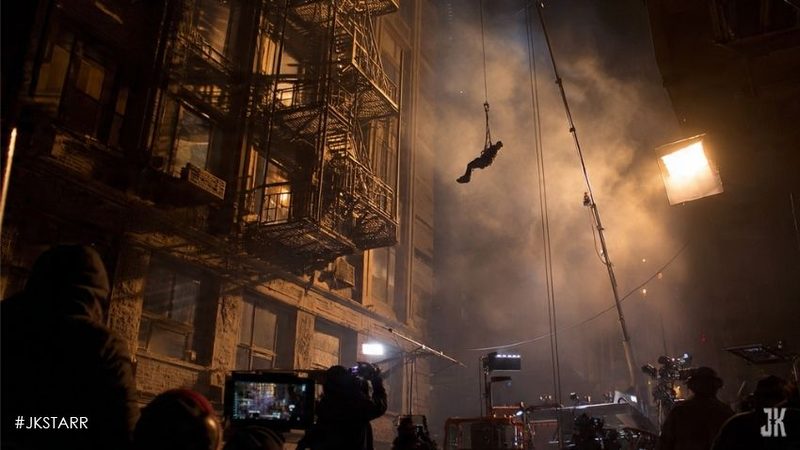
Indian audiences have always loved their heroes larger than life, and nothing delivers that promise quite like a thunderous action sequence. Behind every gravity-defying leap, every bone-crunching fight and every high-speed chase in Indian cinema stands a stunt choreographer, the specialist who designs violence as carefully as a dance master designs movement. Stunt choreography in Indian action films is a craft where creativity meets life-and-death responsibility, and the best practitioners are among the most respected technicians in the industry.
How an action sequence is designed
It starts with the script and the director’s vision. The stunt coordinator, often called the action director, breaks the sequence into beats: the hero’s entrance, the escalation, the reversals, the climax. Each beat is choreographed like a piece of music, with rhythm, pauses and crescendos. Coordinators create detailed previsualisation or storyboards so the director, cinematographer and editor all share the same mental image before anyone steps onto the set.
Indian action has its own grammar. Audiences expect the hero’s invincibility to be stylised rather than realistic: the slow-motion turn, the single punch that sends a villain flying, the dramatic background score swelling at the moment of impact. Choreographers working in this tradition design for the cheer moment, the beat engineered to make theatres erupt, while grounding the surrounding action enough that the fantasy feels earned rather than absurd.
Rehearsal: where safety is built
No stunt is performed cold. Fight sequences are rehearsed for days or weeks, first in slow motion and then at increasing speed, until every performer knows the choreography by muscle memory. Stunt doubles, fighters and the lead actors train together, learning distances, timings and fall techniques. Wire work is rehearsed with harnesses and rigging crews; vehicle sequences are practiced on closed tracks with precision drivers.
Safety protocols govern everything: crash mats, hidden padding, fire-retardant gels, medics on standby, and a strict hierarchy on set where the stunt coordinator has the final word on whether a shot is safe to attempt. India’s stunt community has professionalised rapidly, with coordinators trained in international techniques and associations pushing for standardised safety norms. The cardinal rule never changes: no shot is worth a life.
How different kinds of stunts are executed
- Hand-to-hand combat: choreographed exchanges where camera angles, reaction timing and sound design sell impacts that never actually land.
- Wire work: harnesses and rigs that launch performers into the air, later erased digitally, essential for mythological and superhero action.
- Vehicle chases: precision driving on closed roads with camera rigs mounted on pursuit vehicles, often enhanced with VFX.
- Fire and explosions: controlled pyrotechnics managed by licensed specialists, with actors protected by gels and strict timing.
Modern Indian action blends all of these with digital effects. A performer may do a real jump from a moderate height while VFX extends the fall; a real explosion may be augmented with digital debris. The audience sees seamless spectacle; the set sees a carefully layered construction.
The stunt performer’s world
Stunt performers are the unsung athletes of cinema. Many come from martial arts, gymnastics or wrestling backgrounds, and work as part of teams led by senior coordinators. Pay has improved as action budgets have grown, but the work remains physically punishing and largely anonymous: doubles’ faces are rarely seen, and credit often flows to the star. Within the industry, however, top coordinators are stars in their own right, with signature styles that producers specifically hire for.
The craft is also becoming more inclusive and technical. Women stunt performers are taking on bigger roles, and the influx of international training has raised standards for everything from fall technique to rigging mathematics. What was once improvised daring is now an engineered discipline.
FAQs
Do Bollywood actors perform their own stunts? Some do portions of their action, especially hand-to-hand sequences, after training. But dangerous stunts, falls, fire and vehicle work are almost always performed by professional doubles.
How are stunt coordinators credited? As action directors, a title that reflects their creative authority over the sequences. Leading action directors are marketed as major attractions of big films.
Has CGI reduced the need for real stunts? It has changed the mix rather than eliminated it. Digital effects handle the impossible, but directors still want the weight and texture of real physical performance at the core of every sequence.
Great stunt choreography is invisible engineering: the audience remembers the hero’s triumph, never the weeks of rehearsal, the mathematics of the rigging, or the courage of the doubles who made it possible.
Source: The Hollywood Reporter

Khabar 24h Editorial Desk — our explainers are prepared by the Khabar 24h editorial team using AI-assisted research tools, and every piece is reviewed by a human editor before publishing. We do not claim original reporting: our work is turning complex topics into simple, accurate summaries. Spotted an error? Write to contact@khabar24h.com — our corrections policy aims for same-day review.
More from this author →