How Archival Footage Powers India’s Historical Documentaries
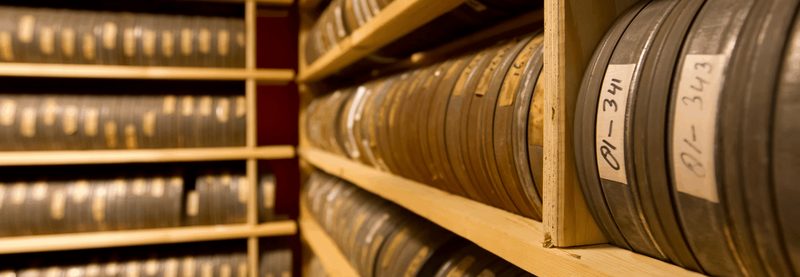
When a documentary shows Mahatma Gandhi walking, Nehru speaking, or a Bombay street in 1940, it is drawing on archival footage: fragile, fading, often miraculously surviving film that lets the past move again. How archival footage powers India’s historical documentaries is a story of treasure hunts through neglected archives, of decaying film stock rescued just in time, and of editors who build entire eras from fragments.
Where the footage lives
India’s moving-image heritage is scattered across institutions and accidents of survival. The National Film Archive of India in Pune holds the country’s most significant collection, including early Indian cinema and newsreels. Doordarshan’s archives contain decades of television history. The Films Division holds vast documentary footage. Beyond institutions lie private collections, family films, newsreel libraries, foreign archives holding footage shot in colonial India, and material discovered in abandoned studios and godowns.
The tragedy is how much is lost. Nitrate film decayed, archives flooded or burned, priceless footage junked for silver recovery or sheer neglect. Every surviving reel is a small miracle, and archivists speak of India’s film heritage as an ongoing emergency: material deteriorating faster than it can be preserved.
How filmmakers find and use it
Archival research is detective work. Researchers mine archive catalogues, cultivate relationships with archivists, chase leads to private collectors and negotiate with foreign institutions. Rights clearance is a parallel ordeal: determining who owns decades-old footage, negotiating licenses, and budgeting for material that can cost dearly per minute. A historical documentary’s budget often hinges on its archival needs.
- Research: locating relevant footage across institutional and private archives.
- Restoration: digitising and repairing damaged film for modern use.
- Licensing: clearing rights and paying for usage, often the costliest step.
- Editing: weaving fragments into coherent, emotionally truthful narratives.
Restoration is its own craft: scratched, faded, shrunken film digitally cleaned, stabilised and colour-corrected, sometimes frame by frame. The transformation can be astonishing: footage unwatchable in its raw state emerging luminous.
The editor as historian
Archival editing is historical argument made visible. The filmmaker selects which fragments represent an era, in what order, to what end, and those choices shape viewers’ understanding of history. Responsible archival filmmakers research deeply, avoid misleading juxtapositions and respect the footage’s original context; the power to make the past move carries the duty not to make it lie.
Sound design completes the illusion: silent footage gains foley, ambience and music, carefully built to support without falsifying. Colourisation, when used, remains controversial: some see it as bringing history alive, others as distorting the record. The debates reflect archival footage’s unique status: evidence and art at once.
Why it matters now
As living memory of the 20th century fades, archival footage becomes the primary witness. Documentaries built on archives let new generations see, not just read about, the freedom movement, Partition, the early republic, transforming abstract history into felt experience. Each major archival documentary also performs rescue: digitised, restored and seen, footage that might otherwise have rotted unseen.
The race against decay continues, and every documentary that brings archival India to light is both a film and an act of preservation.
The digitisation race
Preservation is now a race against chemistry. The National Film Archive’s digitisation programmes work through vast holdings, scanning film at high resolution before decay wins. Private initiatives complement the effort: production houses restoring their classics, families digitising home movies that capture vanished streets and customs, foreign archives sharing scans of colonial-era footage. AI-assisted restoration accelerates the work: algorithms removing scratches, stabilising shrinkage and even reconstructing damaged frames, though archivists debate how much intervention history can bear. Funding remains the bottleneck: digitisation is expensive, unglamorous work that competes poorly with production budgets for attention. But each completed project proves the value: restored footage finding new life in documentaries, educational programmes and public exhibitions. The goal is not just saving film but saving access: digitised archives searchable and available to the filmmakers, researchers and citizens who give preservation its purpose. The past survives only if someone can watch it.
FAQs
Where is India’s film archive? The National Film Archive of India in Pune is the primary institution, supplemented by Doordarshan, Films Division and various private and foreign collections.
Why is so much old Indian footage lost? Nitrate decay, fires, floods, neglect and deliberate destruction: film preservation was long undervalued, and losses were catastrophic.
Can anyone access archival footage? Researchers and filmmakers can access institutional archives through application processes, with licensing fees for commercial use.
Archival footage is time travel on film: every historical documentary is built from rescued moments, and every rescued moment is a small victory against forgetting.
Compiled by the Khabar 24h Editorial Desk from publicly available sources.

Khabar 24h Editorial Desk — our explainers are prepared by the Khabar 24h editorial team using AI-assisted research tools, and every piece is reviewed by a human editor before publishing. We do not claim original reporting: our work is turning complex topics into simple, accurate summaries. Spotted an error? Write to contact@khabar24h.com — our corrections policy aims for same-day review.
More from this author →