Vocational Subjects in Schools: NEP’s Push for Skill-Based Learning
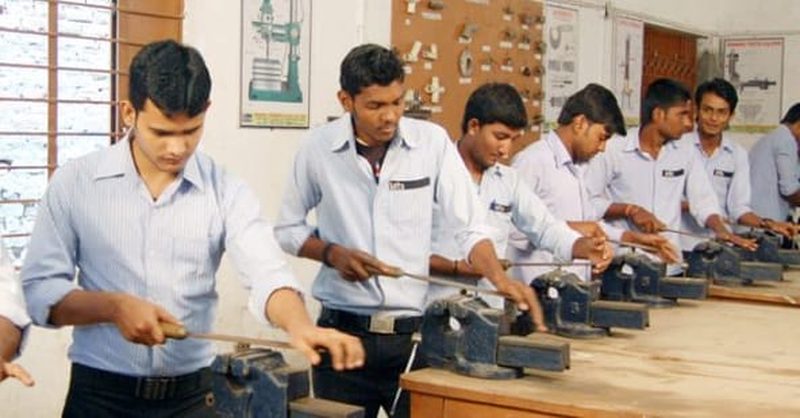
For decades, Indian schooling treated vocational training as the consolation prize for academic failures — separate ITIs, separate tracks, separate prestige. Vocational subjects in schools under NEP 2020 demolish that hierarchy: every student, from Class 6 onward, is to get exposure to vocational skills, with bagless days, local artisan internships and the freedom to count vocational subjects toward board results. The ambition is a generation that can code, wire a circuit, manage accounts or design graphics alongside conventional academics. This guide explains what schools are actually offering and why it matters.
What NEP mandates
The policy sets an ambitious target: 50 per cent of learners to have exposure to vocational education by 2025, through mainstream schooling rather than separate tracks. Starting in Class 6, students get hands-on experience — the famous bagless days where children intern with local artisans, carpenters, electricians, potters and IT professionals. From Class 9, vocational subjects become formal electives that can count toward board examinations, with CBSE already offering subjects like Information Technology, Retail, Healthcare and Artificial Intelligence. The National Skills Qualifications Framework aligns school vocational courses with nationally recognised skill levels, so a school certificate connects to real employability credentials.
The 50-per-cent-by-2025 target deserves honest scrutiny. It was always aspirational rather than operational — no enforcement mechanism compels schools to meet it, and the gap between CBSE-affiliated urban schools (which have moved fastest) and under-resourced state-board schools remains wide. Targets in Indian education policy often function as direction-setters rather than deadlines; what matters is whether the institutional machinery — teacher training, labs, certification — is being built regardless of the calendar.
Which subjects schools offer
- Information Technology and Artificial Intelligence: coding, data basics, digital tools — the most widely adopted.
- Healthcare and wellness: first aid, nutrition basics, caregiving skills.
- Retail, banking and financial services: customer handling, basic accounting, digital payments.
- Electronics, plumbing and electrical work: hands-on trade skills with local relevance.
- Beauty, tourism, agriculture and food processing: region-specific livelihood skills.
- Design, media and handicrafts: creative skills with entrepreneurial potential.
CBSE’s affiliated schools choose from an approved list; state boards are developing their own baskets aligned to local economies.
Why it matters: beyond jobs
The obvious benefit is employability — a Class 12 graduate with IT or healthcare skills has options beyond the degree-or-nothing gamble. But the deeper benefits matter more: hands-on work builds problem-solving and confidence that transfer to academics; exposure to trades dismantles the caste-tinged stigma around manual work; and entrepreneurial skills let students create livelihoods rather than queue for jobs. Countries with strong vocational-school integration — Germany, Switzerland, Singapore — show lower youth unemployment and smoother school-to-work transitions. India’s demographic dividend needs skills, not just degrees.
Germany’s dual system is the gold standard worth understanding: students split time between classroom and paid apprenticeships at real companies, with chambers of commerce co-designing curricula so training matches actual labour-market demand. Youth unemployment in Germany has historically run far below the European average — not because German teenagers are more talented, but because the system converts schooling into employability by design. India cannot copy the model wholesale — it depends on employer participation that India’s fragmented MSME sector struggles to organise — but the principle travels: vocational education works when employers co-own it.
The implementation gap: teachers, labs and tokenism
The honest obstacle after prestige is capacity. Good vocational teaching requires instructors with real trade skills, functional equipment, consumable materials and industry linkages — all expensive, all scarce in the average Indian school. The predictable failure mode is the theory-only vocational period: “Information Technology” taught from a textbook in a room with ten working computers for sixty students. NEP’s framework anticipates this by pushing school-industry-artisan partnerships, but partnerships require local ecosystems that many schools must build from scratch. Parents evaluating a school should treat vocational infrastructure like they treat science labs: no equipment, no seriousness.
There is also the question of who teaches. India faces a shortage of vocational trainers with both trade mastery and pedagogical skill — the ITI instructor pool was built for a different era’s trades. Retraining and recruiting for new-age subjects like AI, drone operation or EV maintenance is a bottleneck the policy acknowledges but has not yet solved at scale.
The prestige problem
The biggest obstacle is cultural, not logistical. Middle-class parents still see vocational subjects as signalling academic weakness, and schools often assign them to weaker students, recreating the very hierarchy NEP wants to destroy. Countering this needs deliberate status-building: showcasing successful vocational alumni, integrating vocational excellence into school awards, and ensuring top students also take these subjects. Some progressive schools now require every student to complete vocational modules — normalisation by universality. Parents can help by treating a child’s electrical-skills certificate with the same pride as a maths olympiad medal.
What to check in your child’s school
Ask whether vocational subjects are genuine electives or dumping grounds: who teaches them, with what qualifications and equipment? A functional computer lab and a trained instructor signal seriousness; a theory-only period signals tokenism. Check whether the subjects carry board-exam weightage and NSQF certification. Look for industry and artisan partnerships — schools connected to local businesses offer real exposure. And watch your own bias: encourage your child to pick a vocational subject of genuine interest rather than steering them away from it.
FAQs
Do vocational subjects count in board exams?
Yes. CBSE and several state boards offer vocational subjects as electives counting toward Class 10 and 12 results, with NSQF-aligned certification.
Will vocational subjects hurt college admissions?
No. They are additional electives; core academic subjects remain. For skill-adjacent courses like design or IT, they actively strengthen applications.
At what age does exposure start?
Hands-on exposure begins in Class 6 with activities and bagless days; formal vocational electives start around Class 9.
How is this different from ITI courses?
ITIs are post-school, full-time trade institutes. NEP’s vocational subjects bring skill exposure inside regular schooling, so students graduate with both academic qualifications and NSQF-recognised skill levels.
Parents should also track the NSQF levels their child’s courses map to, since these stack into recognised qualifications. Skill-based learning in schools is NEP’s quiet revolution — less debated than language policy, potentially more transformative for livelihoods. The schools that implement it seriously, and the parents who embrace it without snobbery, will give their children something degrees alone cannot: the ability to make, fix, build and earn.
Compiled by the Khabar 24h Editorial Desk from publicly available sources.

Khabar 24h Editorial Desk — our explainers are prepared by the Khabar 24h editorial team using AI-assisted research tools, and every piece is reviewed by a human editor before publishing. We do not claim original reporting: our work is turning complex topics into simple, accurate summaries. Spotted an error? Write to contact@khabar24h.com — our corrections policy aims for same-day review.
More from this author →