Study in Japan: MEXT Scholarship and English-Taught Degree Programmes
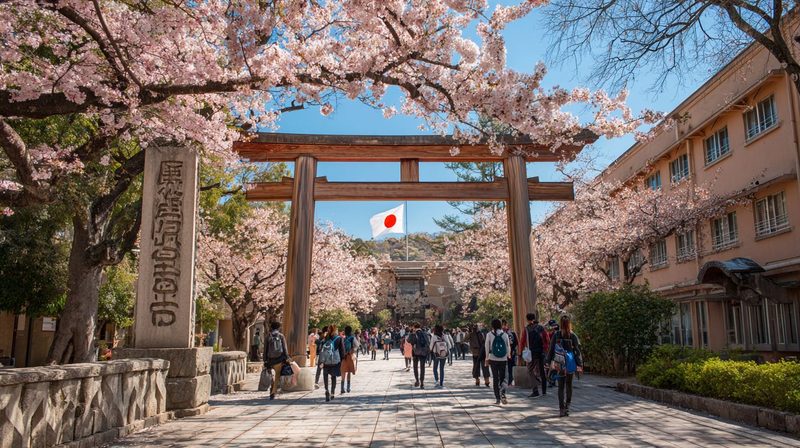
Japan is study-abroad’s most underrated destination: the world’s third-largest economy, universities of genuine global standing, and a government scholarship — MEXT — that covers tuition, airfare and a monthly stipend most students elsewhere can only dream of. Add over 700 English-taught degree programmes and a society actively recruiting international talent to counter its demographic decline, and Japan becomes a remarkable opportunity hiding behind a language barrier that is far more crossable than it looks. This guide covers MEXT, English-taught programmes, costs and careers.
The MEXT scholarship: Japan’s golden ticket
The Japanese government’s MEXT (Monbukagakusho) scholarship is among the world’s most generous: full tuition coverage, monthly stipend (around 144,000 yen for undergraduates, 147,000 for postgraduates), free round-trip airfare, and no bond or service requirement. Two routes exist: embassy recommendation (apply through the Japanese embassy in India — written exams in English/Japanese plus interviews, typically for undergraduate and research categories) and university recommendation (applied through the Japanese university itself, usually for postgraduate research). The embassy route for undergraduates requires strong Class 12 marks and clearing exams in mathematics, English and sciences; for research students, a strong academic record and a clear research plan matter most. Deadlines fall around April-May each year — a full year before the intended start.
English-taught programmes: studying without Japanese
The Global 30 and Top Global University projects have created 700+ English-taught programmes: the University of Tokyo’s PEAK, Sophia University’s Faculty of Liberal Arts, Waseda’s SPSE and SILS, Keio, and many national universities offer full English degrees in engineering, sciences, economics and liberal arts. Admission typically requires English proficiency (TOEFL/IELTS), strong academics, and essays — no Japanese needed at entry. The honest caveat: daily life, part-time jobs and post-study employment all improve dramatically with Japanese, so treat the English programme as the entry point and Japanese study as the parallel project.
Costs without MEXT: the real numbers
Without the scholarship, Japan is surprisingly affordable: national universities charge around 535,800 yen yearly tuition (roughly Rs 3 lakh) — a fraction of Western fees — while private universities run 800,000-1,500,000 yen. Living costs in Tokyo run 120,000-150,000 yen monthly; regional cities like Fukuoka or Sendai cost 80,000-100,000. Total without scholarship: roughly Rs 8-12 lakh yearly — comparable to Indian private colleges. Tuition waivers of 30-100 per cent are common for strong international students at national universities, and JASSO scholarships plus university awards add further support. The economics work even self-funded; with MEXT, they are unbeatable.
Application routes and timelines
- MEXT embassy route: applications open April-May; exams in June-July; interviews after; departure the following April/October.
- Direct application: apply to universities for English-taught programmes — typically two intakes (April, September/October).
- Documents: transcripts, English test scores, essays, recommendations — standard international set.
- Student visa (College Student status): straightforward with a Certificate of Eligibility from the university.
- Start Japanese early: even N5/N4 basics transform your arrival experience.
Careers in Japan: the demographic opportunity
Japan’s shrinking workforce is international students’ greatest advantage: the government has streamlined work visas, and companies actively recruit foreign graduates, especially in IT, engineering, manufacturing and research. The job-hunting system (shukatsu) starts early — begin in your penultimate year. Japanese language ability is the decisive factor: N2 level opens most professional doors, N3 suffices for many technical roles, and English-only positions exist but are limited. Post-study, the Designated Activities visa gives 6-12 months of job search; employed graduates move to work visas with a clear path to permanent residence. Salaries for fresh graduates (3-5 million yen) go far given Japan’s efficient public infrastructure.
Student life and culture: what to expect
Japanese universities blend rigour with remarkable campus culture — clubs (circles) for everything from robotics to tea ceremony, spotless facilities, and a respect for process that shapes how you work. Daily life runs on trains that arrive to the second, convenience stores that solve every midnight need, and a safety that lets students explore freely. The cultural adjustment is real: hierarchy matters, garbage is sorted into many categories, and silence is valued in public spaces. But Indian student associations in major cities ease the transition, vegetarian and halal food is increasingly available, and most students report that the discipline of Japanese life improves their own habits permanently.
FAQs
Is MEXT very competitive? Yes, but less than it appears — many eligible students never apply. Strong academics plus genuine motivation win more often than perfection.
Can I survive without Japanese? On campus, yes; in daily life, barely; in the job market, no. Commit to learning it — the ROI is enormous.
Is Japan safe for Indian students? Japan is among the world’s safest countries, with growing Indian student communities in Tokyo, Osaka and Fukuoka.
Full funding, English degrees, affordable costs, and an economy that needs you. Learn the MEXT calendar, start Japanese now, and consider the destination everyone else overlooks.
Compiled by the Khabar 24h Editorial Desk from publicly available sources.

Khabar 24h Editorial Desk — our explainers are prepared by the Khabar 24h editorial team using AI-assisted research tools, and every piece is reviewed by a human editor before publishing. We do not claim original reporting: our work is turning complex topics into simple, accurate summaries. Spotted an error? Write to contact@khabar24h.com — our corrections policy aims for same-day review.
More from this author →