Kendriya Vidyalayas vs Navodaya Vidyalayas: Admissions, Fees and Key Differences
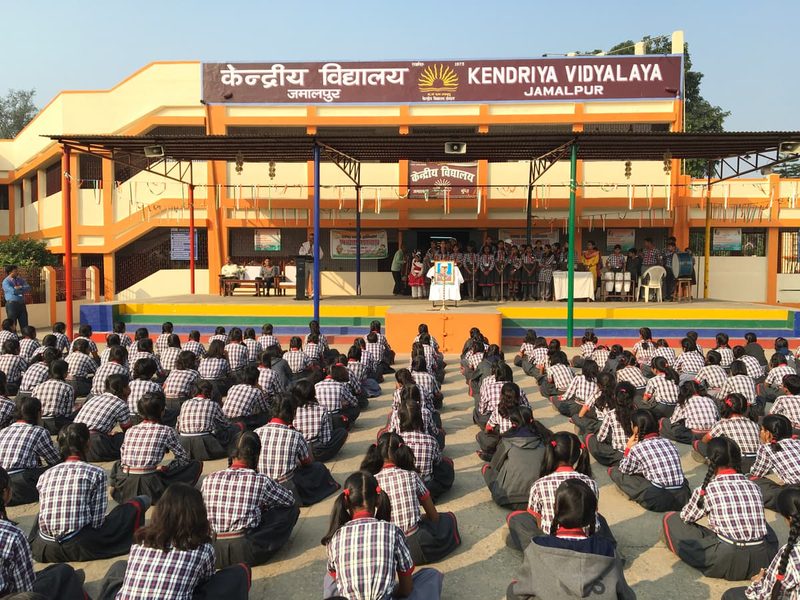
For middle-class Indian parents, few school brands command more respect than KV and JNV. Kendriya Vidyalayas vs Navodaya Vidyalayas is a comparison between two central-government school systems that have educated lakhs of children — including countless IITians, civil servants and professionals — at fees private schools charge for a month. Both are excellent, both are brutally competitive to enter, but they serve different populations through different models: KVs are day schools primarily for transferable central-government employees’ children, while Navodayas are residential schools for talented rural children. Choosing between them starts with understanding which one you are even eligible for.
What each system is
Kendriya Vidyalayas, run by the Kendriya Vidyalaya Sangathan under the Ministry of Education, number over 1,250 schools across India. They were created for children of transferable central-government employees — defence personnel, bank staff, PSU employees — so a posting from Jammu to Kochi never disrupts a child’s schooling. Navodaya Vidyalayas, run by the Navodaya Vidyalaya Samiti, number around 660 — roughly one per district — and are fully residential schools designed to give talented rural children a world-class education free of cost. KV is a day school you commute to; JNV is a boarding school you live in from Class 6 to 12.
Admissions: who gets in and how
KV admissions prioritise children of central-government employees, with categories cascading down to state-government staff and finally private-sector parents if seats remain; admission to Class 1 is through a lottery system, and higher classes admit against vacancies. In practice, popular KVs in metros have near-zero seats for general applicants. JNV admission is through the Jawahar Navodaya Vidyalaya Selection Test (JNVST) held in Class 5 for Class 6 entry, with a smaller lateral entry in Class 9 — open only to students studying in rural schools of that district, with reservations for SC, ST, girls and rural quotas. JNVST is a genuine merit filter testing mental ability, arithmetic and language; roughly 80 students per district make it from tens of thousands of applicants.
Fees and costs
- Kendriya Vidyalayas: highly subsidised — monthly fees around 1,000 rupees for most classes, with exemptions for SC, ST, girls up to certain classes, and children of certain employee categories.
- Navodaya Vidyalayas: effectively free — no tuition, free boarding, lodging, uniforms and textbooks; only a nominal Vidyalaya Vikas Nidhi of about 600 rupees a month from Classes 9-12 for general and OBC boys.
- Both systems cost a tiny fraction of private schools charging 1-3 lakh rupees a year.
- Additional costs in both are minimal: transport for KV day scholars, and almost nothing for JNV boarders.
Academics and outcomes
Both follow CBSE curriculum with consistently strong board results — KVs and JNVs regularly outperform national CBSE averages in Classes 10 and 12. JNVs have a remarkable record in competitive exams relative to their rural intake, producing JEE and NEET qualifiers at rates that shame expensive coaching-fed private schools; the residential environment’s peer learning and structured routine are the secret. KVs benefit from standardised quality across the country, good labs and libraries, and a diverse student body of pan-India exposure. Both systems emphasise Hindi-English bilingualism, and JNVs add a distinctive three-language formula with migration schemes between Hindi and non-Hindi regions.
Which should you choose
The choice is usually made by eligibility, not preference: if you are a central-government employee with transferable postings, KV is built for you. If your child studies in a rural school and can clear JNVST, JNV offers a life-changing free residential education. For private-sector urban parents, KV admission is a lottery longshot worth trying, while JNV is generally not an option. Boarding-school readiness matters for JNV — the child must thrive away from home from age 11. Both demand parental involvement despite their quality; no school substitutes for an engaged family.
FAQs
Can private-sector employees’ children join KV?
Yes, in the lowest priority category, admitted only if seats remain after government-employee categories. In popular city KVs, such seats are rare.
Is JNV only for rural students?
Yes — 75 per cent of seats are reserved for rural candidates, and applicants must be studying in the district. Urban students are generally ineligible.
Which is better for competitive exams?
JNVs have the stronger track record relative to intake, thanks to the residential peer environment. KVs provide excellent foundations but day scholars typically add external coaching.
KV and JNV represent the best of what Indian public education can be: standardised quality, committed teachers and extraordinary value. If you are eligible for either, apply — a seat in these schools is among the finest educational bargains in the country.
Source: Kendriya Vidyalaya Sangathan

Khabar 24h Editorial Desk — our explainers are prepared by the Khabar 24h editorial team using AI-assisted research tools, and every piece is reviewed by a human editor before publishing. We do not claim original reporting: our work is turning complex topics into simple, accurate summaries. Spotted an error? Write to contact@khabar24h.com — our corrections policy aims for same-day review.
More from this author →