ITI Courses After 10th: Trades, Fees and Job Prospects
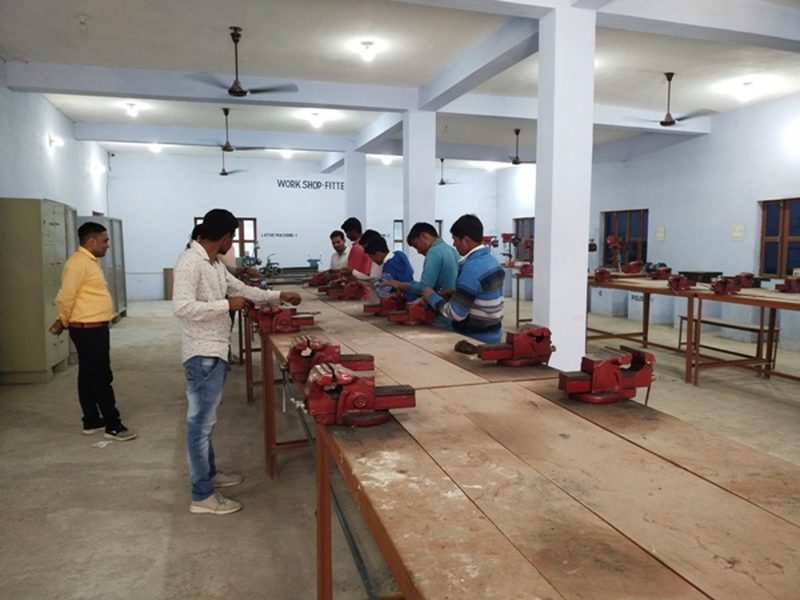
While lakhs chase college degrees of uncertain value, ITI graduates quietly get hired. ITI courses after 10th — Industrial Training Institute programmes — train students in hands-on trades from electrician to machinist in one to two years, at fees a fraction of any college, with apprenticeship pathways into railways, PSUs and private industry. For students who like working with their hands and want earning power fast, ITIs are among India’s most practical educational choices. This guide covers trades, fees and real job prospects.
How ITIs work
ITIs, run by state governments and private operators under the Directorate General of Training, offer two programme types: CTS (Craftsmen Training Scheme) courses of 1-2 years after Class 10, and shorter modular courses. Training is heavily practical — workshops, not lecture halls — with theory supporting hands-on skill. Government ITIs charge nominal fees (often under 5,000 rupees a year) with stipends and scholarships for SC, ST and girl students; private ITIs charge 20,000-60,000 rupees a year with varying quality. Admission is generally merit-based on Class 10 marks, with no entrance exam in most states — refreshingly straightforward.
The trades that pay: choosing wisely
- Electrician: the evergreen trade — construction, industry and self-employment demand never dries up.
- Fitter and Turner/Machinist: core manufacturing trades feeding railways, PSUs and factories.
- Welder: high demand in infrastructure, shipbuilding and Gulf employment.
- COPA (Computer Operator and Programming Assistant): the digital trade — data entry, office IT, a bridge to computer careers.
- Mechanic (Motor Vehicle/Diesel): automobile servicing with strong self-employment potential.
- Refrigeration and AC Technician: booming with climate change and rising AC penetration.
- Plumber, Carpenter, Mason: construction trades with entrepreneurial upside.
Choose trades with both wage-employment and self-employment potential — that dual option is the real security.
Apprenticeships: the earning bridge
After ITI, the Apprentices Act route places trainees in railways, BHEL, SAIL, HAL, private manufacturers and service companies with monthly stipends (typically 8,000-15,000 rupees). Apprenticeship converts training into experience — the currency employers actually pay for — and many apprentices are absorbed as regular employees. Apprenticeship melas and the government’s apprenticeship portal list thousands of openings. Treat the apprenticeship year as a job interview: attendance, attitude and skill displayed there decide absorption more than certificates.
Job prospects and salaries: honest numbers
ITI graduates find work as technicians in manufacturing, railways (as technicians and assistants), PSUs, construction companies, automobile service centres and facility management. Starting salaries run 12,000-25,000 rupees monthly, rising to 30,000-50,000 with experience and specialisation. Gulf employment multiplies earnings 2-4x for welders, electricians and AC technicians — a well-trodden path. Self-employment — electrical contracting, AC servicing, fabrication shops — offers the highest ceiling; many successful small contractors started as ITI electricians. The honest caveat: initial years involve hard physical work and modest pay; the payoff compounds with skill and reputation.
Beyond ITI: lateral entry and growth
ITI is not a dead end. Graduates can pursue a diploma in engineering through lateral entry, then B.Tech — a respected climb from shop floor to engineering office. The All India Trade Test’s National Trade Certificate and National Apprenticeship Certificate carry weight with employers. Some trades feed into supervisory and quality roles; others into entrepreneurship. Government recruitment — railways, defence civilian posts, state electricity boards — reserves quotas for ITI holders, offering the coveted sarkari path without a degree.
FAQs
Is ITI better than 12th + graduation?
For hands-on learners wanting quick employability, often yes. For careers needing degrees, no. It is a different ladder, not a lower one.
What are government ITI fees?
Typically under 5,000 rupees a year, with scholarships for reserved categories and girls. Private ITIs charge 20,000-60,000 rupees.
Can girls do ITI courses?
Absolutely — COPA, electronics, fashion technology and healthcare-adjacent trades see strong female enrolment, and women’s ITIs exist in many states.
ITI courses offer something precious in Indian education: a short, affordable, honest path to earning. For the student who learns by doing, the workshop beats the lecture hall — and the skilled trades will never be outsourced to AI. Visit two or three ITIs before choosing one, because workshop equipment, instructor experience and placement records differ enormously between institutes. Check whether the ITI offers NSQF-aligned modules, which improve employability and lateral-entry prospects. Finally, treat safety training seriously from day one: workshops reward the careful, and good safety habits mark you as a professional from your first apprenticeship interview.
Source: Directorate General of Training

Khabar 24h Editorial Desk — our explainers are prepared by the Khabar 24h editorial team using AI-assisted research tools, and every piece is reviewed by a human editor before publishing. We do not claim original reporting: our work is turning complex topics into simple, accurate summaries. Spotted an error? Write to contact@khabar24h.com — our corrections policy aims for same-day review.
More from this author →