How to Make Notes for Competitive Exams: The 3-Pass Note System
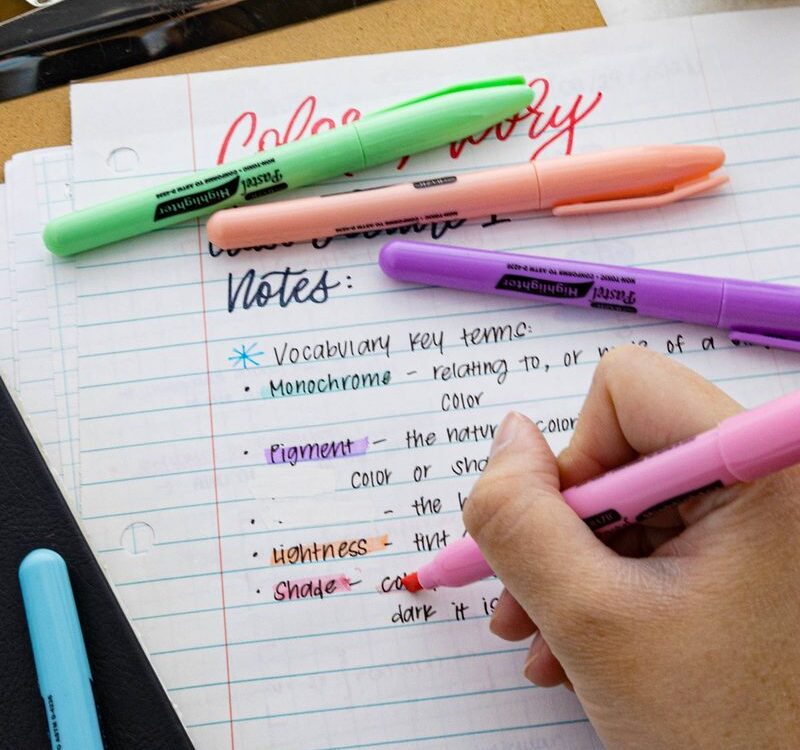
Most students’ notes are cemeteries of information — fifty pages per chapter, lovingly transcribed, never opened again. The problem is not effort; it is method. Notes fail when they are made to record, and succeed when they are made to revise. The 3-pass note system treats note-making as a three-stage refinement process: each pass compresses the previous one, forcing the deep processing that builds memory. By the third pass, an entire chapter fits on one page — and that page is pure gold in the final week before the exam.
Pass 1: Capture — learn in real time
The first pass happens during the class or first reading. Its job is capture, not beauty: get down the key concepts, formulae, diagrams and the teacher’s asides (examiners’ hints often hide there). Use abbreviations freely, leave wide margins, and mark confusion with a star rather than stopping to resolve it — flow matters more than perfection. The biggest mistake in pass 1 is transcription: copying sentences verbatim. Instead, listen, understand, then write the idea in your own words. If you cannot paraphrase it, you did not understand it — and that star in the margin tells you exactly what to fix tonight.
Pass 2: Condense — the same evening
Within 24 hours, revisit your capture notes and condense them to roughly one-third the length. This is where real learning happens: deciding what to keep forces you to judge importance, and rephrasing forces understanding. Structure the condensed notes with clear headings, numbered points and boxes for formulae. Resolve every starred confusion now — check the textbook, ask a teacher, watch a video. Add memory hooks: mnemonics, diagrams, and connections to other chapters. Pass 2 notes should be clean enough that a stranger could study from them, and short enough that you will actually re-read them.
Pass 3: Compress — the one-page revision sheet
In the final revision phase, compress each chapter onto a single page (front, or front-and-back at most). This is not a summary — it is a trigger sheet: formulae, diagrams, key dates, exceptions, and the three or four ideas most likely to be examined. If something needs more than a line, it does not belong on this sheet. The magic of pass 3 is the compression itself: deciding what makes the cut is the highest form of revision. Toppers’ “short notes” that juniors admire are simply well-executed pass-3 sheets — and in the last 48 hours before an exam, they are the only notes anyone has time to read.
Subject-wise adaptations
- Physics/Chemistry: Formula and reaction sheets dominate pass 3; derivations stay in pass 2.
- Mathematics: Pass 2 holds solved exemplar problems; pass 3 lists formulae plus the trick for each problem type.
- Biology: Labelled diagrams in every pass; pass 3 is NCERT one-liners and diagram labels.
- Social Science/Theory: Pass 3 becomes flowcharts, timelines and cause-effect chains — visual, not textual.
- English/Humanities: Quote banks and theme maps rather than summaries.
Mistakes that kill note systems
Making notes too beautiful (decoration is procrastination), never doing pass 2 (capture notes decay within days), copying coaching material verbatim (no processing happens), maintaining five notebooks per subject (complexity kills consistency), and — the classic — making notes instead of solving questions in the final months. Notes are a means to revision, not a substitute for practice. If your notes are growing but your mock scores are not, you are transcribing, not learning.
FAQs
Should I make digital or handwritten notes? Handwritten for sciences and maths (diagrams and formulae flow better); digital works for theory subjects if you actually revise them. The best system is the one you revisit.
Is it too late to start in Class 12? No — start pass 1 now for current chapters and build pass-3 sheets for completed ones. Partial implementation still beats none.
Can I just use topper’s notes? As a reference, yes; as a replacement, no. The memory benefit comes from the compression process, which only happens when you make them yourself.
How do I handle diagrams and maps in notes? Redraw every important diagram from memory in pass 2 — the act of redrawing is recall practice. For maps, maintain a separate outline-map practice sheet alongside your notes.
Capture, condense, compress — three passes, each shorter and sharper than the last. Your future self, revising at midnight before the exam, will thank you.
Compiled by the Khabar 24h Editorial Desk from publicly available sources.

Khabar 24h Editorial Desk — our explainers are prepared by the Khabar 24h editorial team using AI-assisted research tools, and every piece is reviewed by a human editor before publishing. We do not claim original reporting: our work is turning complex topics into simple, accurate summaries. Spotted an error? Write to contact@khabar24h.com — our corrections policy aims for same-day review.
More from this author →