GST Registration for Small Businesses: Who Needs It and How to Get It
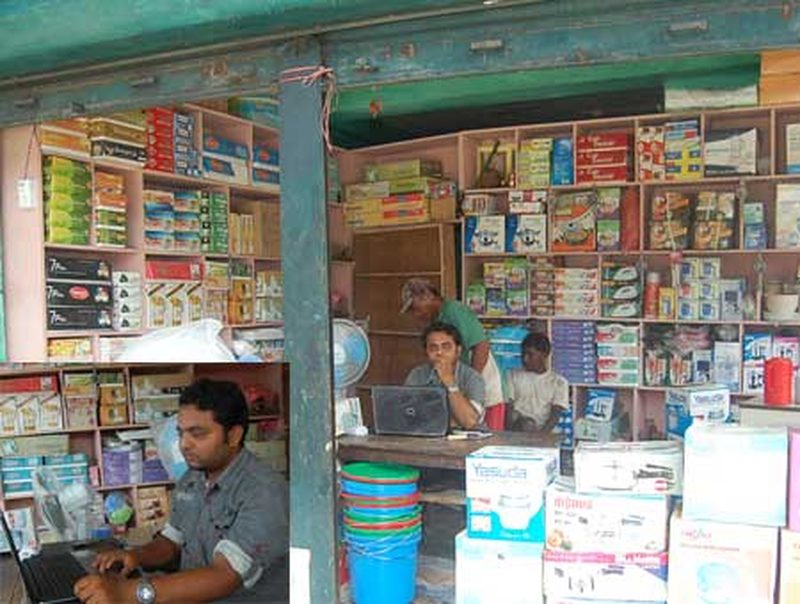
For a small business crossing the invisible line from informal to formal, GST registration is often the first real encounter with the tax system — and the most confusing one. Who actually needs to register? What happens if you do not? And how painful is the process? The answers are more straightforward than the rumours suggest: clear turnover thresholds, a free online process, and genuine benefits that go beyond compliance. Here is the complete picture for small businesses in 2026.
Who must register
The headline thresholds: businesses with annual aggregate turnover above 40 lakh rupees for goods and above 20 lakh rupees for services must register for GST — with lower thresholds of 20 and 10 lakhs respectively in special-category states. But several categories must register regardless of turnover: anyone making inter-state supplies, e-commerce sellers supplying through platforms, casual and non-resident taxable persons, businesses liable under reverse charge, input service distributors, and agents of suppliers. Aggregate turnover counts all taxable, exempt and export supplies across all your business verticals on the same PAN — splitting a business across entities to stay below thresholds is specifically countered by anti-fragmentation rules. Voluntary registration below the threshold is permitted and often wise, as explained below.
What happens if you should register but do not
Operating above the threshold without registration is not a grey area — it attracts penalties, interest on unpaid tax, and the inability to issue valid tax invoices, which means your B2B customers cannot claim input tax credit on your supplies and will eventually buy from someone who lets them. Tax officers can also assess and demand tax retrospectively. The practical cost is commercial as much as legal: unregistered suppliers get filtered out of supply chains, government tenders and marketplace onboarding. Registration, by contrast, costs nothing but time.
How to register, step by step
Registration happens on the GST portal, gst.gov.in, and is free. First, generate a TRN by validating your PAN, mobile number and email. Then complete Part B of the application: business details, promoter and partner information with photographs, the principal place of business with address proof — electricity bill, rent agreement or property tax receipt — bank account details with a cancelled cheque or statement, and the HSN codes for your goods or SAC codes for services. Authorised signatory details and digital signature or Aadhaar-based e-sign complete the submission. An officer verifies the application, sometimes scheduling a physical verification of the premises, and issues the GSTIN — typically within 7 working days if everything is in order. Display the GSTIN on invoices, signboards and your website; it is your business’s tax identity now.
- Thresholds: 40 lakh (goods) / 20 lakh (services); lower in special-category states.
- Always register: inter-state suppliers, e-commerce sellers, reverse-charge cases — whatever the turnover.
- Cost: zero government fee; beware agents charging thousands for a free process.
- Timeline: GSTIN typically issued within 7 working days of a complete application.
Composition scheme: the simpler alternative
Small suppliers with turnover up to 1.5 crores (75 lakhs in special states; 50 lakhs for services) can opt for the composition scheme: pay a flat 1 per cent of turnover for traders and manufacturers or 6 per cent for services, file one annual return with quarterly payment challans, and skip detailed invoicing. The catch is steep: no input tax credit, no inter-state sales, no e-commerce selling, and you must mention your composition status on every bill — B2B customers who need ITC will avoid you. Composition suits small B2C retailers and eateries; anyone selling to businesses or online should register normally.
FAQs
Can I get input tax credit if I register voluntarily? Yes — voluntary registrants get full ITC like any regular taxpayer, which is often the commercial reason to register early.
Do freelancers need GST registration? Only above the 20-lakh services threshold (10 lakhs in special states) or if billing inter-state clients in ways that trigger mandatory registration — check the inter-state provisions carefully.
What is a GSTIN? A 15-digit identifier built on your PAN plus state and entity codes — your single tax identity across India.
GST registration is the doorway to the formal economy: input tax credit, inter-state trade, marketplace access and institutional customers all sit on the other side. Check your turnover honestly, register before you must, and the compliance that follows becomes routine rather than rescue.
Compiled by the Khabar 24h Editorial Desk from publicly available sources.

Khabar 24h Editorial Desk — our explainers are prepared by the Khabar 24h editorial team using AI-assisted research tools, and every piece is reviewed by a human editor before publishing. We do not claim original reporting: our work is turning complex topics into simple, accurate summaries. Spotted an error? Write to contact@khabar24h.com — our corrections policy aims for same-day review.
More from this author →