Bonus Shares vs Stock Splits: What Changes for You as a Shareholder
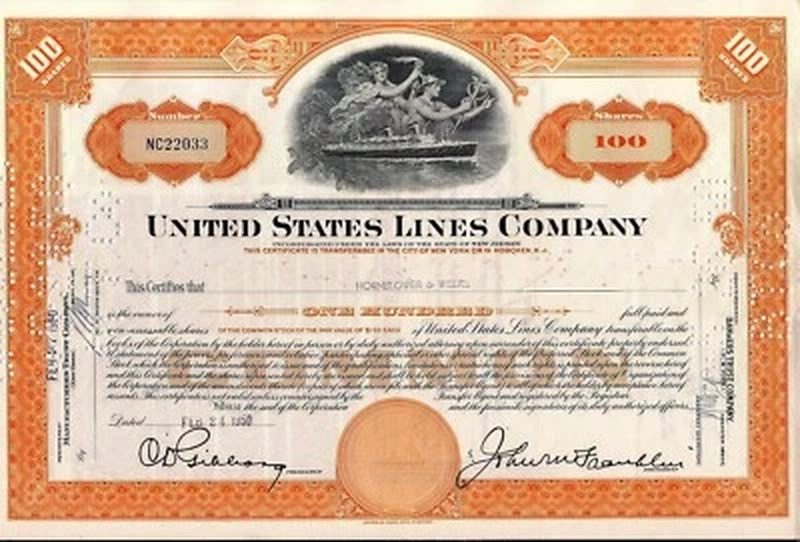
A company announces a 1:1 bonus or a 5-for-1 stock split, and suddenly you own twice — or five times — as many shares. It feels like free money, and the market often celebrates. But here is the uncomfortable truth: neither action changes your wealth by a single rupee. What they change is the share’s price, liquidity and psychology — and the reasons companies do them, plus the tax treatment, are worth understanding precisely because the excitement is misplaced.
How bonus shares work
In a bonus issue, the company capitalises its reserves — accumulated profits sitting in the balance sheet — and issues new shares to existing shareholders in a fixed ratio, such as 1:1 (one new share for each held). No money changes hands; reserves move into share capital on paper. If you held 100 shares at 1,000 rupees, you now hold 200 shares worth roughly 500 each — the market adjusts the price proportionally on the ex-bonus date. Your 1 lakh rupee holding remains 1 lakh rupees. Companies typically issue bonuses when reserves are large and the share price has climbed to levels that discourage small investors — the bonus brings the per-share price down while signalling confidence through the willingness to expand equity.
How stock splits work
A stock split is simpler: the company divides each existing share into multiple shares by reducing the face value — a 10-rupee share split into five 2-rupee shares, for instance. The share count multiplies, the price divides, and nothing on the balance sheet changes at all; unlike a bonus, no reserves are capitalised. The motivation is usually liquidity and accessibility: a stock trading at 5,000 rupees attracts fewer retail participants than the same company at 1,000 rupees post-split, and higher liquidity can modestly improve price discovery. Splits are common in markets like the US; in India, bonuses have historically been the more popular tool.
What actually changes for you
Economically, nothing — your percentage ownership and the value of your holding are identical the morning after. Practically, a few things shift. Liquidity often improves as the lower price draws more traders. Your cost of acquisition per share adjusts proportionally, which matters for capital gains computation when you eventually sell. Psychologically, investors love both actions — announcement rallies are common — though studies suggest the outperformance is mostly short-lived sentiment. The rational response to a bonus or split announcement is mild pleasure at improved liquidity, not a revision of the investment thesis: the business is exactly what it was yesterday.
- Bonus: reserves converted into new shares; balance sheet restructured, price adjusts.
- Split: face value divided; share count up, price down, balance sheet untouched.
- Your wealth: unchanged in both cases — more slices, same pie.
- Tax: no tax on receipt; cost basis splits proportionally for future capital gains.
The tax treatment
Receiving bonus shares or split shares is not a taxable event — no income arises, so nothing is due. The tax relevance comes at sale: your original cost of acquisition is spread across the total shares now held. If you bought 100 shares at 1,000 rupees and received a 1:1 bonus, your cost becomes 500 rupees across 200 shares. The holding period for bonus shares is counted from the date of allotment of the bonus — a nuance that matters for the 12-month long-term threshold — while split shares retain the original acquisition date. Keep the corporate action records; reconstructing adjusted cost bases years later from memory is how tax errors happen.
FAQs
Should I buy a stock because it announced a bonus? No — the bonus itself creates no value. Buy for the business; treat the bonus as a liquidity improvement.
Do bonus shares get the same dividend? Yes, all shares rank equally for future dividends — though companies often adjust per-share payouts after expanding equity.
What is the record date for a bonus? Shareholders on the books on the record date receive the bonus; buy at least one working day before under T+1 settlement.
Bonus shares and stock splits are financial repackaging: the same company, the same value, in more affordable pieces. Enjoy the liquidity, adjust your cost records, and keep your eyes on the only thing that was ever creating wealth — the business itself.
Compiled by the Khabar 24h Editorial Desk from publicly available sources.

Khabar 24h Editorial Desk — our explainers are prepared by the Khabar 24h editorial team using AI-assisted research tools, and every piece is reviewed by a human editor before publishing. We do not claim original reporting: our work is turning complex topics into simple, accurate summaries. Spotted an error? Write to contact@khabar24h.com — our corrections policy aims for same-day review.
More from this author →