Scented Cleaners May Produce Lung-Penetrating Nanoparticles
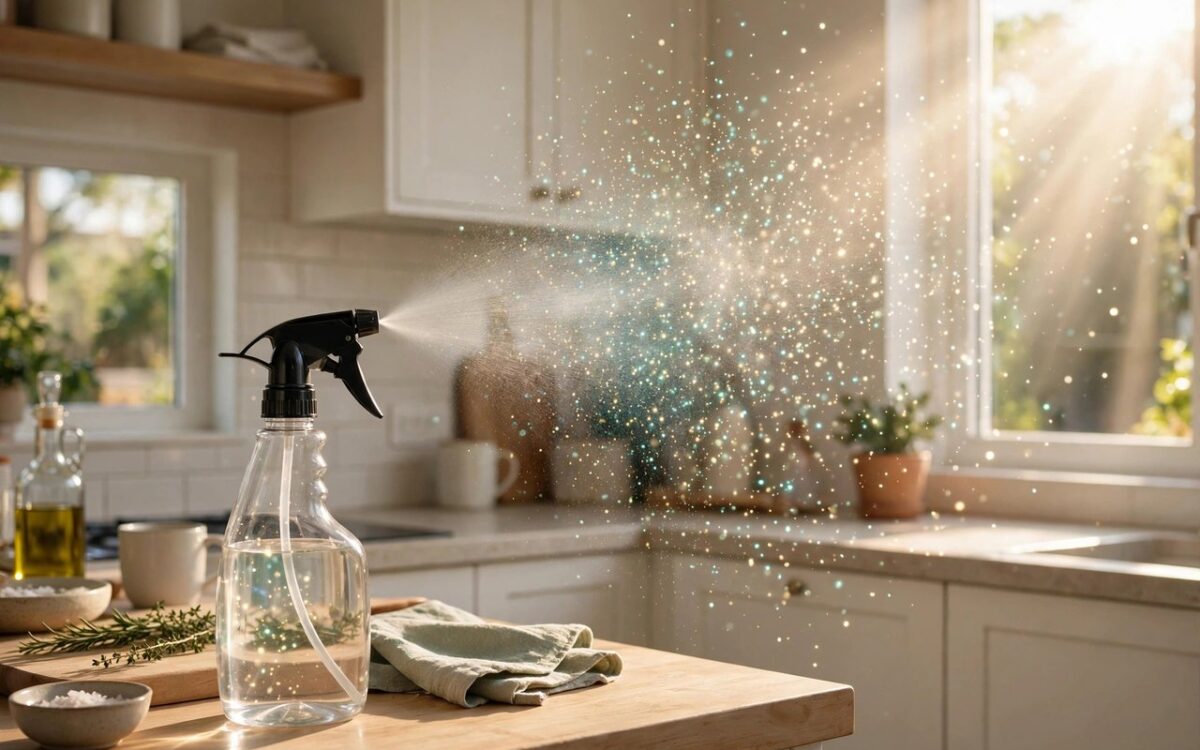
Fragrance compounds in scented cleaning products can react with indoor ozone to form nanoparticles small enough to reach deep into the lungs, researchers reported in findings presented at the American Chemical Society’s fall meeting.
The study suggests common household activities such as mopping or wiping surfaces can generate tiny airborne particles through chemistry between the product’s fragrance chemicals and ozone present in indoor air. The researchers described the pollution as invisible but potentially significant.
Because the findings were presented at a scientific meeting and have not yet completed peer review, they should be treated as preliminary. The authors did not claim specific health outcomes, only that the particles are in a size range capable of penetrating deep into the respiratory system.
Experts say improving ventilation, choosing fragrance-free products and avoiding harsh cleaners are sensible steps while further research establishes what these nanoparticles mean for health.
Indoor air quality has become a growing research focus as people spend most of their time inside buildings. Scientists say chemistry between everyday household products and ambient ozone can produce pollutants that are not captured by standard cleaning-product safety labels, prompting calls for updated testing standards.
Related stories
View all →
Fractionated Radiosurgery Shows Promise for Brain Tumours
A phase III trial found fractionated post-surgery radiosurgery gave 87% one-year control vs 81% for single-session, with longer median survival.

Ultra-Processed Foods Linked to Higher Disease Risk
A meta-analysis of 51 studies found each extra 100g/day of ultra-processed food linked to higher cardiovascular, cancer and mortality risks.

UF-Led Alzheimer’s Centre Gets $22 Million Grant
The NIH's National Institute on Aging renewed a $22.3 million, five-year grant for the UF-led 1Florida Alzheimer's Disease Research Center.

Khabar 24h Editorial Desk — our explainers are prepared by the Khabar 24h editorial team using AI-assisted research tools, and every piece is reviewed by a human editor before publishing. We do not claim original reporting: our work is turning complex topics into simple, accurate summaries. Spotted an error? Write to contact@khabar24h.com — our corrections policy aims for same-day review.
More from this author →
Leave a Reply