Six years of NEP 2020: the reforms that took hold and the ones still waiting
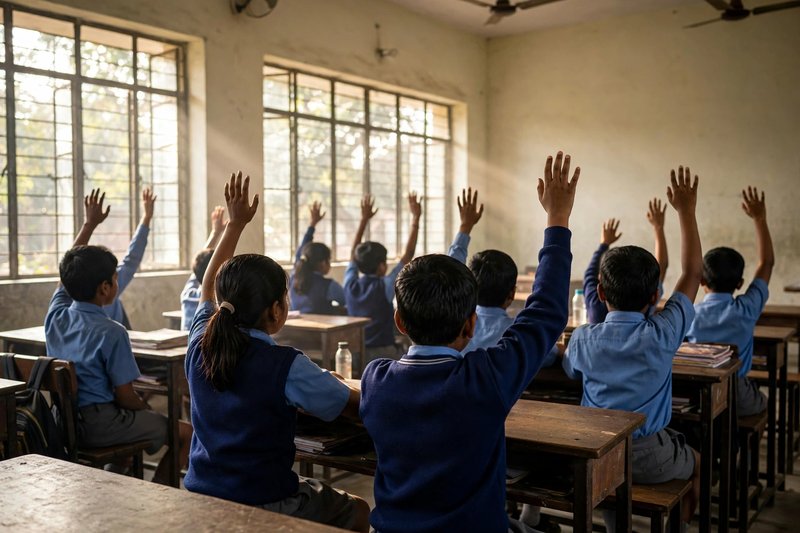
Approved by the Union Cabinet on 29 July 2020, the National Education Policy (NEP) 2020 replaced the 1986 education policy and promised the most comprehensive overhaul of Indian schooling and higher education in a generation. Six years on, the implementation record is genuinely mixed: some of the policy’s most visible reforms have taken root in classrooms and universities, while several of its defining structural promises — a single higher-education regulator, teacher-education reform, the 6 per cent of GDP spending target — remain unfinished business.
The changes you can already see
The most visible transformation is the structure of schooling itself. The traditional 10+2 system has been replaced by the 5+3+3+4 framework, formally bringing children aged three to eight into the education system, and most states and Union Territories have shifted the minimum age for admission to Class 1 from five to six. To support the new model, the Centre introduced the Jaadui Pitara learning kit for young children, rolled out the national early-childhood framework for anganwadis and pre-schools, and encouraged states to integrate anganwadi centres with nearby primary schools — though training frontline workers remains a challenge.
The curriculum is changing too. NCERT has released new textbooks for Classes 1 to 9 under the new framework, with revised books for the senior secondary classes expected next. In higher education, flexibility — the policy’s signature promise — is taking concrete shape: by June 2026, the government reported that 170 universities had adopted the National Credit Framework, 2,469 institutions had joined the Academic Bank of Credits, and 153 universities were offering biannual admissions with multiple entry and exit options. The SWAYAM online platform has expanded to more than 18,580 courses with over 6.1 crore enrolments. Foreign universities have begun opening campuses in India, and Indian institutions have expanded overseas — a two-way opening that was unthinkable a decade ago.
Access has widened — but the headline target is distant
The numbers on enrolment tell a story of real expansion. The All India Survey on Higher Education for 2023-24 recorded 4.50 crore students in higher education, up from 3.42 crore in 2014-15. The gross enrolment ratio reached 30 per cent, up from 23.7 per cent, with female enrolment at 31.2 per cent and higher figures for Scheduled Caste (27.8 per cent) and Scheduled Tribe (22.8 per cent) students. That progress is real — but it remains far from the NEP’s target of a 50 per cent gross enrolment ratio by 2035. Experts caution that access alone is not the achievement: students need qualified faculty, functioning laboratories and libraries, fair assessment and credible degrees. Flexibility, they add, must not slide into fragmentation, where credit accumulation produces a disconnected collection of courses rather than a coherent qualification.
What is still stuck
The pending list is where the six-year report card gets uncomfortable:
- The single regulator: the proposed Higher Education Commission of India, meant to replace the University Grants Commission, has yet to materialise.
- Teacher education: reforms to how teachers are trained remain incomplete.
- Funding: public spending on education is still well below the policy’s own target of 6 per cent of GDP, constraining infrastructure, research and teacher training.
- Examinations: a central NEP promise, but overshadowed by repeated controversies around national entrance tests, including the NEET overhaul pushed by the Supreme Court and the Nilekani panel’s long-awaited report.
State-level rollouts have also been uneven: some states have embraced the 5+3+3+4 transition and phased curriculum changes grade by grade through 2028-29, while others have resisted or rewritten parts of the policy on language and curriculum.
The verdict after six years
NEP 2020’s first six years have delivered structural change in schooling, genuine flexibility in higher education, and a measurable expansion of access — alongside a slow-motion record on regulation, teachers, funding and examinations. The policy’s own milestones stretch to 2030, 2035 and 2040, so judging it finished now would be premature. But the pattern is clear enough: the reforms that could be delivered through frameworks, platforms and new textbooks moved fastest; the reforms that need money, teachers and political consensus are the ones still waiting. The next phase, experts say, has to invest in teacher capacity, assessments that value understanding over recall, and schools given room to adapt reform to their own context.
Source: NDTV

Khabar 24h Editorial Desk — our explainers are prepared by the Khabar 24h editorial team using AI-assisted research tools, and every piece is reviewed by a human editor before publishing. We do not claim original reporting: our work is turning complex topics into simple, accurate summaries. Spotted an error? Write to contact@khabar24h.com — our corrections policy aims for same-day review.
More from this author →
Leave a Reply