The Arab Spring Explained: The Uprisings That Shook the Middle East
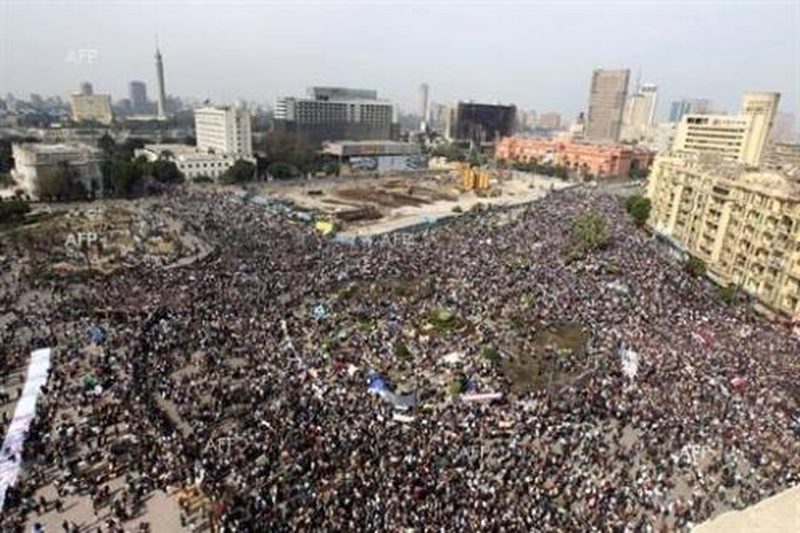
In December 2010, a Tunisian street vendor named Mohamed Bouazizi set himself on fire after police seized his cart, and the Arab world ignited. Within months, mass protests toppled Tunisia’s Ben Ali and Egypt’s Mubarak, sparked civil wars in Libya, Syria and Yemen, and shook monarchies from Bahrain to Morocco. The Arab Spring was the most dramatic wave of popular uprising in modern Middle Eastern history. A decade and a half later, its hopes lie mostly in ruins. What happened, and why?
The tinder: why 2011 exploded
The kindling had piled for decades: sclerotic dictatorships, youth bulges with no jobs, corruption, humiliation by security states, and food price spikes. Satellite TV and social media, Al Jazeera, Facebook, Twitter, let Arabs see both their rulers’ rot and each other’s courage. Bouazizi’s self-immolation was the spark, but the fuel was a generation’s fury at systems that offered them nothing. Tunisia’s rapid success electrified the region: if Ben Ali could fall in weeks, why not Mubarak, Gaddafi, Assad?
Tunisia and Egypt: revolution’s high tide
Tunisia’s Jasmine Revolution forced Ben Ali’s flight in January 2011 and, remarkably, built a democracy: free elections, a progressive constitution, a Nobel-winning civil society quartet. Egypt’s Tahrir Square was the iconic moment: 18 days of protest forced Mubarak’s fall in February 2011, to global euphoria. But Egypt’s revolution was hijacked: the Muslim Brotherhood won elections, the military ousted it in 2013, and Abdel Fattah el-Sisi built a regime more repressive than Mubarak’s. Tunisia’s democracy, the lone success, itself collapsed in 2021 when its president seized power.
Libya, Syria, Yemen: revolution into war
Where dictators fought back, uprisings became catastrophes. In Libya, NATO intervention helped rebels topple Gaddafi, but the state disintegrated into militia chaos and slave markets. In Syria, Assad’s crackdown on protests spiralled into a civil war that killed hundreds of thousands, displaced millions, drew in Russia, Iran, America and Turkey, and spawned ISIS. Yemen’s uprising ended in a Saudi-Iranian proxy war and the world’s worst humanitarian crisis. The lesson was brutal: revolutions without institutions invite warlords.
The counter-revolution strikes back
The old order learned fast. Gulf monarchies bought calm with subsidies and crushed Bahrain’s uprising with Saudi tanks. Egypt’s deep state returned with a vengeance. Syria’s Assad survived through Russian intervention. Across the region, security states rebuilt themselves harder and smarter, mastering digital surveillance and pre-emptive repression. The counter-revolution’s message: protest leads to Syria. Fear, more than satisfaction, keeps the peace today.
Why the Spring failed
Historians cite many causes: protesters who could topple regimes but not govern, Islamist-secular divides, the absence of organised democratic parties, economies that couldn’t deliver jobs, and ruthless external intervention. The deepest failure was institutional: decades of dictatorship had destroyed the parties, unions and civic bodies revolutions need to succeed. Tearing down proved easier than building up. The Arab Spring’s tragedy was not its aspirations but its unpreparedness.
The Spring’s afterlives
Yet nothing is fully over. Sudan’s 2019 revolution, Algeria’s Hirak, Lebanon’s 2019 protests and Iraq’s Tishreen movement carried the Spring’s spirit into a second wave, with similarly mixed results. A generation learned that change is possible and that power fears the street. The underlying conditions, youth unemployment, corruption, repression, have only worsened. The Arab Spring failed as revolution; as a warning to the region’s rulers, it may yet succeed.
Women of the Arab Spring
Women were central to the uprisings, from Tahrir’s female organisers to Yemen’s Nobel laureate Tawakkul Karman, yet revolutions largely failed them: Egypt’s military subjected protesters to virginity tests, and post-revolution politics marginalised women’s rights. The Spring promised dignity for all; its gendered betrayals remain among its bitterest legacies, and women’s movements its most persistent unfinished business.
FAQs
What started the Arab Spring? The self-immolation of Tunisian vendor Mohamed Bouazizi in December 2010, protesting police harassment, which triggered nationwide and then region-wide protests.
Which countries had revolutions? Tunisia, Egypt, Libya, Yemen, Syria and Bahrain saw major uprisings; Morocco, Jordan and others saw protests and concessions.
Did any Arab Spring succeed? Tunisia built a democracy that lasted a decade before collapsing in 2021; elsewhere uprisings were crushed or descended into war.
The Arab Spring was the Arab world’s 1848: a year of miracles that ended mostly in restoration. Its hopes were real, its failures instructive, and its unfinished business still shapes the Middle East’s future.
Compiled by the Khabar 24h Editorial Desk from publicly available sources.

Khabar 24h Editorial Desk — our explainers are prepared by the Khabar 24h editorial team using AI-assisted research tools, and every piece is reviewed by a human editor before publishing. We do not claim original reporting: our work is turning complex topics into simple, accurate summaries. Spotted an error? Write to contact@khabar24h.com — our corrections policy aims for same-day review.
More from this author →