The Industrial Revolution Explained: How It Remade Work, Cities and the World
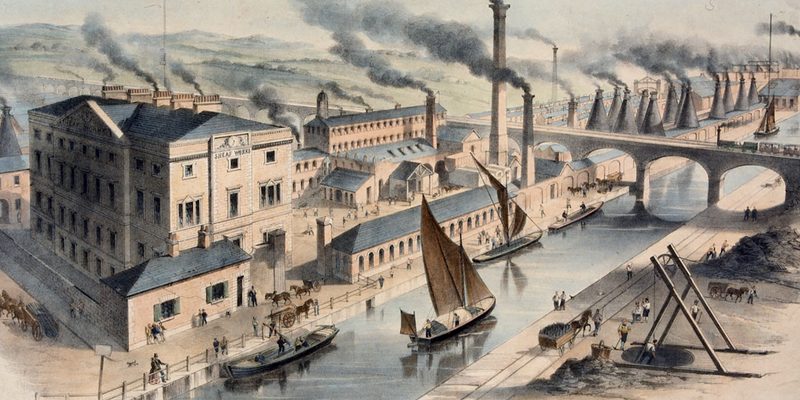
Around 1760, Britain began a transformation that would remake human existence more thoroughly than anything since the invention of agriculture. The Industrial Revolution mechanised production, urbanised populations, and unleashed economic growth that lifted billions from poverty, while creating slums, pollution and exploitation on an unprecedented scale. It is the hinge on which the modern world turns. How did it happen, and what did it cost?
Why Britain first?
Historians debate endlessly, but Britain had a unique cocktail: abundant coal and iron, a culture of tinkering and scientific inquiry, secure property rights, liquid capital markets, a large domestic market unified by good transport, and high wages that made labour-saving machines profitable. The patent system rewarded inventors; the Royal Navy protected trade. When James Watt improved the steam engine in the 1770s, Britain had the coal to fuel it, the iron to build it and the markets to justify it. Nowhere else combined all the ingredients.
The breakthrough technologies
Three interlocking revolutions drove the change. Textiles led: the spinning jenny, water frame and power loom mechanised cloth-making, Britain’s great export industry. Steam power, Watt’s engine and its successors, provided energy anywhere, freeing industry from rivers. Iron and steel, made cheap by coke smelting and later the Bessemer process, built the machines, rails and bridges. Railways then stitched it together, collapsing distance and creating national markets. Each innovation amplified the others in a self-reinforcing surge.
How work and life changed
For ordinary people, the revolution was wrenching. Artisans became factory hands, working 12-to-14-hour days under dangerous, disciplined conditions; children laboured in mines and mills. Cottage industry died; the rhythms of farm life gave way to the clock and the whistle. But over time, productivity raised wages, and workers organised: unions, factory acts limiting hours and child labour, and eventually the vote. The revolution created both the miseries Dickens described and the prosperity that eventually ended them.
The urban explosion
Industrialisation meant urbanisation. Manchester, the shock city of the age, exploded from town to metropolis in decades; London became the world’s largest city. Workers crowded into hastily built terraces without sanitation, and cholera stalked the slums. Yet cities also concentrated innovation, culture and opportunity. Urban reform, sewers, public health, building codes, gradually made cities livable. The modern city, for good and ill, is the Industrial Revolution’s child.
The global spread
Britain’s lead lasted decades, but industrialisation spread: Belgium, France and Germany by the mid-1800s, America after its Civil War, Japan with astonishing speed after 1868, Russia under state direction. Each followed a different path, but all transformed. The revolution redrew global power: industrial nations colonised the rest, and the gap between industrial and non-industrial worlds, the Great Divergence, shaped everything from imperialism to today’s development debates. Industrialisation became the universal prescription for national power.
The costs: environment and inequality
The bill is still being paid. Coal smoke blackened skies and lungs; rivers ran with industrial waste; and the carbon dioxide from two and a half centuries of fossil-fuelled growth now drives the climate crisis. The revolution created unprecedented wealth and unprecedented inequality, both within nations and between them. Its model, endless material growth powered by fossil energy, faces its reckoning in the 21st century. The question now is whether a new industrial revolution, green this time, can repeat the prosperity without the poison.
The revolution’s winners and losers
The Industrial Revolution minted new elites, factory owners, engineers, financiers, while artisans and handloom weavers were ruined; the Luddites smashed machines in doomed protest. Women and children filled the mills because they were cheap. Over generations, though, industrial wages outran farm incomes, drawing millions voluntarily into cities. The revolution’s moral ledger is mixed: immense suffering that eventually produced the wealth to end much of it.
FAQs
When was the Industrial Revolution? Roughly 1760 to 1840 for the first wave in Britain, with a second wave of steel, chemicals and electricity later in the 19th century.
Why did it start in Britain? A unique mix of coal, capital, property rights, scientific culture, high wages and global trade networks.
Was the Industrial Revolution good or bad? Both: it eventually lifted billions from poverty but caused immense suffering, inequality and environmental damage along the way.
The Industrial Revolution made the modern world: its wealth, its cities, its climate crisis, its belief in progress. We are all still living in the world it built, and still negotiating its price.
Source: Britannica

Khabar 24h Editorial Desk — our explainers are prepared by the Khabar 24h editorial team using AI-assisted research tools, and every piece is reviewed by a human editor before publishing. We do not claim original reporting: our work is turning complex topics into simple, accurate summaries. Spotted an error? Write to contact@khabar24h.com — our corrections policy aims for same-day review.
More from this author →