The World’s Most Spoken Languages Explained: Mandarin, Spanish, English and Beyond
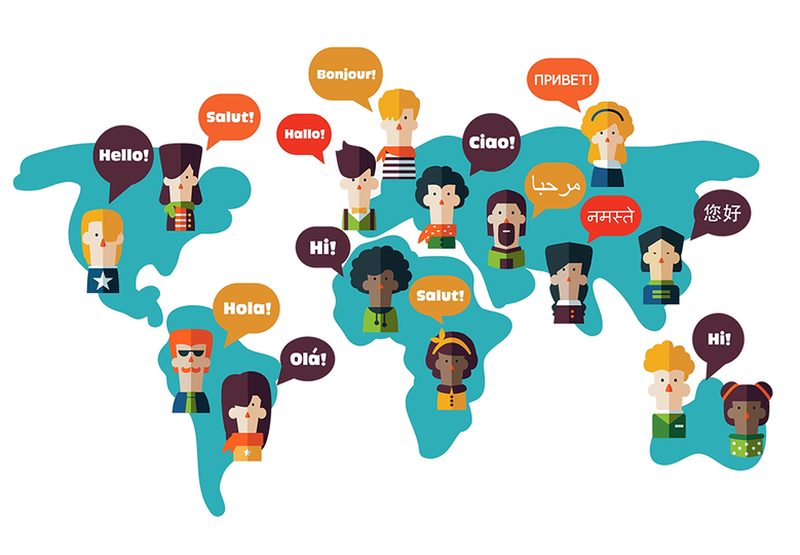
Ask what the world’s most spoken language is and you will get two different answers, because the question has two different meanings. By native speakers, Mandarin Chinese wins by a mile, with over 900 million people who grew up speaking it. By total speakers, including everyone who learned it as a second language, English takes the crown, spoken to some degree by as many as 1.5 billion people. The distinction matters, because it reveals how languages spread: some by birth, others by empire, trade and the internet.
How the rankings actually work
Linguists count two things. Native speakers, those who learned the language as children, favour Mandarin, Spanish (around 460 million natives) and Hindi. Total speakers add second-language users, which rockets English to the top, boosts French far beyond France, and lifts Hindi-Urdu, Arabic and Bengali. The two lists tell different stories: the native ranking reflects population size, while the total ranking reflects power, commerce and history. English did not become the world’s lingua franca because England is populous; it did so because of empire, then American economic and cultural dominance, then the internet.
The giants of the list
Mandarin’s dominance is a product of sheer demography: one country, one standardised language, 1.4 billion people. Spanish spread across the Americas through colonisation and now has more native speakers than English, concentrated in Latin America. Hindi, often counted with Urdu as Hindustani, rides India’s population. Arabic is really a family of dialects, from Moroccan to Gulf, unified by a classical written standard. Bengali, Portuguese (thanks to Brazil), Russian and French round out the top ten. Remarkably, just 23 languages are spoken by more than half of humanity, while thousands of others share the remainder.
Why English rules as a second language
English is the default language of international business, aviation, science, diplomacy and the web. A Brazilian engineer and a Korean client will most likely negotiate in English. This creates a self-reinforcing loop: everyone learns English because everyone else speaks it. The result is that most English conversations in the world now happen between non-native speakers, a fact that is slowly reshaping the language itself, as new varieties like Singlish and Hinglish coin their own norms. Some linguists predict English will fragment, as Latin once did, though global media may hold it together.
Which languages are rising and falling?
The list is not static. Hindi and Bengali are climbing with South Asia’s population. French could surge this century on the back of Africa’s demographics, with most of the world’s French speakers projected to be African. Arabic is growing fast. Meanwhile, Russian’s reach has shrunk with the Soviet Union’s fall, and Japanese is sliding as Japan’s population declines. Chinese officials promote Mandarin abroad through Confucius Institutes, but it remains hard for foreigners to learn, which limits its global spread. Demography is the slow tide that moves every ranking.
The politics of counting speakers
Every ranking hides an argument about what counts as a language. Chinese officials treat Mandarin and Cantonese as dialects of one language, which inflates Chinese totals; by the same logic, some linguists argue Hindi and Urdu are one tongue written in two scripts. Arabic’s hundreds of millions depend on counting mutually unintelligible dialects, from Moroccan to Iraqi, as a single language united by classical Arabic. Censuses add politics: governments have incentives to inflate or shrink the numbers for favoured tongues. The honest answer is that speaker counts are estimates built on contested definitions, and rival lists can differ by hundreds of millions. Treat any ranking as a map, not the territory.
FAQs
What is the most spoken language by native speakers? Mandarin Chinese, with over 900 million native speakers, far ahead of Spanish in second place.
How many languages exist in the world? Around 7,000, though counts vary because the line between a language and a dialect is often political.
Will English always be dominant? Probably for decades, but history shows lingua francas change; French and Latin once ruled, and demography favours other tongues long-term.
Languages are maps of human history: conquest, trade, migration and birth rates, all encoded in who speaks what. The current ranking, with Mandarin biggest by birth and English biggest by choice, captures the world as it is: demographically Asian, commercially globalised, and more connected than ever.
Source: Ethnologue
Related stories
View all →
ASML Says It Sold ‘Absolutely Nothing’ in Europe in 2026
ASML executive Frank Heemskerk says Europe accounted for 0% of the chip-equipment giant's sales in 2026, calling on the EU to create…

Ditching Diesel Would Gain Australia More Than AI Push
New analysis says replacing diesel with electricity would save Australia $35 billion in imports and cut freight costs by over 10 percent.…

Thousands March in Madrid Over Eviction of 87-Year-Old Woman
Tens of thousands marched in Madrid after 87-year-old Maricarmen Abascal was evicted from the apartment she had lived in for 71 years.…

Khabar 24h Editorial Desk — our explainers are prepared by the Khabar 24h editorial team using AI-assisted research tools, and every piece is reviewed by a human editor before publishing. We do not claim original reporting: our work is turning complex topics into simple, accurate summaries. Spotted an error? Write to contact@khabar24h.com — our corrections policy aims for same-day review.
More from this author →