Coral Reefs Explained: Why the Ocean’s Rainforests Are Bleaching
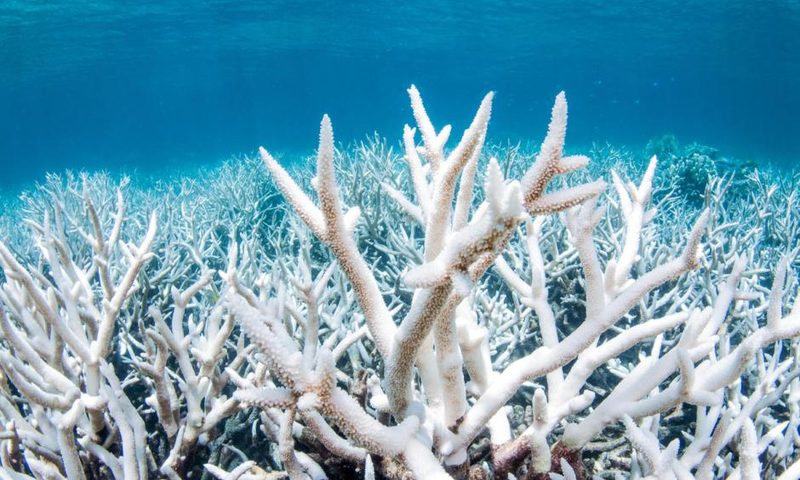
Coral reefs cover less than 1 per cent of the ocean floor yet support a quarter of all marine life, feed hundreds of millions of people, and protect coastlines worth billions. They are also among the most vulnerable ecosystems on earth: warming oceans are bleaching them at an unprecedented rate, and scientists warn most could be lost this century. This explainer shows why the ocean’s rainforests matter and whether they can survive.
Why reefs matter
Reefs are economic and ecological powerhouses. They nurture fisheries that feed coastal populations across the tropics, draw tourism worth tens of billions annually, and buffer shores against storms and erosion, a service valued in the hundreds of billions. Pharmaceutically, reef organisms yield compounds used in cancer and pain drugs. Culturally, they anchor the identities of Pacific islanders and coastal communities. A world without reefs would be poorer in every sense: hungrier, more exposed, less diverse, and less beautiful.
What bleaching is
Corals are animals living in symbiosis with algae that give them colour and food. When oceans warm, stressed corals expel the algae, turning ghostly white: bleaching. Mild bleaching is survivable if temperatures fall; prolonged heat kills. Mass bleaching events, once rare, have become routine: the Great Barrier Reef has bleached repeatedly since 2016, with recent events striking even previously spared regions. Ocean acidification, pollution, overfishing and crown-of-thorns starfish compound the damage. The science is brutally clear: reefs can handle many insults, but not sustained warming.
How bad is it?
About half the world’s shallow-water corals have been lost in recent decades, and the trajectory worsens with each fraction of warming. At 1.5C of global warming, scientists project 70-90 per cent of reefs gone; at 2C, over 99 per cent. Some reefs show resilience: the Red Sea’s corals tolerate extreme heat, and deeper mesophotic reefs may shelter species. But refugia cannot replace the vast tropical systems, and adaptation has limits against the pace of change. The honest assessment: most of the world’s iconic reefs will not survive current warming trajectories.
- Reefs support about 25% of marine species on under 1% of the ocean floor.
- Over 500 million people depend on reefs for food, income or coastal protection.
- The Great Barrier Reef has suffered mass bleaching in 2016, 2017, 2020, 2022 and 2024.
- At 2C warming, scientists project over 99% of coral reefs lost.
Can reefs be saved?
Local action helps: marine protected areas, fishing limits, pollution control and starfish culls buy reefs time and boost resilience. Restoration science is advancing: coral gardening, larval seeding, and breeding heat-tolerant super-corals show promise at small scales. But nothing local can substitute for cutting emissions: reefs are a global-warming problem requiring a global-warming solution. The emerging strategy is triage: protect the most resilient reefs as arks, restore what can be restored, and fight for the emissions cuts that are the only real cure.
What losing reefs means
Reef loss is not just an ecological tragedy but a human one: collapsed fisheries, unprotected coasts, lost livelihoods for some of the world’s poorest communities. Island nations that contributed least to warming will lose the ecosystems that define them. The reefs are also a moral test: they are the first entire ecosystems humanity may knowingly destroy, a preview of what unchecked warming does to the living world. Saving them requires the one thing the world struggles to do: act fast enough.
FAQs
What causes coral bleaching? Ocean warming stresses corals into expelling their symbiotic algae; prolonged heat kills them.
Can bleached coral recover? Yes, if temperatures drop quickly enough; but repeated or prolonged bleaching is usually fatal.
Will all reefs disappear? Under current trajectories, most shallow tropical reefs face collapse this century; only rapid emissions cuts can change that.
Coral reefs are the ocean’s rainforests, its pharmacies, its storm walls and its nurseries. They survived for millions of years and may not survive this century. Their fate is the clearest measure of whether humanity can protect what it claims to value.
The window for saving reefs is closing with the carbon budget. Marine scientists speak of triage: protecting resilient reefs as arks, restoring what can be restored, and buying time with local action. But every fraction of a degree matters more for corals than almost any other ecosystem. Their survival is the most sensitive test of whether the world will act on warming in time.
Compiled by the Khabar 24h Editorial Desk from publicly available sources.

Khabar 24h Editorial Desk — our explainers are prepared by the Khabar 24h editorial team using AI-assisted research tools, and every piece is reviewed by a human editor before publishing. We do not claim original reporting: our work is turning complex topics into simple, accurate summaries. Spotted an error? Write to contact@khabar24h.com — our corrections policy aims for same-day review.
More from this author →