Global Supply Chains Explained: How Your Phone Travels the World Before Reaching You
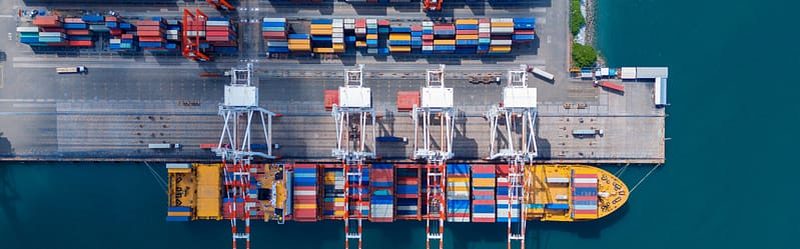
Before your smartphone reaches your hand, its journey spans a dozen countries: chips from Taiwan, screens from South Korea, batteries from China, assembly in Vietnam or India, software from California. Global supply chains are the invisible circulatory system of the modern economy, moving 25 trillion dollars of goods a year. They made products cheaper and the world richer, then broke spectacularly in the pandemic. This explainer traces how supply chains were built, why they snapped, and the race to rebuild them.
How the system was built
The modern supply chain rests on three revolutions. Containerisation, from the 1960s, slashed shipping costs by standardising cargo into steel boxes. Trade liberalisation, through the WTO and bilateral deals, tore down tariff walls. And China’s opening offered a billion workers at unbeatable cost, drawing factories into vast clusters. Companies chased efficiency to its logical extreme: just-in-time production with minimal inventory, single suppliers for critical parts, and globe-spanning networks optimised for cost. It worked brilliantly until it didn’t: the system was lean, but fragile.
Why it broke
COVID exposed every fragility at once. Factory shutdowns in China rippled worldwide; shipping containers piled up in wrong ports; a single stuck ship, the Ever Given in the Suez Canal, blocked 10 per cent of global trade. Semiconductor shortages idled car plants on every continent. Then geopolitics piled on: the Ukraine war spiked energy and grain; US-China tensions weaponised chips and rare earths. The lesson was brutal: optimising purely for cost had created single points of failure, and the bill for resilience had never been paid.
The resilience race
Governments and firms are now redesigning supply chains around a new mantra: just-in-case. Friend-shoring moves production to allies: Vietnam, India and Mexico boom as China alternatives. Reshoring brings chip fabs and battery plants home, subsidised by America’s CHIPS Act and Europe’s Green Deal. Companies dual-source critical parts, stockpile inventory, and map their suppliers’ suppliers. The buzzwords multiply: China-plus-one, de-risking, near-shoring. The costs are real: resilience means redundancy, and redundancy means higher prices, a quiet tax on the efficiency era.
- Global merchandise trade exceeds 25 trillion dollars annually.
- A single container ship can carry over 24,000 containers.
- The Ever Given’s 2021 Suez blockage held up an estimated 9 billion dollars of trade daily.
- China still dominates supply chains for batteries, solar panels and many electronics.
Who wins the rewiring?
The supply-chain rewiring is redrawing the economic map. Vietnam and India win factories; Mexico wins near-shored American production; Indonesia wins nickel processing. China, far from collapsing, is moving up the value chain into EVs and batteries while losing low-end assembly. The losers are consumers, facing higher prices, and the ideal of a single integrated global economy. Supply chains are becoming regionalised and politicised: efficiency still matters, but trust matters more.
Can the system be fixed?
Perfect resilience is impossible and unaffordable; the goal is robustness against likely shocks. That means diversification without full decoupling, transparency about dependencies, strategic stockpiles for essentials like chips and medicines, and international coordination so that export bans don’t cascade. The deeper question is philosophical: the world must decide how much efficiency to sacrifice for security. The phone in your pocket will keep travelling the world before reaching you, but its route is being redrawn by politics as much as by price.
FAQs
What is friend-shoring? Moving supply chains to allied or friendly countries to reduce geopolitical risk, as opposed to purely cost-driven offshoring.
Why were there chip shortages? Pandemic demand spikes met concentrated production and just-in-time inventories, leaving no slack when orders surged.
Will supply chains leave China? Partially: low-end manufacturing is shifting, but China’s ecosystems, skills and scale keep it central for years.
Global supply chains made the modern world possible: cheap goods, rising incomes, interconnected prosperity. Their breakdown taught a harder lesson: that the cheapest system is not the strongest, and that resilience, like insurance, looks wasteful until the day it isn’t.
The rewiring is still early, and its full costs are unknown. What is clear is that the era of single-minded efficiency is over: boards now discuss resilience alongside cost, and governments treat supply chains as national security. Consumers will pay more for that insurance, quietly, through higher prices. The phone in your pocket will keep travelling the world, but its journey will be shaped as much by geopolitics as by economics from now on.
Compiled by the Khabar 24h Editorial Desk from publicly available sources.

Khabar 24h Editorial Desk — our explainers are prepared by the Khabar 24h editorial team using AI-assisted research tools, and every piece is reviewed by a human editor before publishing. We do not claim original reporting: our work is turning complex topics into simple, accurate summaries. Spotted an error? Write to contact@khabar24h.com — our corrections policy aims for same-day review.
More from this author →