The IMF Explained: How the World’s Financial Firefighter Lends to Nations
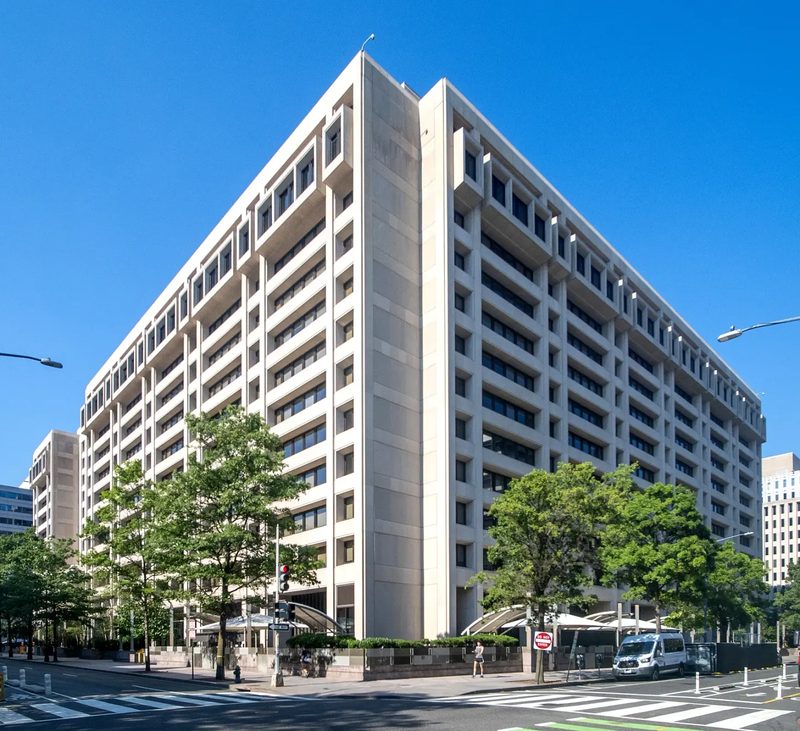
When a country runs out of money, there is one number it calls: the International Monetary Fund. From Argentina to Pakistan to Sri Lanka, the IMF has lent hundreds of billions to governments in crisis, attaching conditions that reshape entire economies. Loved by creditors, loathed by protesters, the Fund is the closest thing the world has to a financial firefighter. This explainer shows how IMF lending works, where the money comes from, and why its prescriptions spark such fury.
What the IMF is for
Created at Bretton Woods in 1944, the IMF exists to keep the global monetary system stable. Its 190 member countries pool resources, and when one faces a balance-of-payments crisis, running out of foreign currency to pay for imports or debts, it can borrow from the Fund. The IMF also conducts annual health checks, the Article IV consultations, on every member’s economy, and provides technical training to finance ministries and central banks. Think of it as part lender, part doctor, part credit-rating agency for sovereign states.
How a bailout works
A typical IMF programme starts with a government admitting it cannot pay its way and requesting help. Fund staff fly in, pore over the books, and negotiate a deal: loans disbursed in tranches, each released only if the country hits agreed targets. The loans are large, often several times a country’s quota, and carry lower interest than markets would charge a distressed borrower. But they come with conditionality: fiscal tightening, subsidy cuts, tax rises, privatisation, central bank reform. The logic is that the money must fix the underlying disease, not just mask the symptoms; the politics is that ordinary people feel the cure as austerity.
Where the money comes from
The IMF’s firepower, about 1 trillion dollars in total resources, comes from members’ quotas, essentially deposits proportional to economic size, plus borrowed backstops like the New Arrangements to Borrow. The United States is the largest shareholder with about 17 per cent of votes, giving it an effective veto over big decisions; Europe and Japan follow, while China’s share has grown with its economy. Voting power tracks money, which is why developing countries complain the Fund is run by its richest creditors. Quota reforms to give emerging economies more voice have advanced at a glacial pace.
- Argentina’s 2018 programme, at 57 billion dollars, was the largest in IMF history.
- The Fund’s total lending capacity is roughly 1 trillion dollars.
- 190 countries are members; each gets an annual economic check-up.
- IMF loans must be repaid, usually within 3-10 years depending on the facility.
Why the conditions are so hated
IMF conditionality has a brutal reputation, earned in episodes like the 1997 Asian crisis, where Fund-prescribed austerity deepened recessions, and the 2010s eurozone crisis, where Greece’s bailout became a byword for economic punishment. Critics argue one-size-fits-all austerity crushes growth, hits the poor hardest, and serves foreign creditors over citizens. The Fund has evolved: it now talks about inclusive growth, social spending floors and even capital controls, and its own research admitted it underestimated austerity’s damage. But when a country is out of options, the Fund remains the lender of last resort, and last resorts do not offer painless terms.
Does the IMF work?
The record is mixed but better than its caricature. Countries that complete IMF programmes usually stabilise: currencies steady, reserves rebuild, growth resumes. The failures tend to involve politics: governments that take the money but dodge the reforms, or programmes designed to protect creditors rather than citizens. Recent innovations, like the Resilience and Sustainability Trust for climate shocks, show an institution trying to stay relevant. The fundamental tension endures: the IMF exists because markets panic, and panic does not negotiate gently.
FAQs
Is the IMF a bank? Not exactly. It is a cooperative of member countries that lends its pooled resources to members in crisis; it does not take deposits or lend to individuals.
Why do countries hate IMF conditions? Because they typically require spending cuts, tax rises and subsidy removals that cause immediate hardship, even if meant to restore long-term stability.
Who controls the IMF? Voting power follows financial contributions, so the US, Europe and Japan dominate; the managing director has by tradition always been European.
The IMF is the institution the world loves to hate and cannot do without. As long as financial crises cross borders, someone must play firefighter, and for eighty years that someone has been the Fund in Washington.
Compiled by the Khabar 24h Editorial Desk from publicly available sources.

Khabar 24h Editorial Desk — our explainers are prepared by the Khabar 24h editorial team using AI-assisted research tools, and every piece is reviewed by a human editor before publishing. We do not claim original reporting: our work is turning complex topics into simple, accurate summaries. Spotted an error? Write to contact@khabar24h.com — our corrections policy aims for same-day review.
More from this author →