Singapore Explained: How a Tiny City-State Became an Economic Powerhouse
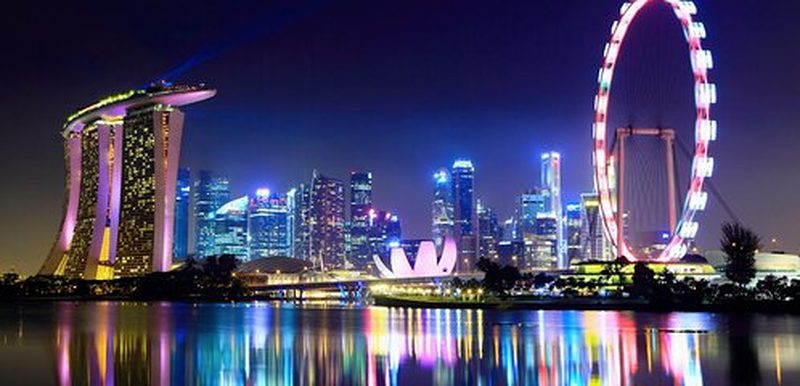
Singapore is a city-state smaller than New York City, with no natural resources, no farmland and no oil. Yet it ranks among the richest places on earth, with a per-capita income above that of the United States and a port that never sleeps. Singapore’s rise from a poor British colonial outpost to an economic powerhouse in a single generation is one of the most studied development stories of the modern era. This explainer traces how a tiny island with nothing to sell but its location built one of the world’s most successful economies.
An unlikely beginning
When Singapore was expelled from Malaysia in 1965, its prospects looked bleak. The new nation had about two million people, high unemployment, slum housing and no hinterland. Its founding prime minister, Lee Kuan Yew, bet everything on a simple insight: if Singapore could not feed itself from its own soil, it would have to earn its living from the world. The government courted multinational companies with tax breaks, built industrial estates before investors arrived, and invested relentlessly in education and English-language skills. Within two decades, electronics, petrochemicals and shipping had transformed the island’s economy.
The port that built a nation
Geography was Singapore’s first and greatest asset. Sitting astride the Strait of Malacca, through which a huge share of global trade passes between the Indian and Pacific Oceans, the island was a natural trading post. The government turned that accident of geography into a strategy, building one of the world’s most efficient ports and, later, one of Asia’s busiest airports. But the deeper strategy was institutional: rule of law, courts that enforce contracts, low corruption and a bureaucracy that actually works. For a multinational deciding where to put an Asian headquarters, Singapore offered something rare in the developing world: predictability.
How did Singapore get so rich?
The standard recipe combined free-market openness with heavy state direction. The government kept corporate taxes low and trade barriers minimal, but it also directed investment through state-linked companies like Temasek and GIC, which today manage hundreds of billions of dollars. Compulsory savings through the Central Provident Fund channelled workers’ wages into housing and retirement, while the Housing Development Board built homes for more than 80 per cent of the population. Education was treated as an economic weapon: streaming, teacher quality and relentless testing produced a workforce that multinationals trusted. By the 2000s, Singapore had layered finance, biotech and wealth management on top of its manufacturing base.
- Population: about 6 million people on 734 square kilometres of land.
- GDP per capita (PPP): among the top five in the world, ahead of the US.
- The Port of Singapore is routinely ranked among the world’s two busiest container ports.
- Changi Airport has been voted the world’s best airport more than a dozen times.
The price of the miracle
Singapore’s success came with trade-offs its critics never stop raising. The ruling People’s Action Party has governed continuously since independence, and while elections are free, the playing field tilts heavily toward the incumbents through libel suits, press controls and electoral engineering. Civil liberties are narrower than in Western democracies: chewing gum was famously restricted, drug trafficking carries the death penalty, and public protest requires a permit. Inequality has also grown, with a visible divide between wealthy professionals and the migrant workers who build the towers and clean the streets. Defenders argue that Singaporeans traded some freedoms for security and prosperity, and kept voting for the deal.
Can the model survive the future?
The challenges ahead are real. An ageing population is straining the low-tax, low-welfare model. Regional rivals like Vietnam and Indonesia are competing for the same manufacturing investment. And the city-state’s bet on being a neutral hub is tested by US-China rivalry, which forces it to balance carefully between its security partner and its largest trading partner. Singapore’s answer, so far, is to keep reinventing itself: into a green finance centre, a data and AI hub, and a biotech cluster. The island has made a habit of spotting the next wave early, from container shipping in the 1970s to semiconductors in the 1980s to fintech today.
FAQs
Is Singapore a democracy? It holds regular elections and the opposition has grown, winning a record share of seats in recent polls, but the PAP’s structural advantages mean it remains a dominant-party system rather than a fully competitive democracy.
Why is chewing gum banned in Singapore? The sale of chewing gum was restricted in 1992 after vandals stuck it on MRT train doors, disrupting services; it became a global symbol of the city-state’s strict rules.
What is Temasek? A state-owned investment company that owns stakes in Singapore’s biggest firms and invests globally; together with the sovereign wealth fund GIC, it manages the nation’s reserves.
Singapore’s story is often reduced to a slogan about discipline, but the real lesson is less glamorous: competent institutions, long-term planning and a willingness to adapt. A city with no resources became rich by being useful to the world, and by being reliable in a region where reliability was scarce. Whether that formula works for the next sixty years is the question now facing the generation that inherited the miracle.
Compiled by the Khabar 24h Editorial Desk from publicly available sources.
Related stories
View all →
Trump Rejects Iran’s Hormuz Offer as Coalition Downs Houthi Drones
US President Donald Trump has rejected Iran’s seven-day proposal to reopen the Strait of Hormuz, dimming hopes of a diplomatic breakthrough. ‘They…
Jaishankar Flags India’s Russia Sanctions Concerns to Rubio
External Affairs Minister S Jaishankar raised India's concerns over Russia sanctions in talks with US Secretary of State Marco Rubio.
Pezeshkian Calls Out Trump By Name In UN Speech
Iranian President Masoud Pezeshkian directly named Donald Trump in a defiant UN address, declaring "we did not bend the knee" amid rising…

Khabar 24h Editorial Desk — our explainers are prepared by the Khabar 24h editorial team using AI-assisted research tools, and every piece is reviewed by a human editor before publishing. We do not claim original reporting: our work is turning complex topics into simple, accurate summaries. Spotted an error? Write to contact@khabar24h.com — our corrections policy aims for same-day review.
More from this author →