Paralympics Explained: Classification, Sports and India’s Medal Winners
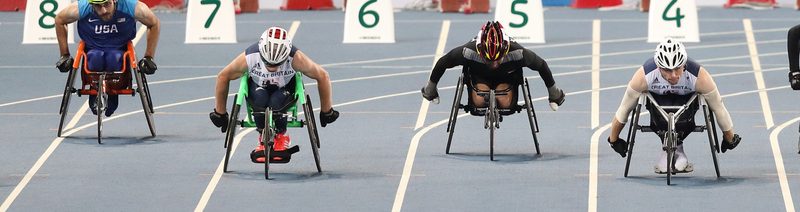
The Paralympic Games are the world’s third-largest sporting event, featuring over 4,000 athletes competing across 22 sports. Born from the rehabilitation of war veterans, the Paralympics have grown into an elite competition with world records, professional athletes and massive television audiences. This guide explains how the Games work, how classification keeps competition fair, and how India became a Paralympic power.
What are the Paralympic Games?
The Paralympics are the parallel Games for athletes with disabilities, held in the same host city as the Olympics, usually beginning a few weeks after the Olympic closing ceremony. The movement began in 1948, when Ludwig Guttmann organised a wheelchair archery competition for Second World War veterans at Stoke Mandeville Hospital in England, coinciding with the London Olympics. The first official Paralympic Games were held in Rome in 1960. Governed by the International Paralympic Committee, the Games now feature 22 summer sports, from athletics and swimming to wheelchair rugby and para badminton, contested by athletes with physical, visual and intellectual impairments.
How does classification work?
Classification is the Paralympics’ defining system: it groups athletes by how much their impairment affects their sport, ensuring fair competition. Each sport has its own classes. In para athletics, for example, classes T11 to T13 cover visual impairment, T35 to T38 cover coordination impairments like cerebral palsy, and T51 to T54 cover wheelchair racing, with lower numbers indicating greater impairment. Swimmers are classified S1 to S14 across physical, visual and intellectual categories. Athletes undergo functional testing by certified classifiers who assess muscle power, range of motion and coordination. Classification is sport-specific: the same athlete may compete in different classes in different sports. The system is periodically reviewed and occasionally controversial, but without it, meaningful Paralympic competition would be impossible.
Which sports are in the Paralympics?
The 22 summer sports blend familiar Olympic disciplines with Paralympic originals. Athletics and swimming are the giants, offering hundreds of medals across classifications. Then come the unique sports: wheelchair rugby, nicknamed murderball for its full-contact intensity; boccia, a precision ball sport for athletes with severe impairments; and goalball, designed for visually impaired athletes, where players track a bell-filled ball by sound. Para powerlifting, para badminton, para table tennis, wheelchair basketball and sitting volleyball all draw passionate followings. Each sport adapts its rules: visually impaired sprinters run with guides, wheelchair racers use specialised chairs, and blind football is played with an audible ball on a walled pitch.
How has India performed at the Paralympics?
India’s Paralympic story mirrors its Olympic one: slow start, then acceleration. Murlikant Petkar won India’s first Paralympic gold in swimming at Heidelberg 1972, then came decades of thin participation. The breakthrough arrived at Rio 2016 with four medals, including golds for javelin thrower Devendra Jhajharia and high jumper Mariyappan Thangavelu. Tokyo 2020 was transformative: 19 medals, including five golds, with shooter Avani Lekhara becoming the first Indian woman to win Paralympic gold. Paris 2024 shattered every record: 29 medals, India’s best-ever Paralympic haul, led by stars like Lekhara, javelin thrower Sumit Antil and archer Harvinder Singh. India is now a genuine Paralympic power, with a dedicated system of para sports centres and TOPS funding driving the rise.
Who are India’s Paralympic stars?
- Devendra Jhajharia: javelin golds at Athens 2004 and Rio 2016; India’s greatest Paralympian and a pioneer of the movement.
- Avani Lekhara: shooting golds at Tokyo and Paris; the first Indian woman Paralympic champion.
- Sumit Antil: javelin gold medallist and world record holder; among the most dominant para athletes in the world.
- Mariyappan Thangavelu: high jump gold at Rio 2016; an icon of the Tamil Nadu para sports system.
- Harvinder Singh: archery gold at Paris 2024; India’s first Paralympic archery champion.
How are the Paralympics different from the Olympics?
Beyond classification, the Paralympics have their own culture and logistics. Venues require extensive accessibility adaptations, from athlete villages to transport. Technology plays a bigger role: racing wheelchairs, running blades and throwing frames are engineered equipment governed by strict regulations. Media coverage, long minimal, has grown dramatically, with Paris 2024 drawing record audiences. Funding models differ: many nations run separate Paralympic programmes, though the trend is toward integration with Olympic setups. What the Games share with the Olympics is the essence: athletes who have trained for years performing at the absolute limit of human capability.
FAQs
When were the first Paralympic Games held? Rome 1960 hosted the first official Paralympics, growing from the Stoke Mandeville Games founded in 1948.
What do the T and F in para athletics classes mean? T stands for track events and F for field events, with numbers indicating the type and severity of impairment.
How many medals did India win at Paris 2024 Paralympics? India won 29 medals, its best-ever Paralympic performance.
From a hospital archery contest in 1948 to a global spectacle, the Paralympics prove that elite sport has no single body type. India’s rise within the movement shows what happens when talent finally gets the system it deserves.
Source: International Paralympic Committee

Khabar 24h Editorial Desk — our explainers are prepared by the Khabar 24h editorial team using AI-assisted research tools, and every piece is reviewed by a human editor before publishing. We do not claim original reporting: our work is turning complex topics into simple, accurate summaries. Spotted an error? Write to contact@khabar24h.com — our corrections policy aims for same-day review.
More from this author →