Online Chess vs Over-the-Board Chess: Key Differences Explained
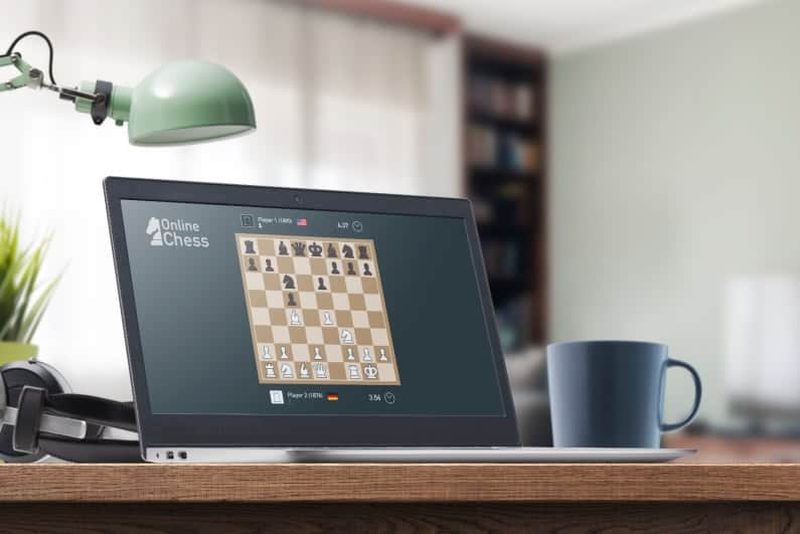
Chess is chess, whether the board is wood or pixels. Yet anyone who has played both knows they feel like different games. Online chess is fast, abundant and anonymous; over-the-board chess is slow, scarce and intensely personal. Each rewards different skills and punishes different weaknesses. This guide explains the key differences and how to thrive in both worlds.
How does the playing experience differ?
Over-the-board chess is a full sensory experience: the weight of the pieces, the opponent’s breathing, the tournament hall’s silence. You see the whole board at once, read body language, and feel time as a physical presence in the ticking clock. Online chess compresses all this into a screen: you see a 2D diagram, hear nothing, and play opponents you will never meet. The online game is far faster to access, a rated game starts in seconds at any hour, while over-the-board play demands travel, entry fees and whole weekends. Many players find they calculate better at a real board, where the position feels tangible, while others prefer the screen’s clarity and the absence of social pressure.
What rules change online?
Several rules work differently or disappear entirely. Touch-move, the iron law of over-the-board chess, does not exist online: you can hover, hesitate and change your mind until you release the piece. Illegal moves are simply blocked by the software rather than penalised. Draw claims like threefold repetition and the fifty-move rule are handled automatically. But online play introduces its own hazards: the mouse slip, where a misclick moves the wrong piece, has lost countless winning positions, and disconnections or lag can forfeit games. Premoves, moves entered in advance to save time, are a uniquely online skill that has no over-the-board equivalent. Each environment demands its own habits.
How do time controls differ?
Online chess skews dramatically faster. While over-the-board tournaments centre on classical time controls of hours per game, the online world runs on blitz and bullet: three-minute and one-minute games dominate. This changes the chess itself: online blitz rewards pattern recognition, opening preparation and mouse speed as much as calculation. Many strong classical players struggle online because their deep thinking becomes a liability with seconds on the clock. Conversely, online specialists sometimes underperform over the board, where patience and endurance matter more. The two formats are increasingly seen as distinct disciplines, with separate ratings, stars and audiences.
What about cheating?
Cheating is the dark shadow of online chess. With powerful engines a click away, the temptation to consult silicon assistance is constant, and platforms ban thousands of accounts using statistical detection: move-matching with engine choices, inhuman consistency and suspicious timing patterns. High-stakes online events now use webcam monitoring, screen sharing and delayed broadcasts. Over-the-board cheating exists too, usually via hidden devices, and has produced scandals that shook the sport, but the physical presence of arbiters and opponents makes it far harder. The integrity battle defines online chess culture: every surprising result invites suspicion, and platforms invest heavily in fair-play systems to preserve trust.
Which is better for improvement?
Each format develops different muscles. Online chess offers volume: you can play dozens of rated games a week, experiment with openings and drill tactics endlessly, all with instant engine analysis after every game. It is the ultimate training ground for pattern recognition and speed. Over-the-board chess offers depth: long time controls force genuine calculation, tournament pressure builds competitive character, and post-game analysis with real opponents teaches lessons no engine can. Coaches recommend both: online play for reps and experimentation, over-the-board events for serious testing. The players improving fastest today use each for what it does best.
Can you be good at one but not the other?
Absolutely, and the gap can be striking. Some grandmasters dominate classical tournaments but struggle in online blitz arenas against younger, faster specialists. Some online stars with sky-high blitz ratings have never earned over-the-board titles. The skills overlap but are not identical: mouse speed, premove technique and bullet instincts do not transfer to a classical board, while deep endgame technique and opening preparation for long games matter less in three-minute chaos. Recognising which game you are playing, and training specifically for it, is the first step to mastering either.
FAQs
Are online chess ratings the same as FIDE ratings? No. Online ratings use different player pools and are typically inflated; only FIDE over-the-board ratings count for official titles.
What is a mouse slip? An accidental wrong move caused by misclicking, a uniquely online blunder that has decided countless blitz games.
Can you get titled playing only online? Official FIDE titles require over-the-board results, though platforms award their own online titles and recognition.
Wooden pieces or pixels, the sixty-four squares remain the same, but the games around them differ profoundly. Play both, respect their differences, and you will become a more complete chess player.
Source: Chess.com fair play and events guide

Khabar 24h Editorial Desk — our explainers are prepared by the Khabar 24h editorial team using AI-assisted research tools, and every piece is reviewed by a human editor before publishing. We do not claim original reporting: our work is turning complex topics into simple, accurate summaries. Spotted an error? Write to contact@khabar24h.com — our corrections policy aims for same-day review.
More from this author →