Indian Football Team: History, FIFA Rankings and the Road to World Cup Qualification
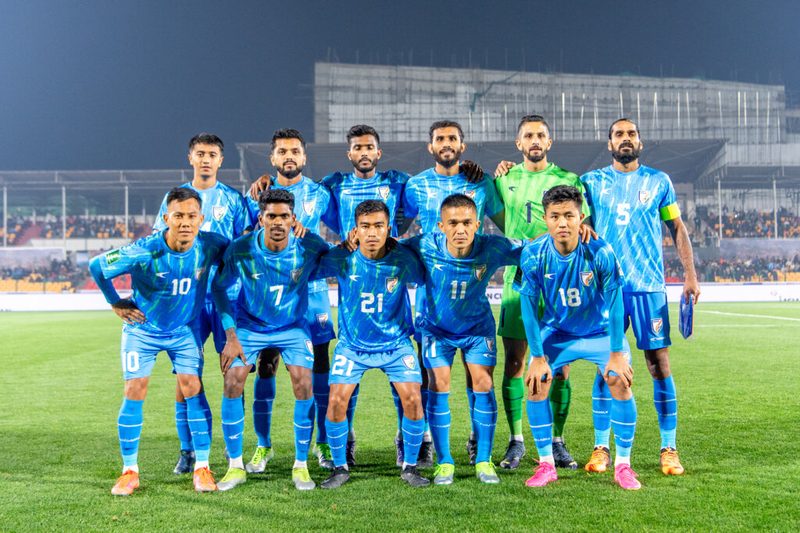
India is a cricket-mad nation that harbours a football dream: to see the Blue Tigers, the national football team, compete at the FIFA World Cup. The journey has been long and winding, from Asian pioneers in the mid-20th century through decades of decline to a modern era of slow, uneven progress. Understanding the Indian football team’s story means understanding both how far the game has come and how far it still has to go. This guide traces the history, explains the FIFA rankings journey, and maps the road to World Cup qualification.
History: pioneers, peak and decline
Indian football’s golden age came in the 1950s and 60s, when the team was among Asia’s best. India won gold at the Asian Games in 1951 and 1962, finished fourth at the 1956 Melbourne Olympics, still the best Olympic football result by an Asian team at the time, and played a brand of skilful, attacking football admired across the continent. The legendary story of India qualifying for the 1950 World Cup but not participating, officially attributed to travel costs and scheduling, remains a bittersweet what-if. From the 1970s, Indian football declined as the game professionalised globally: poor infrastructure, administrative neglect and the overwhelming rise of cricket pushed football to the margins. The national team became a non-factor in Asian football for decades, qualifying rarely for continental championships and never threatening World Cup qualification.
The FIFA rankings journey
The FIFA rankings tell the story of modern Indian football in numbers. The team sank to its lowest depths in the 2010s, at one point ranked near 170 in the world, a humiliation for a nation of over a billion people. The subsequent climb, driven by better organisation, the ISL’s launch and improved results in Asian competition, took India back into the top 100, a psychologically important threshold. Rankings in football’s system reward consistent results against decent opposition, which is why scheduling friendlies and performing in the AFC Asian Cup matter so much. The ranking determines seedings for qualification draws, which in turn shape how hard the road to the World Cup becomes: higher-ranked teams get kinder draws, creating a virtuous circle that India is still trying to enter. Breaking into Asia’s top tier of rankings remains the prerequisite for everything else.
The road to World Cup qualification
World Cup qualification in Asia runs through the AFC’s gruelling multi-round system. India typically enters in the second round, drawn into groups where the winners and best runners-up advance. Progress means surviving home-and-away ties against Asia’s middle powers and, eventually, the continent’s giants: Japan, South Korea, Iran, Australia and Saudi Arabia. The expanded 48-team World Cup has increased Asia’s slots, offering India its most realistic pathway ever, but the gap to Asia’s elite remains significant. The blueprint for closing it is well understood: more Indian players getting regular high-level club football, better youth development, improved sports science, and consistent exposure to top Asian opposition. Recent Asian Cup appearances have provided harsh but valuable lessons about the intensity required. Qualification remains a long-term project, measured in development cycles rather than campaigns.
Where the team stands today
The current era is one of transition and debate. A golden generation of players, led by the country’s greatest goalscorer, carried the team through its most stable period in decades, but succession planning is now the critical question. The ISL provides a professional platform, yet the limited number of Indian starters in some teams and the reliance on foreign players in key positions concern national-team planners. Coaching has seen foreign expertise come and go, with philosophies shifting between pragmatic defending and progressive possession. Fan expectations, fuelled by the passion of football’s strongholds in Kerala, Bengal, Goa and the Northeast, demand progress that the structural realities make slow. The dream endures because the potential is real: a nation this large, with this much passion, should be capable of far more. Turning potential into qualification is Indian football’s defining challenge.
- Asian Games gold in 1951 and 1962; fourth place at the 1956 Olympics.
- FIFA ranking fell near 170 in the 2010s before climbing back toward the top 100.
- World Cup qualification runs through the AFC’s multi-round system against Asia’s best.
- The expanded 48-team World Cup gives Asia more slots and India its best-ever chance.
FAQs
Has India ever played at the FIFA World Cup? No. India qualified for the 1950 World Cup but withdrew before the tournament; the team has never appeared at the finals.
What is India’s best FIFA ranking? The team has climbed back toward the top 100 in recent years after sinking near 170 in the mid-2010s.
How can India qualify for the World Cup? By progressing through the AFC qualification rounds, finishing among Asia’s top teams in the final qualifying stage.
The Blue Tigers carry the hopes of a football-loving nation that knows its team should be better. The road to the World Cup is long, but for the first time in decades, it is visible.
Compiled by the Khabar 24h Editorial Desk from publicly available sources.

Khabar 24h Editorial Desk — our explainers are prepared by the Khabar 24h editorial team using AI-assisted research tools, and every piece is reviewed by a human editor before publishing. We do not claim original reporting: our work is turning complex topics into simple, accurate summaries. Spotted an error? Write to contact@khabar24h.com — our corrections policy aims for same-day review.
More from this author →