Landmark Supreme Court Judgments That Shaped Indian Politics
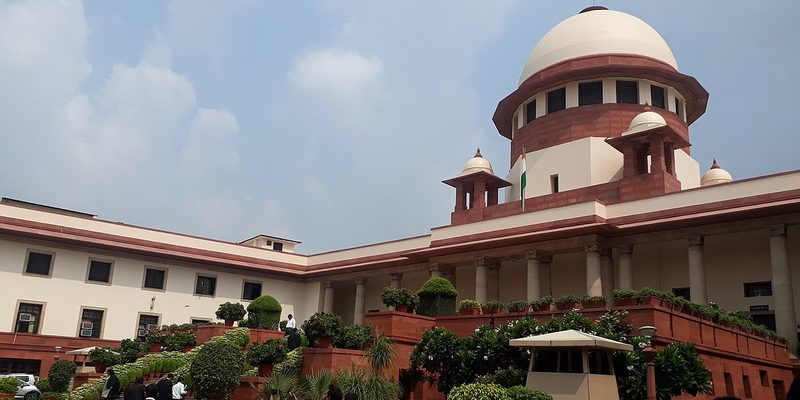
India’s Supreme Court has shaped the country’s politics as profoundly as any election. Through landmark judgments, it has defined the limits of Parliament’s power, expanded fundamental rights beyond the founders’ imagination, and intervened in everything from elections to the environment. This is the story of the cases that made the Court India’s most consequential unelected institution.
How did the basic structure doctrine emerge?
The Court’s most famous creation came from crisis. In Golaknath (1967) the Court barred Parliament from curtailing fundamental rights; Parliament responded with amendments asserting unlimited power. The confrontation peaked in Kesavananda Bharati (1973), decided 7-6 at the height of Indira Gandhi’s dominance: Parliament may amend the constitution, the Court held, but cannot destroy its basic structure — democracy, secularism, federalism, judicial review. During the Emergency, ADM Jabalpur (1976) disgraced the Court by upholding detention without trial; Minerva Mills (1980) then cemented basic structure as the constitution’s unamendable core. No doctrine has constrained Indian politics more.
How did the Court expand citizens’ rights?
After the Emergency, the Court reinvented itself as the people’s champion. Maneka Gandhi (1978) transformed Article 21’s right to life into a guarantee of due process and dignity, the fount of dozens of later rights — privacy (Puttaswamy, 2017), livelihood, clean environment, speedy trial. Vishaka (1997) legislated workplace sexual-harassment guidelines where Parliament had not. Navtej Johar (2018) decriminalised homosexuality; Joseph Shine (2018) struck down adultery as a crime. Through public interest litigation, the Court opened its doors to any citizen, becoming the forum of last resort for causes legislatures ignored.
How has the Court policed democracy itself?
The Court has repeatedly refereed the democratic process. Indira Gandhi v. Raj Narain (1975) — the election case that triggered the Emergency — showed the Court at the centre of political storms. T.N. Seshan-era judgments empowered the Election Commission. Lily Thomas (2013) disqualified convicted legislators immediately, reshaping criminal-politics law. NOTA (2013) gave voters the right to reject all candidates. The electoral-bonds judgment (2024) struck down anonymous political donations as violating voters’ right to information — a landmark for transparency. Each intervention drew applause and accusations of overreach in equal measure.
What are the great controversies?
The Court’s power invites backlash.
- Judicial overreach: critics say PIL and activism turned judges into policymakers — banning firecrackers, managing cricket, overseeing highway liquor bans.
- The collegium: judges appointing judges, born of Second Judges (1993) and Third Judges (1998) cases, is globally unique and democratically questionable.
- Emergency’s shadow: ADM Jabalpur remains the Court’s original sin, invoked whenever it defers to power.
- Selective courage: the Court is bold on some issues (privacy, electoral bonds) and cautious on others (Article 370’s abrogation took years to hear).
- Pending justice: 80,000+ pending cases in the Supreme Court alone mock the promise of speedy justice.
Through these judgments, the Court became what the founders hoped and feared: the constitution’s guardian, democracy’s referee, and occasionally its unelected legislator. Indian politics cannot be understood without the cases that redrew its boundaries.
The Court and the executive: an eternal duel
Behind the judgments lies a permanent power struggle. Indira Gandhi superseded judges and the Emergency punished independence; the Janata interlude restored it; the collegium era asserted judicial supremacy in appointments; recent governments have pushed back through delayed appointments, public criticism and the unimplemented NJAC. Each phase follows the same script: the executive tests the Court’s boundaries, the Court pushes back, and a new equilibrium emerges. The duel is not dysfunction — it is the separation of powers in action, with India’s democracy as the prize.
What is the Court’s most criticised judgment?
ADM Jabalpur (1976), upholding Emergency detentions without trial — the Court’s original sin, later effectively overruled and repeatedly invoked as a warning.
FAQs
What is the basic structure doctrine?
The 1973 Kesavananda Bharati ruling that Parliament cannot amend the constitution’s essential features — democracy, secularism, federalism, judicial review.
Which case expanded the right to life?
Maneka Gandhi (1978), which read Article 21 as guaranteeing due process and dignity — the foundation for privacy, livelihood and environmental rights.
What did the electoral bonds judgment do?
In 2024 the Court struck down anonymous electoral bonds as violating voters’ right to information, a landmark for political-funding transparency.
Source: Supreme Court Observer

Khabar 24h Editorial Desk — our explainers are prepared by the Khabar 24h editorial team using AI-assisted research tools, and every piece is reviewed by a human editor before publishing. We do not claim original reporting: our work is turning complex topics into simple, accurate summaries. Spotted an error? Write to contact@khabar24h.com — our corrections policy aims for same-day review.
More from this author →