The Israel-Palestine Conflict Explained: A Century of History in Brief
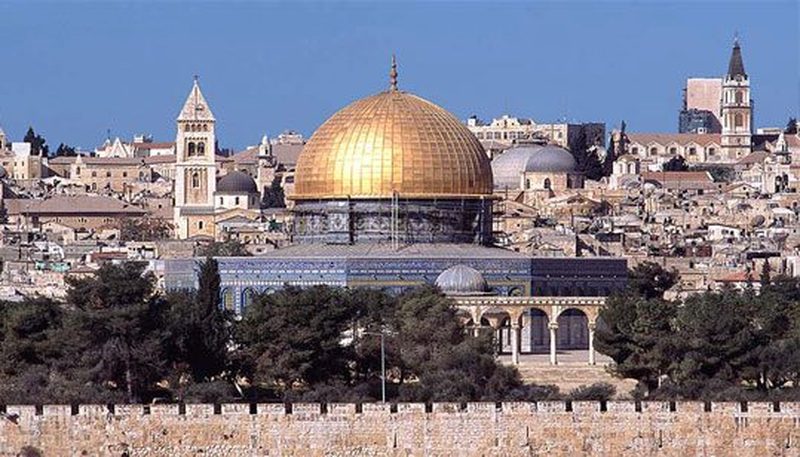
The Israeli-Palestinian conflict, now well over a century old, is among the world’s most intractable disputes — a clash of two national movements over the same land, sacred to three religions. From the Balfour Declaration of 1917 through wars, intifadas, the Oslo peace process and the Gaza war that began in October 2023, every attempt at resolution has foundered on the same core issues: borders, Jerusalem, refugees and security. This is a brief history of how the conflict was made.
How did it begin?
The roots lie in the late 19th century, when the Zionist movement sought a Jewish homeland in Ottoman Palestine, then home to an Arab majority. Britain’s 1917 Balfour Declaration promised a Jewish national home, and after the First World War the League of Nations gave Britain the Palestine Mandate. Jewish immigration surged, especially as Nazism rose; Arab resistance turned violent in the 1936-39 revolt. After the Holocaust, the UN’s 1947 partition plan proposed separate Jewish and Arab states; Jewish leaders accepted, Arab leaders rejected it. When Israel declared independence in May 1948, neighbouring Arab armies invaded — the first of many wars — and some 700,000 Palestinians fled or were expelled, the Nakba (catastrophe) that defines Palestinian memory.
1967: the war that shaped everything
The Six-Day War of June 1967 transformed the conflict. Israel captured the West Bank and East Jerusalem from Jordan, Gaza and Sinai from Egypt, and the Golan Heights from Syria — placing millions of Palestinians under Israeli military occupation. UN Resolution 242 called for withdrawal from occupied territories in exchange for peace, the land-for-peace formula underlying all subsequent diplomacy. The occupation, now approaching six decades, with expanding Israeli settlements deemed illegal under international law, is the conflict’s central grievance and the issue on which every peace plan has broken.
Why did the peace process fail?
The 1993 Oslo Accords were the high-water mark: Israel and the PLO recognised each other, and the Palestinian Authority was created to govern parts of the West Bank and Gaza. But Oslo deferred the hardest issues — Jerusalem, refugees, borders, settlements — to final-status talks that never concluded. The assassination of Yitzhak Rabin in 1995, the second intifada (2000-2005), Hamas’s 2006 election win and 2007 Gaza takeover, and relentless settlement expansion destroyed trust. The 2000 Camp David summit’s failure became the template: each side concluded the other was not a partner, and leaders stopped trying.
The Gaza war and its aftermath
Hamas’s October 7, 2023 attack — killing some 1,200 Israelis, mostly civilians — and Israel’s devastating Gaza campaign, killing tens of thousands of Palestinians, marked the conflict’s bloodiest chapter and shattered remaining assumptions. The war drew in Hezbollah, the Houthis and Iran, triggered South Africa’s genocide case at the ICJ, and polarised the world. Ceasefires have proven fragile, Gaza lies in ruins, and the hostage question haunts Israeli politics.
- Two-state solution: still the international consensus, but settlements and political realities have made it look increasingly notional.
- One-state reality: critics argue a single state already exists between the river and the sea — just an unequal one.
- Regional dimension: the Abraham Accords showed Arab states will normalise with Israel, but Gaza proved the Palestinian issue cannot be bypassed.
- Generational change: younger Israelis and Palestinians, and younger Americans, view the conflict through very different lenses than their elders.
A century of history teaches one lesson above all: the conflict persists not for lack of solutions — the outlines of a deal have been known for decades — but for lack of leaders able and willing to pay the political price. Until that changes, history will keep repeating itself.
India’s balancing act
India’s position reflects decades of careful calibration: historic support for the Palestinian cause — it was the first non-Arab state to recognise Palestine — combined with a transformed strategic partnership with Israel spanning defence, technology and agriculture. New Delhi condemned the October 7 attacks, called for civilian protection in Gaza, and continues to back a two-state solution. The stance satisfies neither partisanship but preserves ties with both Jerusalem and the Arab world, a microcosm of India’s wider multi-alignment.
FAQs
What was the Nakba?
The 1948 catastrophe in Palestinian memory: some 700,000 Palestinians fled or were expelled during Israel’s war of independence, becoming refugees.
What is the two-state solution?
The long-standing international proposal for an independent Palestine alongside Israel, based on 1967 borders with negotiated land swaps and shared Jerusalem.
Why did the Oslo peace process fail?
It deferred Jerusalem, refugees, borders and settlements to final talks that never succeeded, while violence and settlement expansion destroyed mutual trust.
Compiled by the Khabar 24h Editorial Desk from publicly available sources.

Khabar 24h Editorial Desk — our explainers are prepared by the Khabar 24h editorial team using AI-assisted research tools, and every piece is reviewed by a human editor before publishing. We do not claim original reporting: our work is turning complex topics into simple, accurate summaries. Spotted an error? Write to contact@khabar24h.com — our corrections policy aims for same-day review.
More from this author →