The African Union Explained: How Africa’s Continental Body Functions
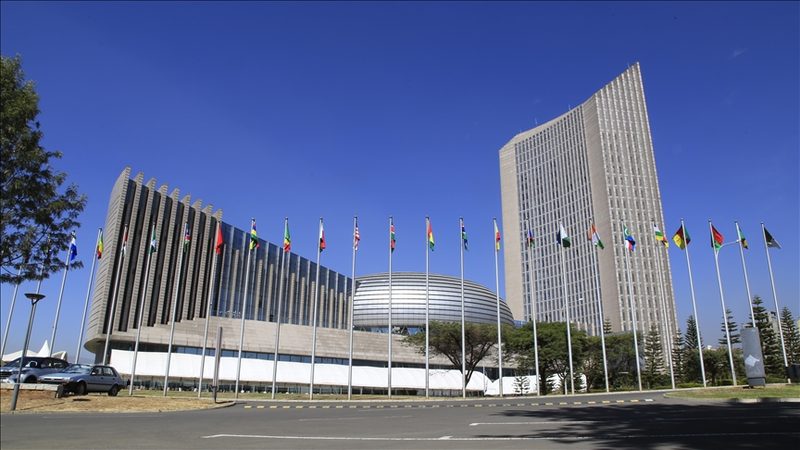
The African Union, headquartered in Addis Ababa, is the continent’s premier political body: 55 member states spanning 1.4 billion people, with a commission, a parliament, a peace and security council and ambitions modelled partly on the European Union. Born in 2002 from the ashes of the Organisation of African Unity, the AU promised a break with the old doctrine of non-interference — including a landmark right to intervene against genocide and war crimes. Two decades on, its record blends genuine achievement with familiar frustrations.
From the OAU to the AU: why the change?
The Organisation of African Unity, founded in 1963, was built on two principles: decolonisation and non-interference. It helped liberate the continent but stood by during Idi Amin’s Uganda, Bokassa’s Central African Empire and the Rwandan genocide — the failures that discredited it. Libya’s Muammar Gaddafi championed its replacement, and the 2000 Constitutive Act created the African Union with a radical innovation: Article 4(h) grants the AU the right to intervene in a member state in cases of war crimes, genocide and crimes against humanity. It was the world’s first treaty enshrining the responsibility to protect.
How is the AU structured?
The Assembly of heads of state is the supreme body, meeting twice yearly. The AU Commission, led by a chairperson, functions as the secretariat and executive. The Peace and Security Council — 15 rotating members — authorises peace operations and sanctions. The Pan-African Parliament in Midrand, South Africa, is currently advisory but intended to become fully legislative. Specialised agencies cover everything from disease control (the Africa CDC, prominent during Ebola and Covid-19) to the African Continental Free Trade Area secretariat in Accra.
What has the AU achieved?
The balance sheet is genuinely mixed. On peace and security, AU missions in Somalia (AMISOM/ATMIS), Darfur and the Comoros helped stabilise conflicts the UN would not touch, though funding dependence on the EU and UN persists. The AU’s suspension of coup regimes — applied after takeovers in Mali, Burkina Faso, Niger and Gabon — established a democratic norm, even as the Sahel juntas defied it by forming their own rival alliance. The 2018 launch of the African Continental Free Trade Area, creating the world’s largest free-trade zone by membership, is the AU’s flagship economic achievement, and the AU’s 2023 admission to the G20 crowned its diplomatic coming-of-age.
Why does the AU struggle?
Structural weaknesses hobble the institution.
- Money: member states chronically underpay dues; a 2016 levy to fund the AU itself has been patchily implemented, leaving donors disproportionate influence.
- Sovereignty: the non-interference reflex survives — Article 4(h) has never been invoked, and the AU treaded carefully on Ethiopia’s Tigray war.
- Implementation gap: grand summits produce protocols that members sign and ignore; the Pan-African Parliament remains toothless.
- Division: rivalries — Morocco vs Algeria, the Sahel split, competing regional blocs — repeatedly paralyse collective action.
Yet the AU endures because Africa needs a continental voice: in climate negotiations, in G20 rooms, in the scramble for critical minerals. Its project — unity without uniformity across 55 states — was always the hardest in multilateralism. Judged against that bar, mere survival with growing authority is no small thing.
Reform or irrelevance: the AU’s choice
The AU’s own reformers, led by Rwanda’s Paul Kagame, proposed a brutally honest diagnosis: the Union must fund itself, focus on fewer priorities and enforce decisions. Implementation has been partial — the import levy crawls, summits still sprawl across dozens of agenda items. The 2025-26 period offers a window: G20 membership gives the AU a global stage, AfCFTA implementation tests its economic seriousness, and the Sahel split forces a reckoning with its peace-and-security credibility. Reform or drift — the continent’s verdict on its Union will shape Africa’s century.
FAQs
What is the difference between the OAU and the AU?
The OAU (1963-2002) prioritised decolonisation and non-interference; the AU added intervention rights against atrocities, deeper economic integration and continental institutions.
Has the AU ever intervened militarily?
It has authorised peace missions in Somalia, Darfur, the Comoros and elsewhere, but has never invoked its Article 4(h) right to intervene against a member government.
What is the African Continental Free Trade Area?
Launched in 2018, the world’s largest free-trade area by country membership, aiming to boost intra-African trade by cutting tariffs across the continent.
Source: Institute for Security Studies

Khabar 24h Editorial Desk — our explainers are prepared by the Khabar 24h editorial team using AI-assisted research tools, and every piece is reviewed by a human editor before publishing. We do not claim original reporting: our work is turning complex topics into simple, accurate summaries. Spotted an error? Write to contact@khabar24h.com — our corrections policy aims for same-day review.
More from this author →