How ASEAN Works: Southeast Asia’s Consensus-Driven Bloc
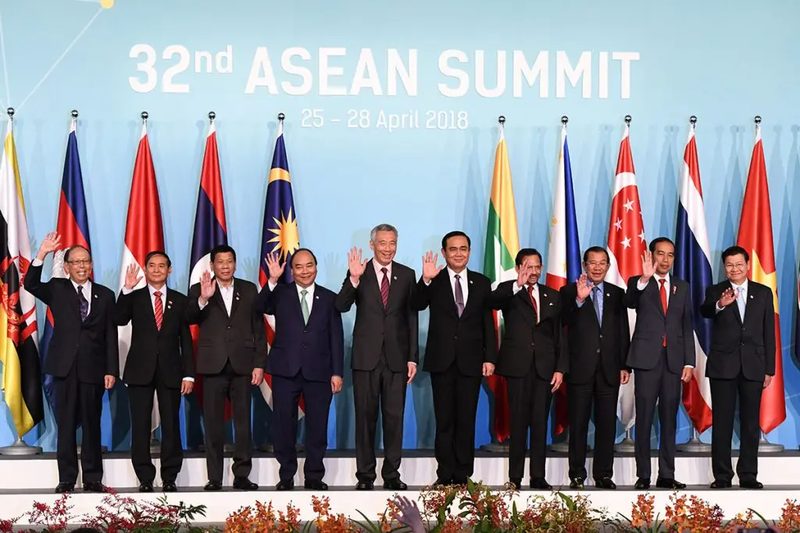
The Association of Southeast Asian Nations brings together eleven countries — from Indonesia’s 280 million people to Brunei’s 450,000 — in one of the world’s most durable regional blocs. Founded in 1967 as an anti-communist club, ASEAN has grown into the diplomatic centre of the Indo-Pacific, courted by Washington and Beijing alike. Its operating system is consensus, non-interference and quiet diplomacy — principles that have kept it united for decades but increasingly strain under great-power rivalry and internal crises.
How did ASEAN begin?
ASEAN was founded in Bangkok in 1967 by Indonesia, Malaysia, the Philippines, Singapore and Thailand, at the height of the Vietnam War and Indonesia’s confrontation with Malaysia. The original purpose was modest: prevent conflict among members and present a united front against communist expansion. Brunei joined in 1984, Vietnam in 1995, Laos and Myanmar in 1997, and Cambodia in 1999, completing the ten. The bloc’s founding genius was turning former adversaries — including Vietnam, once the region’s battlefield — into partners through relentless dialogue.
What is the ASEAN Way?
The ASEAN Way is the bloc’s famous diplomatic culture: decisions by consensus, non-interference in members’ internal affairs, and conflict avoidance through consultation rather than confrontation. It has real achievements to its credit — Southeast Asia has avoided full-scale interstate war for decades, no small feat in a region once defined by it. But the same principles paralyse the bloc when members disagree: a single dissenting state can block joint statements, as Cambodia has done on South China Sea language under Chinese pressure, and non-interference has left ASEAN impotent over Myanmar’s post-2021 civil war.
How does ASEAN make decisions?
The summit of heads of state is the supreme body, supported by foreign-minister meetings and a Jakarta-based secretariat. ASEAN also convenes wider forums — the East Asia Summit, the ASEAN Regional Forum and ASEAN Plus Three — which make it the convenor of Indo-Pacific diplomacy: American, Chinese, Indian, Japanese and Russian leaders all come to ASEAN’s table. Economically, the bloc has built the ASEAN Free Trade Area and the Regional Comprehensive Economic Partnership, the world’s largest trade deal, anchoring Southeast Asia in global supply chains.
The economic miracle inside the diplomacy
ASEAN’s quietest achievement is economic. The bloc’s combined GDP makes it one of the world’s largest economies, and it has become the prime beneficiary of the global supply-chain reshuffle: as firms diversify away from China, Vietnam, Thailand, Malaysia and Indonesia absorb electronics, automotive and textile investment. The ASEAN Free Trade Area eliminated most intra-bloc tariffs over the past two decades, and RCEP — covering ASEAN plus China, Japan, South Korea, Australia and New Zealand — created the world’s largest trading bloc by population and GDP. For all its political caution, ASEAN integrated its economies with a thoroughness that puts most regional blocs to shame.
The contrast with South Asia is stark, and instructive for Indian readers. SAARC — ASEAN’s South Asian counterpart — has been comatose for years, its summits hostage to India-Pakistan hostility. Intra-SAARC trade is a fraction of intra-ASEAN trade. The difference is not culture but design and circumstance: ASEAN’s founding members chose economic cooperation without demanding political trust first, and no single bilateral feud was allowed to hold the bloc hostage. SAARC’s consensus rule, combined with an intractable core rivalry, produced paralysis instead.
India and ASEAN: the Act East ledger
India has courted ASEAN since the Look East policy of the 1990s, upgraded to Act East in 2014. The relationship is now a comprehensive strategic partnership with a free trade agreement in goods — currently under review, since India believes the deal disproportionately benefited ASEAN exporters while its own gains disappointed. Beyond trade, India sells ASEAN on connectivity (the India-Myanmar-Thailand highway, stalled but symbolic), digital public infrastructure, and a shared interest in a multipolar Indo-Pacific that resists Chinese dominance without becoming an American camp. The honest assessment: the strategic convergence is real, the economic integration lags, and closing that gap is the work of the next decade.
What are ASEAN’s biggest tests?
Three crises define the bloc’s current stress test.
- Myanmar: the 2021 coup and ensuing civil war shattered ASEAN’s credibility; its Five-Point Consensus peace plan has been ignored by the junta.
- South China Sea: members’ overlapping claims with China divide the bloc between claimants like the Philippines and Vietnam and states closer to Beijing.
- Great-power rivalry: US-China competition forces members to hedge, and ASEAN’s cherished centrality risks becoming irrelevance if the big powers bypass it.
- Expansion: Timor-Leste’s long-delayed admission, finalised in 2025, tests whether the bloc can integrate its poorest member.
ASEAN’s defenders argue that its very survival is the achievement: a region of deep diversity that talks instead of fights. Its critics reply that talk without action is exactly the problem. As the Indo-Pacific’s strategic centre of gravity, ASEAN can no longer afford to merely convene — it must choose, and choosing is what the ASEAN Way was designed to avoid.
The South China Sea code of conduct: ASEAN’s longest negotiation
For over two decades, ASEAN has negotiated a Code of Conduct with China to manage South China Sea disputes — and for over two decades, the talks have inched forward without conclusion. Claimant members want binding rules restraining Chinese coercion; Beijing prefers a code that constrains outside powers like the United States while preserving its own freedom of action. The Philippines’ recent confrontations with Chinese vessels have added urgency, but also exposed the bloc’s limits: ASEAN can facilitate talks, yet the outcome depends on Beijing’s willingness to be bound. The negotiation is the ASEAN Way in miniature — dialogue as both method and substitute for resolution.
FAQs
Which countries are in ASEAN?
The eleven members are Brunei, Cambodia, Indonesia, Laos, Malaysia, Myanmar, the Philippines, Singapore, Thailand, Timor-Leste and Vietnam — Timor-Leste was admitted as the 11th member in 2025.
What is the ASEAN Way?
The bloc’s diplomatic culture of consensus decision-making, non-interference in internal affairs and quiet consultation rather than public confrontation.
Why can’t ASEAN solve the Myanmar crisis?
Non-interference and consensus rules prevent coercive action, and the junta has ignored ASEAN’s Five-Point Consensus peace plan while some members shield it.
What is RCEP and is India in it?
The Regional Comprehensive Economic Partnership is the world’s largest trade deal, centred on ASEAN. India participated in negotiations but withdrew in 2019 over concerns about Chinese imports and inadequate safeguards.
Compiled by the Khabar 24h Editorial Desk from publicly available sources.

Khabar 24h Editorial Desk — our explainers are prepared by the Khabar 24h editorial team using AI-assisted research tools, and every piece is reviewed by a human editor before publishing. We do not claim original reporting: our work is turning complex topics into simple, accurate summaries. Spotted an error? Write to contact@khabar24h.com — our corrections policy aims for same-day review.
More from this author →