Sri Lanka’s Executive Presidency: How the System Concentrated Power
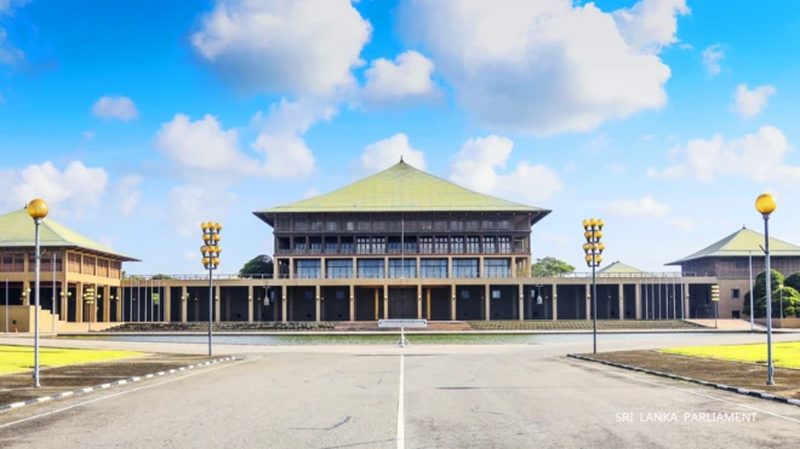
In 1978, Sri Lanka replaced its Westminster-style parliamentary system with an executive presidency modelled loosely on France’s — creating one of the most powerful elected offices in any democracy. The president became head of state, head of government and commander-in-chief, able to appoint ministers, dissolve parliament and rule with minimal checks. For four decades this concentration of power shaped Sri Lankan politics, culminating in the Rajapaksa era’s authoritarian drift and the economic collapse of 2022. Reforms have since trimmed presidential powers, but the office remains central.
Why did Sri Lanka create an executive presidency?
President J.R. Jayewardene, architect of the 1978 constitution, argued that Sri Lanka needed strong, stable executive leadership to drive economic development and manage ethnic conflict. The new system gave the president a direct popular mandate through nationwide election, fixed terms and sweeping powers over the cabinet, the judiciary’s appointments and even parliament’s survival. Supporters credited it with decisive governance; critics warned from the start that it created an elected monarch, concentrating power dangerously in one person’s hands.
How did the presidency concentrate power?
The original design stacked the deck. The president appointed the prime minister, cabinet, senior judges, the attorney general and the heads of the police and armed forces. Constitutional amendments swung the pendulum further: the 18th Amendment in 2010 removed presidential term limits and tightened the president’s grip on supposedly independent commissions, enabling Mahinda Rajapaksa to entrench his family’s rule. The 19th Amendment in 2015 reversed course, restoring term limits and independent commissions — only for the 20th Amendment in 2020 to hand the powers back to Gotabaya Rajapaksa. The presidency became a prize that each winner reshaped to taste.
The Rajapaksa era and the 2022 collapse
The system’s dangers were fully exposed under the Rajapaksas. Mahinda Rajapaksa’s presidency (2005-2015) centralised power, crushed the Tamil Tigers militarily in 2009, and built a patronage machine around his family. Gotabaya Rajapaksa’s 2019 election victory, on a platform of security and Sinhala nationalism, gave the family near-total control. Catastrophic policy errors — including a disastrous overnight shift to organic farming and unsustainable borrowing — combined with the pandemic’s blow to tourism to trigger a foreign-exchange crisis. In 2022, mass protests, the Aragalaya, forced Gotabaya to flee the country as the economy collapsed into shortages of fuel, food and medicine.
What changed after the crisis?
Parliament chose Ranil Wickremesinghe as president to stabilise the economy, and the 21st Amendment restored many of the 19th Amendment’s checks: term limits, independent commissions and limits on presidential appointments. The 2024 presidential election — won by Anura Kumara Dissanayake of the leftist NPP — was the first real test of the rebalanced system.
- Term limits restored: presidents are again limited to two terms, closing the door on indefinite rule.
- Independent commissions: bodies overseeing elections, police and the judiciary regained constitutional protection.
- Parliamentary oversight: key appointments once again require parliamentary approval.
- Unfinished reform: many Sri Lankans still demand full abolition of the executive presidency, a promise every opposition makes and every government forgets.
Sri Lanka’s experience is a cautionary tale about institutional design: a presidency created for stability became the instrument of democratic erosion. Whether the post-crisis reforms hold will depend less on constitutional text than on whether voters punish leaders who try to re-concentrate power.
The constitutional ping-pong: 18th, 19th, 20th, 21st Amendments
Sri Lanka’s presidency has been reshaped by amendment more than any comparable office. The 18th Amendment (2010) scrapped term limits so Mahinda Rajapaksa could seek a third term and centralised appointments; the 19th (2015) reversed both, restoring checks under a unity government; the 20th (2020) handed the powers straight back for Gotabaya Rajapaksa’s strongman project; and the 21st (2022) restored limits after the economic collapse discredited the experiment. Each swing reflected not constitutional philosophy but the incumbent’s interests — a pattern that has taught Sri Lankans to view amendment promises with deep scepticism.
FAQs
When did Sri Lanka get an executive president?
The 1978 constitution introduced the system under J.R. Jayewardene, replacing the previous parliamentary model with a directly elected, powerful presidency.
What caused Sri Lanka’s 2022 economic collapse?
Unsustainable debt, collapsed tourism revenue, policy blunders like the organic-farming mandate and depleted foreign reserves triggered shortages and mass protests that ousted the president.
Has the presidency been abolished?
No. The 21st Amendment curbed its powers, but abolition remains a popular demand that successive governments have promised and not delivered.
Compiled by the Khabar 24h Editorial Desk from publicly available sources.

Khabar 24h Editorial Desk — our explainers are prepared by the Khabar 24h editorial team using AI-assisted research tools, and every piece is reviewed by a human editor before publishing. We do not claim original reporting: our work is turning complex topics into simple, accurate summaries. Spotted an error? Write to contact@khabar24h.com — our corrections policy aims for same-day review.
More from this author →