How the UK’s House of Lords Works: Britain’s Unelected Chamber Explained
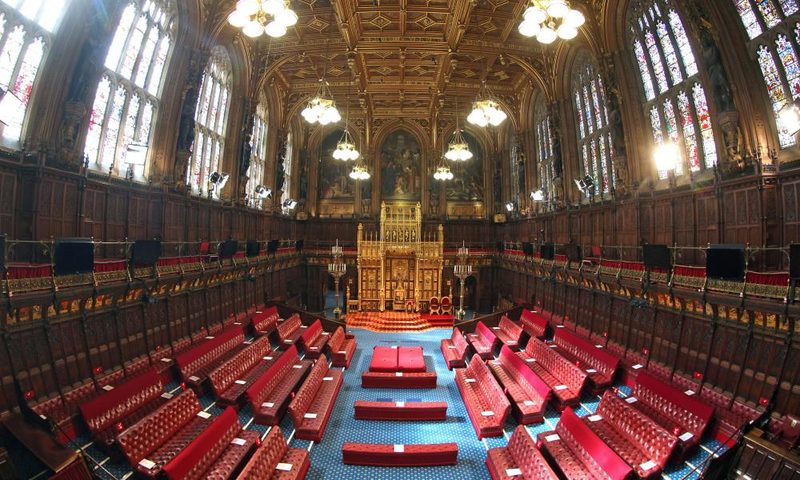
Britain’s Parliament contains an anomaly unique among major democracies: an upper chamber whose members are not elected by anyone. The House of Lords, with around 800 peers appointed for life, bishops and a rump of hereditary aristocrats, revises legislation and holds the government to account without a democratic mandate. Its survival, and repeated failure to reform it, is one of the great puzzles of British constitutional life.
Who sits in the Lords
The Lords’ composition reflects centuries of accretion. Life peers, appointed by the monarch on the Prime Minister’s advice, form the majority: former ministers, judges, businesspeople, academics and public figures honoured for service. Twenty-six Church of England bishops sit as Lords Spiritual. And 92 hereditary peers remain, elected by their fellow hereditaries, a compromise from the 1999 reforms that removed most of the thousand-odd aristocrats who once sat by birthright. Appointments are vetted by an independent commission, but prime ministers retain the decisive say.
What the Lords does
The Lords’ main work is legislative scrutiny: examining bills line by line, proposing amendments, and using its members’ expertise to improve drafting. It cannot veto most legislation permanently; the Parliament Acts allow the Commons to override Lords opposition after delay. But delay and revision are real powers: governments routinely accept Lords amendments to avoid prolonged ping-pong between the chambers. The Lords also questions ministers, conducts inquiries through select committees, and provides a forum where expertise outweighs partisanship.
Why an unelected chamber survives
Defenders argue the Lords works precisely because it is unelected: free from electoral pressures, it can take unpopular positions, defend minorities and scrutinise governments of any party without fear. Turnout for Lords reform debates in the Commons is often thin, suggesting many MPs privately value a revising chamber that does the detailed work they lack time for. without fear. Its members’ independence and expertise, the argument runs, complement the Commons’ democratic legitimacy. Critics counter that appointment by prime ministers creates cronyism, that its size is absurd, and that no modern democracy should tolerate legislators nobody voted for. Both sides agree the current House is indefensible in theory; they disagree on whether it works in practice.
The failed reform attempts
Reform has been attempted for over a century and has always foundered on disagreement about what should replace the Lords. The 1999 reforms removed most hereditary peers but left stage two, an elected or fully appointed house, unbuilt. Proposals for a wholly or partly elected upper chamber have repeatedly collapsed over fears of creating a rival to the Commons’ supremacy. The result is the worst of both worlds for reformers: a chamber everyone agrees is anachronistic but no one can agree how to fix.
The Lords and the Commons: the balance
The relationship is governed by convention as much as law. The Salisbury convention holds that the Lords does not block manifesto commitments of the elected government. Financial legislation is the Commons’ exclusive domain. In practice, the Lords amends, delays and embarrasses governments, particularly on civil liberties and constitutional matters, but ultimately yields to the elected chamber. It is a revising chamber that knows its place, which is both its limitation and its strength.
The Lords’ select committees
Beyond legislation, the Lords’ select committees produce some of Britain’s most respected policy reports: on science, economics, international relations and the constitution. Freed from constituency pressures, peers conduct inquiries with a thoroughness the Commons rarely matches, and governments take their conclusions seriously. The committee system is arguably the Lords’ most valuable contribution to British governance.
FAQs
Can the House of Lords block legislation? It can delay most bills for about a year, after which the Commons can invoke the Parliament Acts to pass them without Lords consent.
Are hereditary peers still in the Lords? Yes, 92 remain under the 1999 compromise, elected by their fellow hereditary peers when vacancies arise.
Has Lords reform been proposed recently? Repeatedly, including plans to shrink its size and change appointments, but comprehensive reform remains stalled. Recent manifestos have promised changes including retirement ages, yet the fundamental question, election or appointment, remains unanswered.
The House of Lords endures as a living paradox: undemocratic in composition, often admirable in function, and apparently unreformable in practice. Until Britain decides what it wants from a second chamber, the Lords will remain exactly as it is.
Compiled by the Khabar 24h Editorial Desk from publicly available sources.

Khabar 24h Editorial Desk — our explainers are prepared by the Khabar 24h editorial team using AI-assisted research tools, and every piece is reviewed by a human editor before publishing. We do not claim original reporting: our work is turning complex topics into simple, accurate summaries. Spotted an error? Write to contact@khabar24h.com — our corrections policy aims for same-day review.
More from this author →