How Political Parties Win National Party Status in India: The Recognition Rules Explained
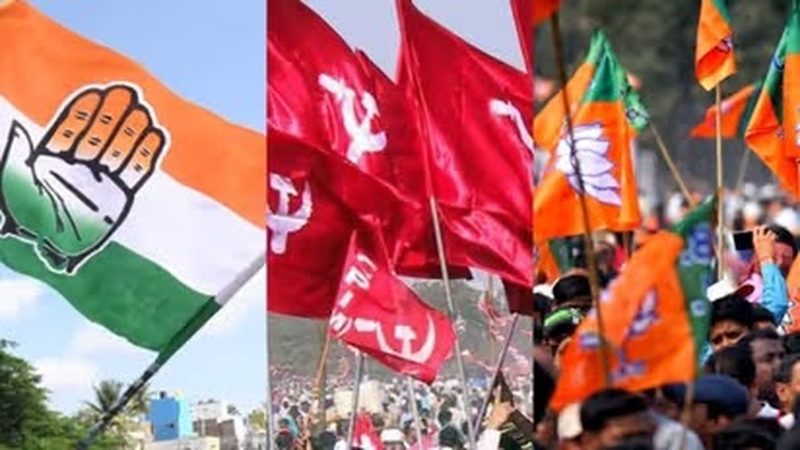
In India, being called a national party is not just a label but a legal status conferred by the Election Commission, carrying tangible privileges: a reserved election symbol across the country, free broadcast time, and consultation on electoral matters. The criteria are precise, numerical and periodically revised, and losing the status, as some parties have discovered, is a public embarrassment. The rules, administered by the Election Commission under the Election Symbols Order of 1968, reward demonstrated electoral strength rather than historical reputation. Here is how the recognition system works.
Why recognition matters
Recognition as a national or state party determines a party’s election symbol rights. Recognised parties get exclusive symbols, the lotus, the hand, the elephant, reserved for them nationwide or statewide, while unrecognised parties must choose from free symbols that can differ by constituency. Recognition also brings free airtime on public broadcasters during elections, the right to have star campaigners whose expenses are exempted, and a voice in consultations with the Election Commission. For voters, the reserved symbol is often the primary identifier on the ballot.
The three routes to national status
The Election Commission’s rules offer three alternative paths. A party is recognised as national if it wins at least 2 per cent of Lok Sabha seats, currently 11 seats, from at least three different states; or if it polls at least 6 per cent of the vote in four or more states and wins at least four Lok Sabha seats; or if it is already recognised as a state party in four or more states. Meeting any one condition suffices. The thresholds are deliberately demanding: national status is meant to signify genuinely pan-Indian presence.
How state party status works
State party recognition follows similar logic at the state level: 6 per cent of the vote in the state plus two assembly seats, or 3 per cent of assembly seats, or one Lok Sabha seat per 25 in the state, among other conditions. A party recognised in four states automatically qualifies as national under the third route. State status brings the reserved symbol within the state and the associated campaign privileges, making it the crucial first rung for regional parties with national ambitions.
Review, loss and restoration of status
Recognition is not permanent. After every general election and assembly election cycle, the Commission reviews parties’ performance against the criteria. Parties that fall short lose their status, as has happened to several once-prominent parties, forcing them onto free symbols and into the indignity of public demotion. The Commission has occasionally amended the rules to give parties more time, recognising that electoral fortunes fluctuate, but the principle stands: status must be earned afresh by performance, not retained by history. A party that loses national status but keeps state status in some states retains its symbol there, softening the blow.
The politics of recognition
The system shapes party behaviour in subtle ways. Parties strategise to contest in enough states to meet the thresholds, and alliances are sometimes structured with recognition arithmetic in mind. Critics argue the rules entrench established parties and disadvantage new entrants, while defenders say the thresholds prevent ballot clutter and ensure that the privileges of recognition go to parties with demonstrated support. Recognition also shapes alliances: smaller parties sometimes merge with larger ones rather than face derecognition, while national parties nurse their state-level performance to protect their status across review cycles. The periodic culling of recognised parties is one of the few moments when electoral arithmetic is laid bare as administrative judgment.
FAQs
How many national parties does India currently have? The number changes with each review cycle; it has ranged from six to eight in recent years as parties gain or lose the status.
Can a party lose its election symbol? If it loses recognition, it loses exclusive rights to the symbol, which returns to the pool or stays frozen depending on the circumstances.
Who decides recognition disputes? The Election Commission decides, under powers conferred by the Election Symbols Order of 1968, subject to judicial review.
National party status is Indian democracy’s quality mark: hard to win, easy to lose, and a revealing measure of which parties truly speak to more than one corner of the country.
In a crowded political marketplace, recognition remains one of the few objective measures of a party’s reach.
Source: Election Commission of India

Khabar 24h Editorial Desk — our explainers are prepared by the Khabar 24h editorial team using AI-assisted research tools, and every piece is reviewed by a human editor before publishing. We do not claim original reporting: our work is turning complex topics into simple, accurate summaries. Spotted an error? Write to contact@khabar24h.com — our corrections policy aims for same-day review.
More from this author →