How the Election Commission of India Works: Powers, Independence and Appointment
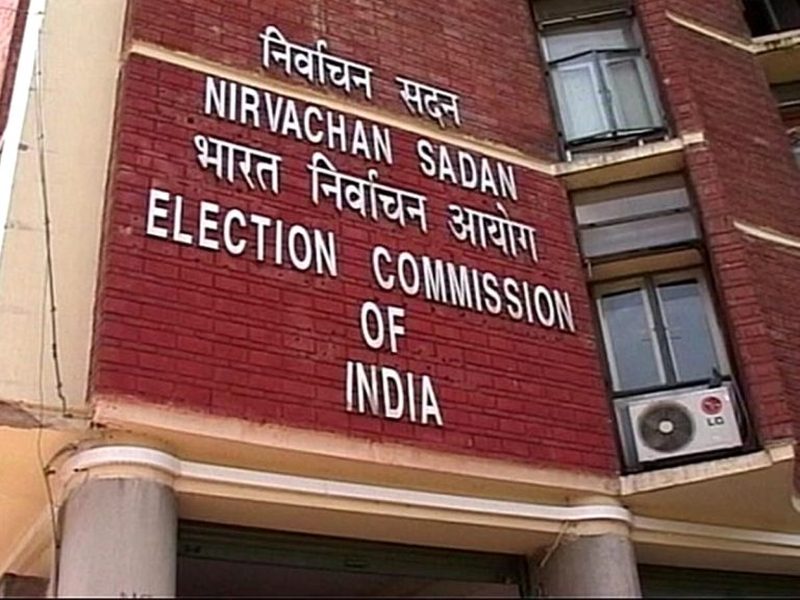
The Election Commission of India is the constitutional body charged with conducting elections to Parliament, the state legislatures and the offices of President and Vice-President. In a country of nearly a billion voters, it is arguably the most powerful election management body in the world, with the authority to requisition the entire state machinery during polls. Its independence, and the limits of that independence, is central to the credibility of Indian democracy.
Constitutional foundation and powers
Article 324 vests the superintendence, direction and control of elections in the Election Commission, language the Supreme Court has interpreted expansively. The Commission prepares and revises electoral rolls, conducts polling and counting, enforces the Model Code of Conduct, allots election symbols, recognises political parties, caps and monitors election expenditure, and can countermand polls in cases of booth-capturing or large-scale irregularity. During elections it can transfer officials, deploy central forces and issue binding directions to governments, powers no ordinary regulator possesses.
How the Commission is composed
The Commission consists of the Chief Election Commissioner and such number of Election Commissioners as the President fixes; since 1993 it has been a three-member body. Decisions are taken by majority, with each member having one vote. The Chief Election Commissioner enjoys special constitutional protection: they can be removed only through impeachment-like proceedings, the same as a Supreme Court judge. Other Election Commissioners can be removed only on the Chief’s recommendation, a shield designed to protect the body’s collective independence.
How members are appointed
For most of its history, Election Commissioners were appointed by the President on the government’s advice, effectively the executive’s choice. In 2023, the Supreme Court ruled that appointments should be made by a committee comprising the Prime Minister, the Leader of the Opposition and the Chief Justice of India, to insulate the process from executive dominance. Parliament then legislated a new selection committee replacing the Chief Justice with a Union minister nominated by the Prime Minister, a change the opposition criticised and which remains contested. The appointment process is thus one of the liveliest fronts in the debate over the Commission’s independence.
How independent is it in practice?
The Commission’s finest hours, the uncompromising tenures that enforced the Model Code against powerful incumbents, are legendary in Indian public life. Structural vulnerabilities remain, however. The Commission depends on the government for its budget and staff, its members are typically former bureaucrats appointed late in their careers, and its decisions on matters like the timing of elections or action against ruling-party violations invite scrutiny. Supporters argue that constitutional protections and public visibility give it real autonomy; critics contend that de facto independence varies with the personalities at the top.
The Commission’s expanding role
Beyond conducting polls, the Commission has become a regulator of political competition: recognising national and state parties, adjudicating party splits and symbol disputes, disqualifying candidates for corrupt practices or excess expenditure, and advising the President and Governors on disqualification of sitting legislators. It has also pushed electoral reforms, from EVMs and VVPATs to the disclosure of candidates’ criminal records and assets. Each expansion of its remit has deepened both its authority and the controversies surrounding it.
The Commission and the courts
The Supreme Court has repeatedly shaped the Commission’s authority, ordering the disclosure of candidates’ assets and criminal records and directing the use of VVPATs nationwide. At the same time, the Court has kept the body within constitutional bounds, checking attempts to overreach. This continuing dialogue between the judiciary and the election machinery has defined the modern Indian electoral landscape more than any single statute has.
FAQs
Who can remove the Chief Election Commissioner? Only Parliament, through a process identical to the removal of a Supreme Court judge: a special majority in each House on grounds of proven misbehaviour or incapacity.
Does the Commission conduct local body elections? No. Panchayat and municipal elections are conducted by each state’s State Election Commission, a separate constitutional body.
Can the Commission derecognise a political party? It can withdraw recognition as a national or state party for failing to meet the criteria, but it cannot deregister or ban a party; that requires judicial process.
The Election Commission remains the indispensable referee of Indian democracy: imperfectly independent by design, yet endowed with powers that have repeatedly allowed it to stare down the mighty during elections.
Compiled by the Khabar 24h Editorial Desk from publicly available sources.

Khabar 24h Editorial Desk — our explainers are prepared by the Khabar 24h editorial team using AI-assisted research tools, and every piece is reviewed by a human editor before publishing. We do not claim original reporting: our work is turning complex topics into simple, accurate summaries. Spotted an error? Write to contact@khabar24h.com — our corrections policy aims for same-day review.
More from this author →