How the Indian Parliament Passes a Bill: From Introduction to Presidential Assent
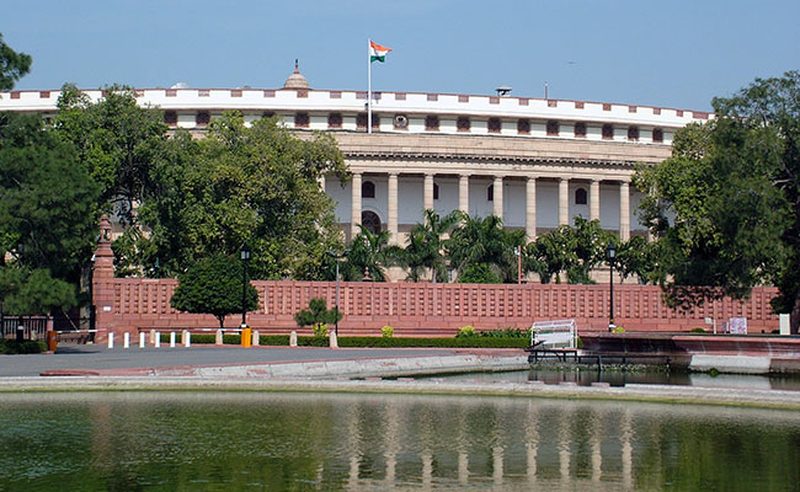
Every law in India begins life as a bill, a draft proposal placed before Parliament. The journey from that first introduction to the President’s signature follows a detailed procedure laid down in the Constitution and the rules of each House. Understanding these stages explains why some bills sail through in days while others spend years in negotiation, amendment and delay.
What a bill is, and the kinds of bills
A bill is simply the draft text of a proposed law. Government bills are introduced by ministers and reflect official policy; private members’ bills are introduced by MPs who are not ministers and rarely become law, though they can spark debate. The Constitution also distinguishes money bills, which deal only with taxation and government expenditure and can be introduced only in the Lok Sabha, from financial bills and ordinary bills, which can start in either House. Constitutional amendment bills follow a special procedure requiring special majorities. The type of bill determines the path it must travel.
Introduction and the first reading
A bill’s journey begins with its introduction, called the first reading. The minister or member in charge seeks the House’s leave to introduce the bill, and there is usually only a brief discussion at this stage, limited to its legislative competence. Once leave is granted, the bill is introduced and published in the official Gazette. This stage is largely formal; the real examination comes later. For government bills, the draft has typically already been approved by the Cabinet and vetted by the Law Ministry before it ever reaches the floor.
Committee scrutiny: where the detail is examined
After introduction, a bill is often referred to a Parliamentary Standing Committee or a Select Committee of the House. This is where the most serious scrutiny happens. Committees invite comments from the public and stakeholders, hear expert evidence, and go through the bill clause by clause, sometimes suggesting substantial changes. The committee then reports back to the House with its recommendations. Although the government is not bound to accept them, committee reports carry weight and frequently reshape legislation. Bills passed without committee scrutiny tend to attract criticism for being rushed.
Second reading: debate and clause-by-clause voting
The second reading is the heart of the legislative process and has two parts. First comes the general discussion, where MPs debate the bill’s principles and overall merits. Then the House considers the bill clause by clause, voting on each clause and on every proposed amendment. This is the stage where opposition members can force divisions, where ministers accept or reject changes, and where the text of the law is actually settled. For a bill to proceed, a simple majority of members present and voting is enough at this stage, except for constitutional amendments.
Third reading and passage in the House
The third reading is confined to arguments for or against the bill as a whole; no detailed amendments are allowed except minor verbal corrections. The House then votes on whether the bill should be passed. If it passes, it is transmitted to the other House, where it goes through the same three readings all over again. If the second House amends the bill, it returns to the first House, and the two must agree on an identical text before the bill can proceed further.
What happens when the Houses disagree?
For ordinary bills, if one House rejects a bill passed by the other, or they cannot agree on amendments, or more than six months pass without action, the President may summon a joint sitting of both Houses. At a joint sitting, the combined membership votes and the Lok Sabha’s numerical superiority usually prevails. Joint sittings are rare and politically significant. Money bills follow a different rule: the Rajya Sabha can only suggest amendments within 14 days, which the Lok Sabha may accept or reject, and the Speaker’s certification that a bill is a money bill is central to this process.
Presidential assent: the final step
Once both Houses have passed the bill, it is presented to the President. The President may give assent, withhold assent, or return the bill, other than a money bill, for reconsideration with suggestions. If Parliament passes the bill again, with or without the suggested changes, the President must give assent. With assent, the bill becomes an Act and is published as law. The President can also, in limited circumstances, seek the Supreme Court’s advisory opinion on a bill’s constitutionality before deciding.
FAQs
How long does it take for a bill to become law? There is no fixed timeline. Some bills pass within days of introduction, while others spend years in committees or lapse when the Lok Sabha is dissolved.
What happens to pending bills when the Lok Sabha is dissolved? Bills pending in the Lok Sabha lapse on dissolution, while bills pending in the Rajya Sabha but not passed by the Lok Sabha survive. A bill passed by both Houses but awaiting assent does not lapse.
Can a private member’s bill become law? Yes, in theory, but it is extremely rare. Only a handful of private members’ bills have ever been enacted, the last several decades ago.
The procedure is deliberately slow: multiple readings, committee examination and bicameral agreement are designed to make sure that laws, once made, have been tested from every angle before they bind 1.4 billion people.
Compiled by the Khabar 24h Editorial Desk from publicly available sources.

Khabar 24h Editorial Desk — our explainers are prepared by the Khabar 24h editorial team using AI-assisted research tools, and every piece is reviewed by a human editor before publishing. We do not claim original reporting: our work is turning complex topics into simple, accurate summaries. Spotted an error? Write to contact@khabar24h.com — our corrections policy aims for same-day review.
More from this author →