How Lok Sabha Elections Work in India: From Notification to Results, Step by Step
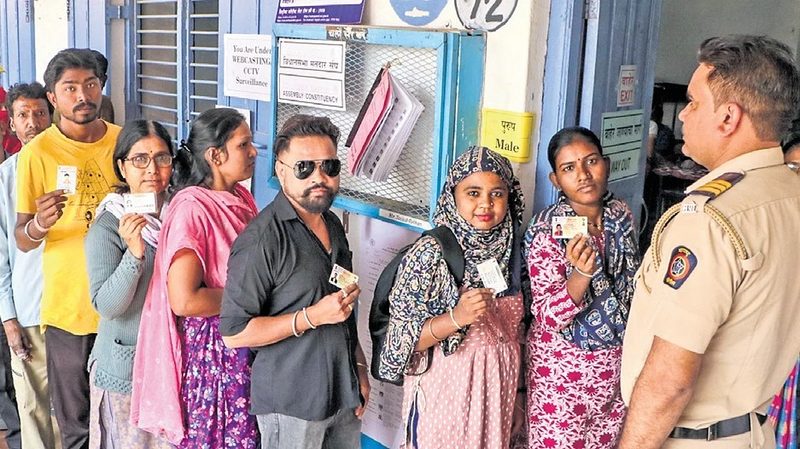
A Lok Sabha election in India is the largest democratic exercise on earth. More than 960 million people are eligible to vote, polling takes place across 543 parliamentary constituencies, and the entire operation is run by a single constitutional body, the Election Commission of India. The process follows a well-rehearsed sequence that begins weeks before the first vote is cast and ends only when results are declared and a new government takes shape. Here is that journey, step by step.
The Election Commission announces the schedule
Everything starts with the Election Commission’s press conference, where the Chief Election Commissioner announces the poll schedule. Because India is so large, voting is usually spread over several phases, sometimes as many as seven, so that security forces and polling staff can move from one region to another. The announcement includes the dates of polling in each phase, the last dates for nominations and withdrawals, and the date of counting. The moment the schedule is announced, the Model Code of Conduct comes into force, placing restrictions on what governments and political parties can say and do until the process is complete.
Notification, nominations and scrutiny
The formal process begins when the President issues a notification calling upon each parliamentary constituency to elect its member, acting on the Election Commission’s recommendation. Candidates then file nomination papers before the Returning Officer of their constituency, along with a security deposit and an affidavit declaring their assets, liabilities, criminal record and educational qualifications. The Returning Officer scrutinises every nomination the next day, rejecting those that are incomplete or invalid, and candidates get a short window to withdraw. What remains is the final list of contesting candidates, and symbols are allotted, with recognised parties keeping their reserved symbols.
How campaigning works under the Model Code of Conduct
Once nominations close, the campaign begins in earnest. Parties hold rallies, roadshows and door-to-door visits, while candidates must file daily accounts of their election expenditure, which is capped by law. The Model Code of Conduct bars ministers from announcing new schemes or using official machinery for campaigning, and it prohibits appeals to voters on grounds of religion, caste or language. Campaigning must stop 48 hours before polling in each phase, a period known as the silence period, during which no public meetings or electronic appeals are allowed. The Commission also enforces a ban on the publication of exit polls until the final phase of voting ends.
Polling day: EVMs, ink and the voter’s journey
On polling day, each constituency’s voters report to their assigned polling booth, where their name is checked against the electoral roll and their finger is marked with indelible ink to prevent repeat voting. India votes entirely on Electronic Voting Machines paired with Voter Verifiable Paper Audit Trail units, which print a paper slip so the voter can confirm their choice. Polling usually runs from morning to evening, with central paramilitary forces and state police guarding sensitive booths. After polling closes, the EVMs are sealed in the presence of candidates’ agents and stored in strong rooms under round-the-clock guard until counting day.
Counting day and the declaration of results
Counting typically begins at 8 in the morning, starting with postal ballots, followed by the EVM rounds, constituency by constituency. The VVPAT slips from a sample of polling stations in every assembly segment are matched against the EVM counts as a verification check. Trends emerge within the first few hours, and by afternoon the picture is usually clear. The Returning Officer declares the winner in each constituency, the candidate with the most votes, since India uses the first-past-the-post system. There is no minimum threshold and no run-off; a plurality is enough.
What happens after the results
Once all 543 results are in, the Election Commission notifies the names of the elected members, constituting the new Lok Sabha. The President then invites the leader who commands the support of a majority, 272 or more seats, to form the government. If no party has a majority, parties negotiate alliances and the President satisfies herself, through letters of support, about who can command the House’s confidence. The new Prime Minister is sworn in along with the Council of Ministers, and the government must prove its majority on the floor of the House within a stipulated time.
FAQs
How long does a Lok Sabha election take? The full process, from the announcement of the schedule to the declaration of results, usually takes about six to eight weeks, with polling itself spread over multiple phases.
Can the schedule change after announcement? The Commission can postpone polling in a constituency for reasons such as a candidate’s death, large-scale violence or natural calamity, but it cannot extend the life of the outgoing House beyond its term.
Who can vote in a Lok Sabha election? Every Indian citizen aged 18 or above who is registered in a constituency’s electoral roll can vote, except those disqualified by law, such as persons of unsound mind or those convicted of certain electoral offences.
Taken together, these steps show why Indian elections are studied around the world: a fixed constitutional timetable, an independent referee, and a machinery that reaches every village combine to convert nearly a billion individual choices into a single national verdict.
Compiled by the Khabar 24h Editorial Desk from publicly available sources.

Khabar 24h Editorial Desk — our explainers are prepared by the Khabar 24h editorial team using AI-assisted research tools, and every piece is reviewed by a human editor before publishing. We do not claim original reporting: our work is turning complex topics into simple, accurate summaries. Spotted an error? Write to contact@khabar24h.com — our corrections policy aims for same-day review.
More from this author →