Kerala’s Backwaters: How Houseboats Became the State’s Floating Economy
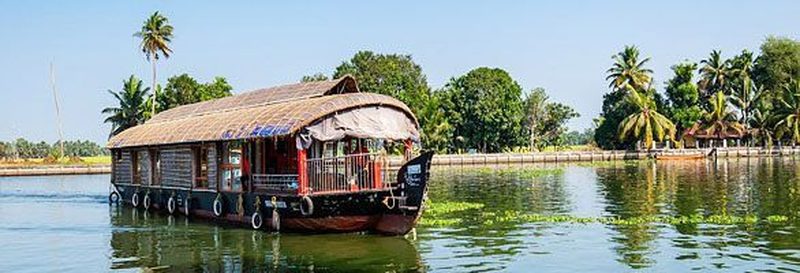
In the lagoons and canals of Kerala’s coast, hundreds of houseboats drift past coconut palms and village jetties: converted kettuvallams, the traditional rice barges of the backwaters, now fitted with bedrooms, kitchens, and sun decks. The Kerala backwaters, a 900-kilometre network of lagoons, lakes, and canals, have become one of India’s most iconic tourism experiences and a floating economy employing tens of thousands. Alleppey, Alappuzha, is its famous heart, but the waters stretch from Kollam to Kochi. This is how houseboats became Kerala’s floating economy.
The backwaters and their boats
The backwaters are a unique hydrological system: brackish lagoons parallel to the Arabian Sea, fed by 38 rivers, interconnected by natural and man-made canals, and supporting a distinctive ecology and culture. For centuries, the kettuvallam, literally a boat with knotted, kettu, planks, vallam, built without a single nail using coir rope, carried rice and spices through these waters. As road transport displaced cargo boats in the late 20th century, enterprising operators saw a new use: the first tourist houseboats appeared in the 1990s, and the industry exploded in the 2000s as Kerala’s tourism brand, God’s Own Country, went global. Today’s houseboats range from single-bedroom budget boats to multi-deck luxury cruisers with conference facilities; the traditional kettuvallam hull, bamboo matting, and coir construction remain the industry’s signature, now housing modern comforts.
The houseboat economy
The industry’s scale is substantial: over a thousand registered houseboats operate in the backwaters, concentrated in Alleppey, with the sector employing tens of thousands directly, crew, cooks, guides, and indirectly, through food supply, maintenance, handicrafts, and transport. A houseboat cruise, typically 22 hours from noon to noon, includes Kerala meals served on board, village visits, and sunset over Vembanad Lake, India’s longest lake. The economics work for operators and the state: houseboat tourism is among Kerala’s highest-revenue tourism segments, and it distributes income to backwater villages that see little other tourism. The industry also spawned ancillary experiences: canoe tours through narrow canals, village homestays, and shikara rides. For Kerala, the houseboat is both an economic engine and a brand image, the photograph that sells the state.
Ecology under pressure
The floating economy floats on a stressed ecosystem. Houseboat sewage and waste, despite regulations requiring treatment systems, pollute the lagoons; diesel engines add oil and noise; and the sheer density of boats in Alleppey’s core routes strains water quality. The backwaters face larger pressures too: reclamation for construction, agricultural runoff, the Thanneermukkom bund’s alteration of salinity regimes, and invasive species like water hyacinth. The Vembanad Lake has shrunk dramatically over the last century through reclamation. Regulation has tightened: the Kerala government introduced registration, safety, and waste-management norms, restricted new licences in congested stretches, and promoted solar-powered boats. Enforcement remains the challenge, as elsewhere: rules exist, compliance varies, and the lagoon’s health is the industry’s ultimate balance sheet.
Life on the water
Beyond tourism, the backwaters are a lived world: villages on narrow strips between water and paddy, where canoes are school buses, fishing is livelihood, and the annual Nehru Trophy Boat Race at Punnamada Lake is the sporting event of the year, with snake boats, chundan vallams, crewed by over a hundred oarsmen. The Kuttanad region, farming below sea level in polders reminiscent of the Netherlands, is an agricultural marvel. This lived backwater culture is what gives the tourist experience its depth: the houseboat drifts past real lives, coir workers, duck farmers, toddy tappers, not a theme park. Responsible operators build village visits and local sourcing into their cruises; the best experiences connect visitors with the waters’ working life rather than insulating them from it.
Keeping the waters alive
The backwaters’ future depends on managing the paradox of their success: tourism revenue funds conservation awareness, but tourism pressure degrades the resource. The agenda is known: enforce waste treatment on all boats, cap numbers on congested routes, accelerate the shift to solar-electric propulsion, protect the remaining wetlands from reclamation, and manage the Vembanad ecosystem as a whole rather than stretch by stretch. Kerala’s experiments with responsible tourism offer models. The houseboat industry, having converted a dying cargo tradition into a thriving tourism economy, now faces its second transformation: proving that a floating economy can be a sustainable one. The lagoons at sunset, palms reflected in still water, are worth the effort.
FAQs
Where are the Kerala backwaters? A 900-km network of lagoons and canals along Kerala’s coast, centred on Alleppey (Alappuzha) and Vembanad Lake, stretching from Kollam to Kochi.
What is a kettuvallam? A traditional Kerala rice barge built of knotted wooden planks without nails; converted versions serve as tourist houseboats.
When is the best time to visit? September to March offers the best weather; the monsoon (June-August) has its own lush charm and lower prices.
From rice barges to floating hotels, Kerala’s houseboats turned tradition into tourism and a lagoon system into a livelihood. Keeping the waters clean enough for the next generation of boats is the industry’s defining challenge.
Compiled by the Khabar 24h Editorial Desk from publicly available sources.

Khabar 24h Editorial Desk — our explainers are prepared by the Khabar 24h editorial team using AI-assisted research tools, and every piece is reviewed by a human editor before publishing. We do not claim original reporting: our work is turning complex topics into simple, accurate summaries. Spotted an error? Write to contact@khabar24h.com — our corrections policy aims for same-day review.
More from this author →