Sainik Schools: How India Prepares Teenagers for the Armed Forces
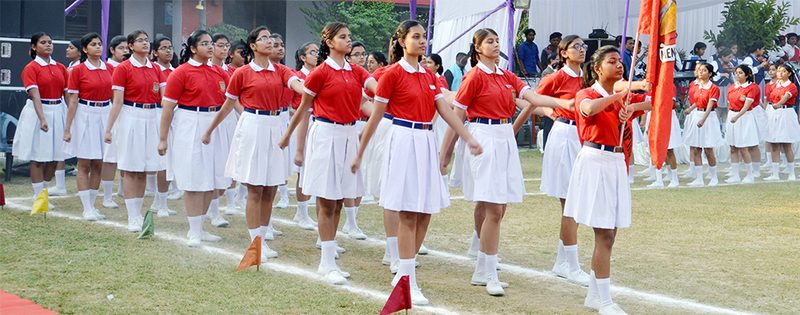
Thirty-three schools across India follow a distinctive formula: rigorous academics plus military-style discipline, designed to prepare boys, and now girls, for the National Defence Academy and the armed forces. The Sainik Schools, established from 1961 onward at the initiative of V.K. Krishna Menon, have produced a disproportionate share of India’s military officers, including service chiefs and gallantry award winners. With girls now admitted and new schools opening under partnership models, the system is expanding and evolving. This is how Sainik Schools prepare teenagers for the armed forces.
The founding idea
The Sainik Schools were conceived to democratise the officer corps: before them, military officers came disproportionately from a narrow set of public schools and backgrounds. The idea was to identify talented boys from all regions and classes at age 10-11, give them quality English-medium education with military orientation, and prepare them for the NDA entrance. The schools are run by the Sainik Schools Society under the Ministry of Defence, with state governments providing land and infrastructure. Each school is headed by a serving officer as principal, with military staff alongside civilian teachers. The all-India entrance examination, the AISSEE, held for Class 6 and Class 9 entry, is fiercely competitive, with lakhs of applicants for a few thousand seats, reflecting both the schools’ reputation and the allure of the armed forces career they promise.
Life on campus
A Sainik School day is regimented by design: morning physical training, academic classes, games, NCC and military training, prep, and lights-out, all to a timetable that leaves little idle. Students live in houses named after military heroes and battles, wear uniforms, and follow a house system with student appointments, school captain, house captains, that teaches leadership early. The curriculum is CBSE, with the academic standard high: Sainik Schools consistently produce strong board results. Military orientation is woven through: drill, weapon training, obstacle courses, map reading, and motivation sessions by visiting officers. The culture emphasises physical fitness, integrity, and service; alumni speak of the schools as transformative, particularly for boys from rural backgrounds encountering structured opportunity for the first time. The routine is demanding by choice: the schools aim to make the NDA’s rigours feel familiar.
The NDA pipeline and the record
The schools’ success is measured in NDA selections, and the numbers are striking: Sainik School alumni form a large share of NDA cadets, far out of proportion to their numbers, and the alumni rolls include Chiefs of Army, Navy, and Air Staff, gallantry award winners, and distinguished officers across generations. The mechanism is straightforward: early identification, sustained preparation for the NDA written examination and SSB interview, physical conditioning, and a peer culture where the armed forces are the default aspiration. Not every student joins the military, alumni are found in civil services, medicine, engineering, and business, and the schools make no secret that the armed forces are the preferred destination. The record is the system’s vindication: as a talent pipeline for national service, few educational institutions anywhere match it.
Girls and the new schools
Two recent changes are reshaping the system. First, girls’ admission: beginning with pilot entry and expanding across schools, girls now study alongside boys, preparing, like them, for the NDA, which opened to women after the Supreme Court’s 2021 intervention. The integration has required infrastructure and cultural adaptation, and early reports suggest girl cadets matching the schools’ standards. Second, the partnership model: the government approved 100 new Sainik Schools in partnership with NGOs, private schools, and state governments, expanding the brand beyond the original 33. This expansion raises quality questions: whether partner schools can replicate the military culture and NDA record of the originals, and how standards will be enforced. The Sainik Schools Society’s challenge is to scale a distinctive institutional culture without diluting it.
An institution and its critics
The schools are not without critics: some question the militarisation of childhood, others the intense pressure of the NDA-or-bust culture, and still others whether the resources might serve broader educational needs. Alumni and supporters counter that the schools offer opportunity, not indoctrination, and that their record of producing leaders of character speaks for itself. What is undeniable is the institution’s distinctiveness: in a school system often criticised for rote learning and indiscipline, Sainik Schools offer a coherent alternative, physically rigorous, morally explicit, nationally oriented. As they admit girls and multiply through partnerships, they are becoming less an exception and more a model, one whose influence on Indian education may extend well beyond the parade ground.
FAQs
How do I get admission to a Sainik School? Through the All India Sainik Schools Entrance Examination for Class 6 and Class 9, with reservations as per policy and medical fitness standards.
Are girls admitted? Yes, girls are now admitted across Sainik Schools and prepare for the NDA like their male counterparts.
Is joining the armed forces compulsory? No, but the schools’ entire orientation prepares students for the NDA and the services; alumni also pursue other careers.
Sainik Schools turned a simple insight, talent is everywhere, opportunity is not, into India’s most successful officer pipeline. As they grow and admit girls, the experiment in democratic military education enters its most ambitious phase.
Compiled by the Khabar 24h Editorial Desk from publicly available sources.

Khabar 24h Editorial Desk — our explainers are prepared by the Khabar 24h editorial team using AI-assisted research tools, and every piece is reviewed by a human editor before publishing. We do not claim original reporting: our work is turning complex topics into simple, accurate summaries. Spotted an error? Write to contact@khabar24h.com — our corrections policy aims for same-day review.
More from this author →