How Noida Grew: The Planned City That Became an Industrial Powerhouse
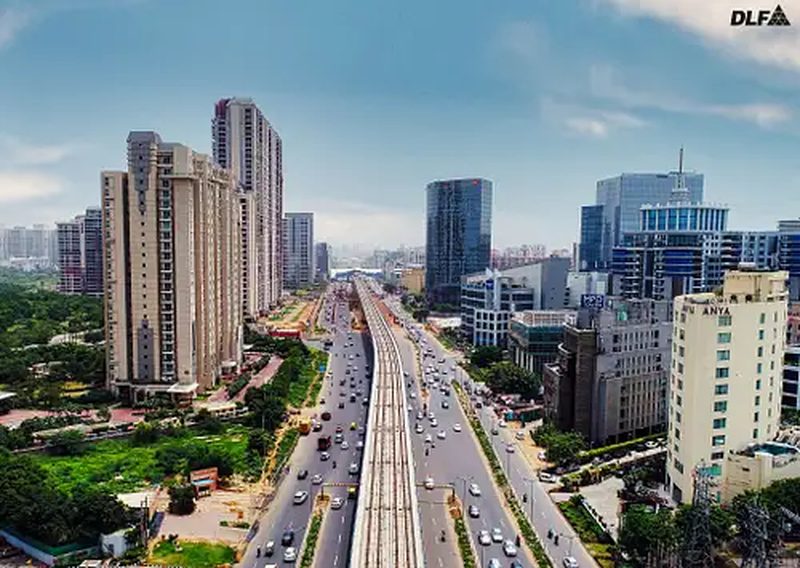
In 1976, the Uttar Pradesh government notified a stretch of farmland across the Yamuna from Delhi as the New Okhla Industrial Development Area: Noida. The idea was straightforward: Delhi’s industry needed space, and planned development could avoid the capital’s chaos. Five decades later, Noida is among India’s most important economic centres: a hub for electronics manufacturing, IT services, media and real estate, with a skyline of glass towers where wheat fields stood. Greater Noida and the Yamuna Expressway belt extended the model further. This is the story of how a planned city became an industrial powerhouse, and of the villages and farmers who paid for the transformation.
The planning model
Noida was developed by a dedicated authority, the New Okhla Industrial Development Authority, with powers to acquire land, plan sectors, build infrastructure and allot plots. The sector grid, numbered sectors with designated land uses, gave Noida the order that Delhi lacked: wide roads, underground utilities, green belts and planned industrial, residential and institutional zones. The authority model, replicated in Greater Noida and the Yamuna Expressway authority, allowed fast, coordinated development without going through municipal politics. For industry, Noida offered what mattered: land near Delhi, decent infrastructure, and a single-window authority.
How industry came
Noida’s industrialisation came in waves. First, manufacturing: electronics, garments, auto components and consumer goods, drawn by proximity to Delhi’s market and labour. Then, in the 2000s, IT and services: Noida’s expressway sectors filled with software parks, BPOs and corporate offices as Delhi’s costs rose and Gurugram’s infrastructure strained. Media followed, with major news channels and film production basing themselves in Film City. Most recently, mobile-phone manufacturing: Noida became one of the world’s largest mobile manufacturing clusters under the Make in India push, with factories producing hundreds of millions of handsets. Each wave layered on the last, creating a diversified economy rare among Indian industrial towns.
The real-estate boom
Industry brought jobs, jobs brought people, and people brought the real-estate boom. Noida’s residential sectors, and later Greater Noida’s vast apartment complexes, absorbed lakhs of migrants from Delhi and beyond. The Yamuna Expressway opened a new frontier of townships and plots. The boom made fortunes and created crises in equal measure: the mid-2010s saw infamous project delays, with lakhs of homebuyers stuck in unfinished apartments, leading to insolvency proceedings against major builders and Supreme Court intervention. The sector grid that planned industry so well proved less adept at regulating developers, and the homebuyer crisis remains Noida’s defining scar.
The villages underneath
Noida was built on acquired farmland, and the acquisition story is the city’s moral ledger. Farmers were paid compensation that seemed generous at the time but proved trivial as land values multiplied a hundredfold; the resulting anger fuelled agitations, litigation and the land wars that shaped Uttar Pradesh politics for a decade. Courts ordered enhanced compensation and developed plots for farmers, but the sense of dispossession persists in the urban villages, the abadi settlements engulfed by the city, where original inhabitants live amid towers they cannot afford. Noida’s prosperity and its villages’ resentment are two sides of the same acquisition.
Noida’s next act
The city’s future is being written on its edges: the Noida International Airport at Jewar, the electronics manufacturing cluster’s expansion, the metro and rapid-rail links knitting the region together, and the data-centre and semiconductor investments scouting the Yamuna belt. The challenges are those of a maturing metropolis: water supply, traffic, air quality, and integrating the urban villages. Noida’s experiment proved that planned industrial cities can work in India. Its next test is whether the plan can handle prosperity: the traffic, the inequality and the environmental bills that success brings.
FAQs
When was Noida founded? In 1976, as the New Okhla Industrial Development Area, developed by the Noida Authority on farmland across the Yamuna from Delhi.
What industries is Noida known for? Electronics and mobile manufacturing, IT services and BPOs, media, and real estate, with growing data-centre and logistics sectors.
What is Greater Noida? A separate planned township southeast of Noida, developed by its own authority, with industry, universities and large residential sectors.
Noida is the most successful planned city of independent India: proof that acquiring farmland, drawing a grid and building infrastructure can conjure an economic powerhouse. Its history is also a reminder of who pays for the conjuring.
Source: The Times of India

Khabar 24h Editorial Desk — our explainers are prepared by the Khabar 24h editorial team using AI-assisted research tools, and every piece is reviewed by a human editor before publishing. We do not claim original reporting: our work is turning complex topics into simple, accurate summaries. Spotted an error? Write to contact@khabar24h.com — our corrections policy aims for same-day review.
More from this author →