Kochi Water Metro: Inside India’s First Water Metro
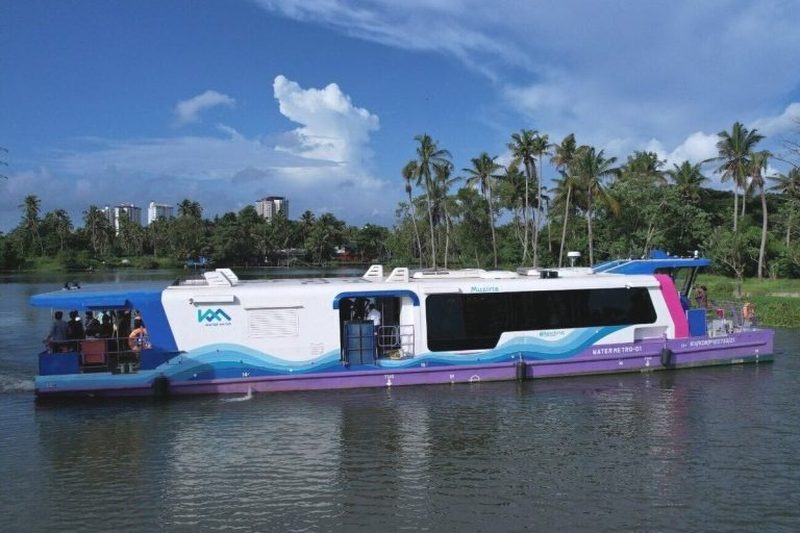
Kochi’s backwaters have carried people for centuries, but the city’s modern commuters were stuck on congested roads and bridges. The Kochi Water Metro, launched in 2023, reimagines the waterways as a metro system: a fleet of modern, battery-powered ferries running on scheduled routes between 38 terminals across 76 kilometres of waterways, integrated with the Kochi Metro rail system. Operated by Kochi Metro Rail Limited, it is India’s first water metro and among the largest battery-electric boat fleets in the world. This explainer looks at the boats, the network and whether water can really work as urban transit.
The boats
The water metro’s ferries are purpose-built hybrid-electric vessels, running on batteries with diesel generators as backup, designed for the backwaters’ shallow drafts and narrow channels. The 100-passenger boats are air-conditioned, with wide windows, accessible boarding for wheelchairs, and real-time passenger information. Battery swapping and charging infrastructure at terminals keeps the fleet moving. The vessels are built in India at Cochin Shipyard, making the project a showcase for indigenous electric-marine technology. Safety systems, from fire suppression to man-overboard response, are designed to metro standards: the “metro” in water metro is a promise of reliability, frequency and safety, not just a brand.
The network
The full network spans 76 kilometres of waterways connecting the islands around Kochi: Vyttila, Kakkanad, High Court, Vypeen, Fort Kochi, Mattancherry and more, with 38 terminals planned. The first operational routes connected Vyttila to Kakkanad, serving the IT corridor, and the High Court to Vypeen and Fort Kochi, serving island commuters. Terminals are designed as modern transit hubs with ticketing integrated with the Kochi Metro’s smart card, waiting areas and last-mile connections. The routes were chosen to serve corridors where road journeys are long and circuitous but water offers a direct path: the classic island-city geometry where ferries beat bridges.
Why water transit makes sense in Kochi
Kochi’s islands were historically connected by private ferries, but the services were informal, infrequent and unsafe. The water metro formalises this with scheduled, safe, comfortable services at metro-like fares. For island residents, the alternative to a 15-minute ferry ride is often an hour-long bus journey around the water. The Kakkanad route serves the Infopark IT hub, where thousands of employees faced brutal road commutes. The environmental case is strong: electric ferries produce no local emissions, and every passenger on water is one less vehicle on Kochi’s congested bridges. The system also serves tourists, for whom a backwater commute is an attraction in itself.
The challenges
Water transit faces constraints that rail does not. Waterways need dredging and maintenance; floating debris, fishing nets and monsoon currents affect operations. Ridership must build: the system’s economics depend on filling boats at commuter frequencies, which requires last-mile connectivity at terminals and a shift in commuting habits. The capital cost, over a thousand crore rupees for the full system, invites the usual questions about priorities. And the battery-electric fleet is a first-of-kind operation whose maintenance and lifecycle costs are still being learned. Kochi Metro’s experience running the rail system gives the water metro capable institutional backing, which is half the battle.
A model for coastal cities?
If Kochi’s water metro succeeds, the template applies to every Indian city with usable waterways: Mumbai’s creeks, Kolkata’s Hooghly, Goa’s rivers, the backwaters of Kerala’s other cities, and the island territories. The project’s real innovation is institutional: treating ferries as public transit, with schedules, fares, safety standards and integration, rather than as informal boats. Urban India has underused its waterways for generations; the water metro suggests a future where the commute goes by water, quietly, electrically, and on time.
FAQs
What is the Kochi Water Metro? India’s first water metro: a fleet of battery-electric ferries on 76 km of waterways with 38 terminals, integrated with the Kochi Metro.
Who operates it? Kochi Metro Rail Limited, the same agency that runs the city’s metro rail system.
Are the boats electric? Yes, battery-powered with diesel backup, built at Cochin Shipyard: among the world’s largest electric boat fleets.
The water metro asks a simple question: what if Kochi’s backwaters, its oldest transport network, became its newest? The ferries are already running, and ridership keeps climbing as new routes and terminals open. The city’s commuters are beginning to answer.
Compiled by the Khabar 24h Editorial Desk from publicly available sources.

Khabar 24h Editorial Desk — our explainers are prepared by the Khabar 24h editorial team using AI-assisted research tools, and every piece is reviewed by a human editor before publishing. We do not claim original reporting: our work is turning complex topics into simple, accurate summaries. Spotted an error? Write to contact@khabar24h.com — our corrections policy aims for same-day review.
More from this author →