Desalination in India: Can Seawater Solve Chennai’s Water Problem?
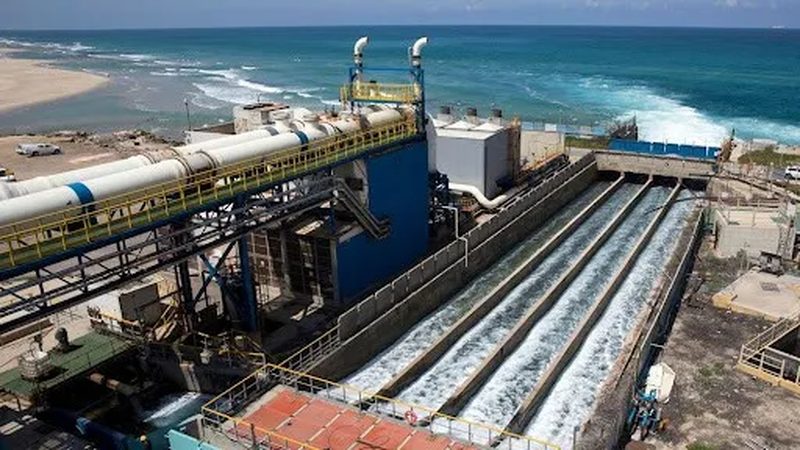
Chennai’s relationship with water is one of chronic anxiety. The city has no perennial river, its reservoirs depend on the fickle northeast monsoon, and its groundwater is stressed by decades of over-extraction. The 2019 water crisis, when the city’s reservoirs ran dry and taps sputtered, was a warning of what climate change and urbanisation hold. Chennai’s distinctive answer has been desalination: the city already operates two large seawater reverse-osmosis plants at Minjur and Nemmeli, with a third under construction, making it India’s desalination capital. This explainer looks at how desalination works, what it costs, and whether it can truly solve Chennai’s water problem.
How desalination works
Chennai’s plants use reverse osmosis: seawater is pre-treated to remove particles, then forced at high pressure through semi-permeable membranes that let water molecules through but block salt. The product is high-quality drinking water, piped into the city’s supply grid. The Minjur plant, commissioned in 2010, was among India’s first large desalination plants at 100 million litres per day; Nemmeli added another 100 MLD, and the upcoming plants will add hundreds more. Desalination’s great virtue is reliability: unlike monsoon-dependent reservoirs, the sea never runs dry. Its great vice is energy: reverse osmosis is electricity-intensive, making desalinated water the costliest source in the city’s portfolio.
What desalinated water costs
Desalinated water costs several times more than conventional treated water, with estimates putting it at multiples of the cost of reservoir or groundwater supply. The energy bill dominates: pushing seawater through membranes at 60-70 bar pressures consumes roughly 3-4 units of electricity per kilolitre. For a city that supplies water at heavily subsidised tariffs, the gap between cost and price is a fiscal burden borne by the utility and the state. Proponents argue the cost must be weighed against the alternative: tanker water in a crisis costs far more, and the economic damage of a Day Zero event dwarfs the desalination premium. The honest accounting is that desalination is insurance, and insurance is never cheap.
The environmental questions
Desalination’s environmental footprint centres on two issues: energy-related emissions and brine discharge. The concentrated brine rejected by the membranes, roughly 1.5 times the volume of product water, is discharged back into the sea; if poorly diffused, it can raise local salinity and affect marine life. Chennai’s plants use offshore diffusers to disperse brine, and monitoring requirements are built into their clearances. The energy question is being addressed, in part, by the falling cost of renewable power: pairing desalination with solar or wind cuts both costs and emissions. But the plants remain large industrial installations on a sensitive coastline, and their cumulative impact needs continuous scrutiny.
Can it solve Chennai’s problem?
Desalination changes Chennai’s water security fundamentally: with several hundred MLD of desalination capacity, the city has a drought-proof baseline supply that no monsoon failure can take away. But it cannot solve the problem alone. Chennai’s water demand keeps growing with its population and industry, and desalination at current costs cannot meet all of it. The city’s water future also depends on restoring its lakes and wetlands, cutting distribution losses, expanding wastewater recycling, and managing groundwater. Desalination is the backstop, the supply of last resort that guarantees survival; the everyday work of water security remains conservation, recycling and better management.
The wider desalination wave
Chennai’s experience is being watched across coastal India. Gujarat, Andhra Pradesh and other states are planning or building desalination plants for cities and industry. Costs are falling globally as membrane technology improves and renewable energy gets cheaper, and new approaches like solar-powered desalination are being piloted. For India’s coastal cities facing the same monsoon dependence as Chennai, desalination is moving from exotic to essential. The technology will not make water cheap, but it can make it certain, and in a warming world, certainty has a value of its own.
FAQs
How does reverse osmosis desalination work? Seawater is forced under high pressure through membranes that pass water molecules but block salt, producing fresh drinking water plus a concentrated brine stream.
How much desalination capacity does Chennai have? Two operating plants of 100 MLD each at Minjur and Nemmeli, with additional large plants under construction.
Is desalinated water expensive? Yes, several times costlier than conventional supply, mainly due to electricity consumption; it functions as drought insurance rather than the cheapest source.
Chennai’s desalination plants will not make the city’s water problems disappear, but they ensure the taps never run completely dry again. In a city that watched its reservoirs crack in 2019, that guarantee is worth the price.
Compiled by the Khabar 24h Editorial Desk from publicly available sources.

Khabar 24h Editorial Desk — our explainers are prepared by the Khabar 24h editorial team using AI-assisted research tools, and every piece is reviewed by a human editor before publishing. We do not claim original reporting: our work is turning complex topics into simple, accurate summaries. Spotted an error? Write to contact@khabar24h.com — our corrections policy aims for same-day review.
More from this author →