India’s Groundwater Crisis: What the Water Census Reveals, and How Atal Bhujal Responds
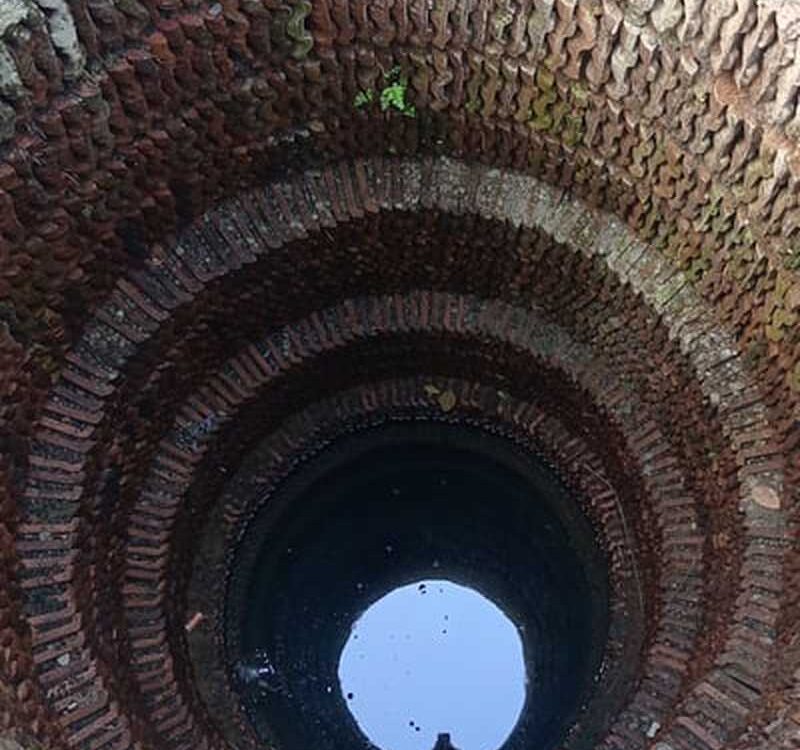
India is the world’s largest user of groundwater, pumping more than any other country to irrigate its fields and supply its cities. Groundwater meets about 60 per cent of irrigation needs and the bulk of rural drinking water. But the water census, the Central Ground Water Board’s periodic assessment of aquifers, tells a worrying story: in large parts of Punjab, Haryana, Rajasthan and Tamil Nadu, extraction far exceeds recharge, and water tables fall year after year. The Atal Bhujal Yojana, a 6,000-crore-rupee programme launched in 2019, takes a different approach from past schemes: instead of building structures, it tries to change behaviour, paying communities to manage their own groundwater. This explainer looks at what the data shows and whether the new approach works.
What the assessments reveal
The Central Ground Water Board classifies assessment units as safe, semi-critical, critical or over-exploited based on the balance between extraction and recharge. The trend over successive assessments is clear: the share of over-exploited and critical units has grown, concentrated in the agricultural heartlands of the northwest and parts of the south and west. In Punjab and Haryana, decades of free power and water-intensive paddy cultivation have mined aquifers that took millennia to fill. Coastal areas face seawater intrusion as freshwater levels drop. Fluoride and arsenic contamination affects habitations across several states. The data’s message is stark: India is living off its groundwater capital, not its interest.
Why groundwater is so hard to govern
Groundwater’s tragedy is its invisibility and open access. Millions of private tube wells, each a rational investment for the farmer who drills it, collectively drain the aquifer. Electricity subsidies make pumping nearly free, removing any incentive to conserve. Laws governing groundwater are weak and poorly enforced; in most states, the landowner effectively owns the water beneath. Past programmes built recharge structures, check dams, percolation tanks, but often without managing demand, which is like pouring water into a leaking bucket. The fundamental problem is collective: no single farmer can save an aquifer alone, and no one is clearly in charge of it.
How Atal Bhujal works
Atal Bhujal Yojana, implemented in seven states with World Bank support, inverts the usual model. Instead of funding structures top-down, it funds institutions bottom-up: gram panchayats prepare water security plans based on aquifer mapping, communities monitor their own water levels, and states are incentivised through performance-linked disbursements to improve groundwater governance. The programme trains thousands of local volunteers, installs digital water-level recorders, and promotes demand-side measures: crop diversification away from paddy, micro-irrigation, and better irrigation scheduling. The bet is that informed communities, given data about their own aquifer, will manage it better than distant bureaucracies.
Does community management work?
The evidence is cautiously encouraging. Participating villages have shown measurable improvements in water-level trends and, more importantly, in awareness: farmers who see their aquifer’s data begin to discuss cropping choices collectively. But the programme faces the same political economy that defeated earlier efforts: as long as power is free and paddy prices are assured, the incentive to pump remains overwhelming. Atal Bhujal’s demand-side measures are voluntary, and voluntarism has limits against strong economic incentives. The programme’s real contribution may be institutional: creating the aquifer-level data, plans and community organisations on which tougher future measures, like power rationing or crop incentives, can be built.
The larger fix
Hydrologists broadly agree on what would stabilise India’s groundwater: metering and rationalising farm power, shifting procurement away from water-guzzling paddy in the northwest, massive expansion of micro-irrigation, and treating aquifers as managed commons with enforceable extraction limits. None of this is technically difficult; all of it is politically difficult. Atal Bhujal represents the consensus that the path runs through communities and data rather than diktats. Whether that path is fast enough, as water tables keep falling, is the question the next water census will answer.
FAQs
What is Atal Bhujal Yojana? A Rs 6,000-crore central programme (with World Bank support) for community-led groundwater management in seven states, focused on aquifer mapping, water security plans and demand management.
Which areas are most stressed? Punjab, Haryana, Rajasthan and parts of Tamil Nadu and Uttar Pradesh show the highest shares of over-exploited assessment units.
What is the water census? The Central Ground Water Board’s periodic assessment of groundwater resources, classifying areas by the balance of extraction and recharge.
India’s groundwater crisis is a slow-motion disaster measured in centimetres of falling water tables. Atal Bhujal’s wager is that the people closest to the aquifer, armed with data, are the ones who can save it.
Compiled by the Khabar 24h Editorial Desk from publicly available sources.

Khabar 24h Editorial Desk — our explainers are prepared by the Khabar 24h editorial team using AI-assisted research tools, and every piece is reviewed by a human editor before publishing. We do not claim original reporting: our work is turning complex topics into simple, accurate summaries. Spotted an error? Write to contact@khabar24h.com — our corrections policy aims for same-day review.
More from this author →