PM-KUSUM Explained: Solar Pumps and Farm Solar in India’s Power Shift
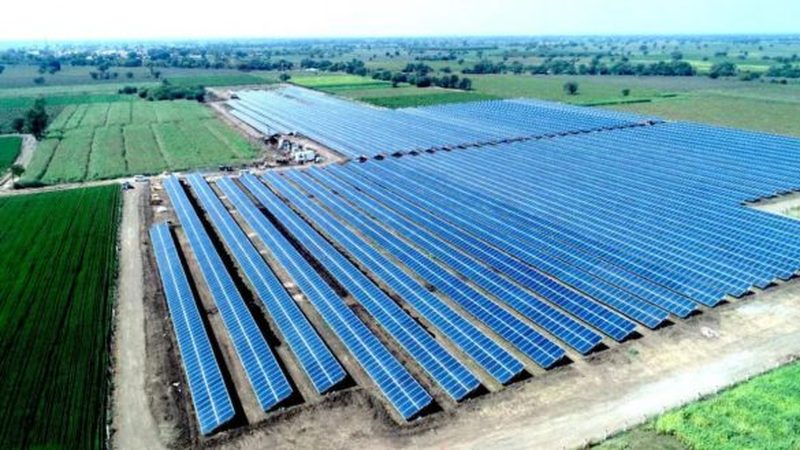
Agriculture consumes roughly a fifth of India’s electricity, much of it supplied free or nearly free to farmers, which bleeds distribution companies and encourages wasteful groundwater pumping. PM-KUSUM, the Kisan Urja Suraksha evam Utthaan Mahabhiyan, attacks this problem with solar: replace diesel and subsidised electric pumps with solar pumps, let farmers sell surplus solar power to the grid, and solarise the agricultural feeders that supply farms. The scheme’s target is 34,800 MW of solar capacity through three components. It is among the world’s largest efforts to solarise agriculture. Progress, however, has lagged targets, and the reasons reveal much about the difficulty of changing farm power.
The three components
Component A supports small solar power plants of up to 2 MW on farmers’ barren or cultivable land, with the power purchased by discoms: the farmer becomes a power producer. Component B subsidises standalone solar pumps, replacing diesel pumps for irrigation, with the central subsidy covering a large share of the cost alongside state support. Component C solarises existing grid-connected agricultural pumps and dedicated farm feeders, so that the power farms consume is generated cleanly. Together, the three components address both the supply side, clean power for farms, and the demand side, efficient pumps and the incentive to use power wisely.
Why solar pumps change farming
A solar pump frees the farmer from diesel costs and from the erratic schedules of rural power supply. Irrigation happens when the sun shines, which is when crops need water, rather than when the discom chooses to release supply. Studies of solar pump adoption show farmers expanding irrigated area, diversifying crops and saving on diesel, with the poorest diesel-dependent farmers gaining the most. The environmental payoff is significant: each diesel pump replaced avoids tonnes of carbon emissions and ends the local air pollution of pump-sets. And because the marginal cost of pumping with solar is near zero, the design challenge is preventing over-pumping of groundwater, which some states address by capping pump sizes.
Why progress has lagged
KUSUM’s targets have been repeatedly extended, and the reasons are structural. State governments, which must contribute subsidies and implement the scheme, have varied in enthusiasm; some prefer the political economy of free farm power, which solar disrupts. Discoms have been lukewarm about buying farmer-generated solar power under Component A. Tendering and vendor ecosystems took time to develop, and the pandemic disrupted early momentum. The subsidy arithmetic, while generous, still leaves a significant upfront contribution for small farmers, and financing has been a constraint. Each of these is fixable, but together they slowed a scheme that looked straightforward on paper.
Feeder solarisation: the quiet fix
Component C’s feeder-level solarisation may prove the most transformative element. Instead of putting panels on millions of individual farms, solar plants feed the dedicated agricultural feeders, greening farm supply at scale with far simpler implementation. Some states have moved aggressively on this model, and it avoids the maintenance and theft issues of distributed pumps. Combined with the separation of agricultural feeders from rural household supply, feeder solarisation lets discoms provide reliable daytime farm power while managing their subsidy burden. It is the unglamorous, systems-level fix that could deliver KUSUM’s goals faster than individual pumps.
The road ahead
The government has extended KUSUM’s timeline and tweaked its guidelines to speed implementation, with states now allowed more flexibility in execution models. The scheme’s ultimate test is whether it can break the political economy of free farm power: solar gives farmers reliable supply, but it also makes consumption meterable and, eventually, accountable. If KUSUM succeeds at scale, it will have done something remarkable: aligned the farmer’s interest in cheap, reliable power with the discom’s interest in solvency and the country’s interest in clean energy. That alignment is the real prize, beyond the megawatts.
FAQs
What is PM-KUSUM? A central scheme to add 34,800 MW of solar capacity in agriculture through small solar plants, solar pumps and feeder solarisation.
What are its three components? A: small solar plants on farmland; B: subsidised standalone solar pumps; C: solarisation of grid-connected farm pumps and feeders.
Who benefits most? Diesel-dependent farmers, who save fuel costs and gain reliable daytime irrigation, and discoms, whose farm-power subsidy burden falls.
PM-KUSUM tries to solve three problems at once: farmer incomes, discom finances and carbon emissions. Its slow progress shows how hard that is; its logic shows why it is worth persisting.
Source: Press Information Bureau

Khabar 24h Editorial Desk — our explainers are prepared by the Khabar 24h editorial team using AI-assisted research tools, and every piece is reviewed by a human editor before publishing. We do not claim original reporting: our work is turning complex topics into simple, accurate summaries. Spotted an error? Write to contact@khabar24h.com — our corrections policy aims for same-day review.
More from this author →