Seaplane Services in India: How the Sabarmati-Kevadia Route Works
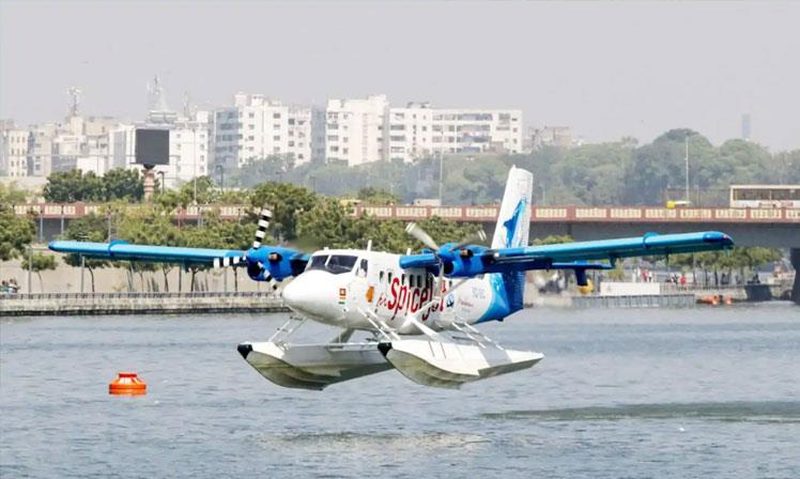
In October 2020, India watched a Twin Otter floatplane splash down on the Sabarmati riverfront in Ahmedabad and take off for Kevadia, home to the Statue of Unity. It was the country’s first scheduled seaplane service, launched under the UDAN regional connectivity scheme, and it captured the imagination: a 200-kilometre journey that took four hours by road compressed into about 45 minutes by air, landing on water near the world’s tallest statue. The service was suspended within months, but the experiment taught Indian aviation valuable lessons about amphibious operations. This explainer looks at how the Sabarmati-Kevadia route worked and what its future holds.
How the service operated
The service used a 19-seat DHC-6 Twin Otter amphibious aircraft, wet-leased from a Maldivian operator experienced in seaplane operations, and was operated by SpiceJet’s subsidiary under UDAN. Passengers boarded at a floating jetty on the Sabarmati riverfront near Ahmedabad and disembarked at a water aerodrome on the Narmada near Kevadia, with shuttle connections to the Statue of Unity complex. The flight took roughly 45 minutes, cruising low over the Gujarat countryside. Fares were subsidised under UDAN’s fare caps, making the novelty accessible to ordinary tourists. Water aerodromes, a new category of aviation infrastructure for India, were built at both ends with floating docks, passenger terminals and safety equipment.
Why a seaplane made sense here
The route was chosen with care. The Statue of Unity had become a major tourist draw, but Kevadia’s remoteness meant most visitors faced long road journeys from Ahmedabad or Vadodara. A seaplane needed no runway, only water and a jetty, which made it far cheaper and faster to establish than a conventional airport. The Sabarmati riverfront offered a ready water body in the heart of Ahmedabad, and the Narmada reservoir at Kevadia offered another. For tourism circuits, island territories and remote lakes, seaplanes promised connectivity without the land acquisition battles that plague airport projects. The Maldives, with its resort seaplane network, was the obvious model.
Why it stopped
The service was suspended in 2021, officially for maintenance of the leased aircraft, and did not resume on schedule. Behind the suspension lay structural issues: the wet-lease arrangement was expensive, the economics depended on sustained subsidies, and the pandemic crushed the tourist traffic the route needed. Operating amphibious aircraft in India also surfaced regulatory and logistical complexities, from maintenance infrastructure to crew training, that a single route could not amortise. The experiment demonstrated demand and technical feasibility but not financial sustainability, the familiar verdict on first-of-kind transport services.
What India learned
The Sabarmati-Kevadia experiment established the regulatory and operational template for water aerodromes in India: how to certify them, how to handle safety on water, and how to integrate seaplanes into the air traffic system. UDAN’s later rounds included seaplane routes, with proposed services in the Northeast, island territories and tourist circuits like the Andamans and Lakshadweep. Globally, seaplanes thrive where geography demands them: the Maldives, coastal Canada, the Scottish isles. India’s long coastline, island territories and reservoir-dotted interior offer similar geography; the question is whether operators can build the scale to make the economics work.
The future of amphibious aviation
Indian operators and the government continue to explore seaplane services, with indigenous aircraft development discussed as a long-term goal to escape expensive wet leases. Potential circuits include Andaman inter-island hops, Kerala’s backwaters, the Northeast’s river valleys and pilgrimage routes. Each will face the same test the Sabarmati-Kevadia route faced: whether enough passengers will pay enough, often enough, to sustain operations. The seaplane’s advantage remains unique, though: where there is water, there is a runway. For a country with 7,500 kilometres of coastline and thousands of reservoirs, that is an asset aviation has barely begun to use.
FAQs
When did India’s first seaplane service launch? In October 2020, connecting the Sabarmati riverfront in Ahmedabad with Kevadia near the Statue of Unity.
Why was it suspended? Officially for aircraft maintenance; underlying issues included high wet-lease costs, subsidy dependence and pandemic-hit tourist traffic.
What is a water aerodrome? A designated water body with floating docks and terminal facilities certified for seaplane operations, a new infrastructure category pioneered in India by this route.
The Sabarmati-Kevadia seaplane flew for only a few months, but it proved that India can land planes on water and fill them with passengers. The next chapter depends on building the economics to keep them flying.
Compiled by the Khabar 24h Editorial Desk from publicly available sources.

Khabar 24h Editorial Desk — our explainers are prepared by the Khabar 24h editorial team using AI-assisted research tools, and every piece is reviewed by a human editor before publishing. We do not claim original reporting: our work is turning complex topics into simple, accurate summaries. Spotted an error? Write to contact@khabar24h.com — our corrections policy aims for same-day review.
More from this author →