What Is Swing Bowling? How Seam, Swing and Reverse Swing Work in Cricket
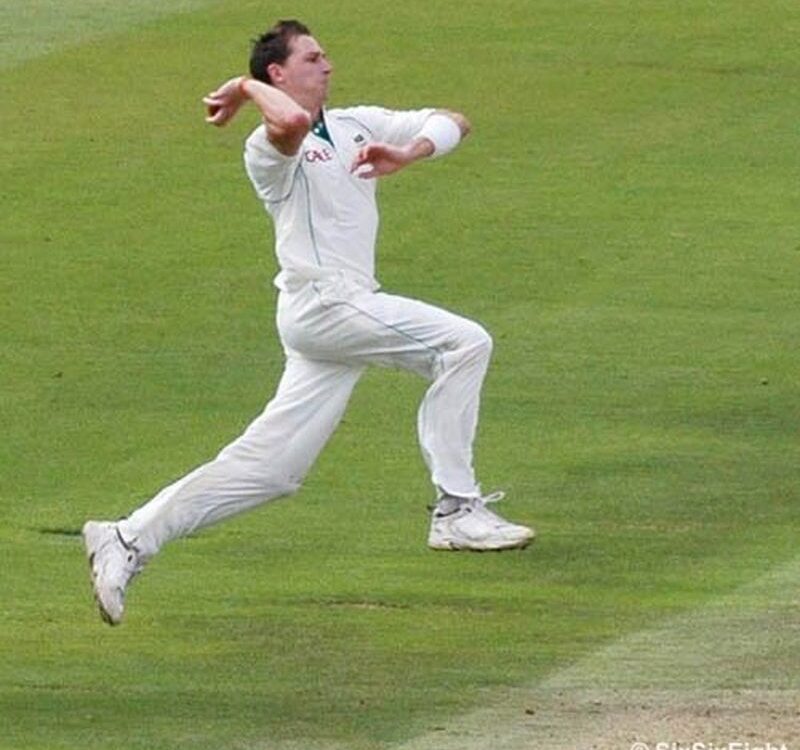
There is no more mesmerising sight in cricket than a fast bowler making the ball swerve late through the air, beating the bat by inches and shattering the stumps. This is swing bowling, the art of moving the ball sideways in flight, and it is governed by a fascinating mix of physics, craftsmanship and cunning. Alongside its close cousins, seam movement off the pitch and reverse swing with the old ball, it forms the core arsenal of pace bowling. This guide explains what each type of movement is, the science behind it, and how bowlers produce it.
Conventional swing: the new ball curving through the air
Conventional swing happens with a relatively new, shiny ball, usually in the first 15 to 20 overs of an innings. The principle is beautifully simple. One side of the ball is kept polished and shiny while the other is allowed to roughen naturally, and the bowler releases the ball with the seam angled to create asymmetric airflow. Air flows faster over the smooth, shiny side and slower over the rough side, and the resulting pressure difference pushes the ball towards the rough side, making it curve in the air. Bowl the seam angled towards the slips and the shiny side facing the leg side, and the ball swings away from the right-hander; reverse the orientation and it swings in towards the pads. Overhead cloud cover, humidity and a lush outfield all help the ball retain its shine and swing longer, which is why English mornings and the first session of a Test are the swing bowler’s paradise. The great practitioners release the ball with the seam bolt upright, letting the angled seam act like a rudder through the air.
Seam movement: deviation off the pitch
Seam movement is swing’s close relative but works differently: instead of curving in the air, the ball deviates sideways after pitching. When the ball lands on its proud leather seam, the angled stitching grips the surface and deflects the ball off its straight path, sometimes sharply. This is why bowlers obsess over landing the ball on the seam, and why pitches with a little grass or moisture assist seam bowlers so dramatically. Unlike swing, which a batter can sometimes pick from the bowler’s wrist position and the ball’s orientation, seam movement happens late and off the surface, giving the batter almost no time to adjust. The classic seam bowler’s stock ball pitches on a good length around off stump and straightens or nips away just enough to find the edge. It is a subtler art than big-hooping swing, but on a responsive pitch it is equally lethal.
Reverse swing: the old ball’s deadly secret
Reverse swing is the most mysterious and feared weapon in pace bowling. After 35 to 40 overs, when one side of the ball has become extremely rough and the other remains relatively smooth, the aerodynamics flip: the ball swings towards the shiny side instead of the rough side, often late and at pace. The discovery is credited to Pakistani masters of the 1970s and 80s, who learned to manage the ball’s condition so that it would reverse, and it transformed the old ball from a dead object into a strike weapon. Reverse swing arrives with the ball at high speed, moves late, and is devilishly hard to read, which is why spells of reverse swing have demolished batting line-ups on flat pitches where nothing else worked. Bowlers achieve it with a scrambled or angled seam and a fast, full action; the contrast between the two sides of the ball does the rest. Umpires watch ball condition closely, because artificially creating that contrast crosses the line into ball tampering.
How bowlers learn and master swing
Swing bowling is not just physics; it is a craft built over years. Young quicks learn to hold the seam upright between index and middle fingers, to keep the wrist locked behind the ball at release, and to follow through straight towards the target. The non-bowling arm, the run-up rhythm and the release point all matter, because swing demands precision: a ball that is too full becomes a driveable half-volley, and one that is too short sits up to be pulled. Great swing bowlers also think like chess players, setting batters up with a series of away-swingers before slipping in the inswinger, or vice versa. They read conditions obsessively, choosing ends based on the wind and the cloud cover, and they work in partnerships, with one bowler attacking the stumps while the other hunts the edge. Fitness matters too, because maintaining the intensity to swing the ball spell after spell is exhausting work.
- Outswing moves away from the right-handed batter; inswing moves in towards the pads and stumps.
- The contrast between the shiny and rough sides of the ball is the engine of all swing.
- Reverse swing typically appears after 35-40 overs and moves towards the shiny side.
- Bowlers are allowed to polish the ball on their clothing but may not use artificial substances or scratch it with fingernails.
FAQs
What is the difference between swing and seam bowling? Swing is movement through the air before the ball pitches, caused by asymmetric airflow. Seam movement is deviation after the ball pitches, caused by the seam gripping the surface.
Why does the ball stop swinging after some overs? As both sides of the ball roughen up, the asymmetry that creates swing disappears. Skilful ball maintenance can delay this, and extreme roughening eventually produces reverse swing instead.
Is reverse swing legal? Yes, when it occurs naturally through wear. It becomes illegal only if the fielding side artificially alters the ball’s condition.
From the first-over outswinger to the 80th-over reversing yorker, sideways movement is the pace bowler’s answer to the batter’s dominance in the modern game. Understand swing, and you understand half of what makes fast bowling worth watching.
Source: Wisden

Khabar 24h Editorial Desk — our explainers are prepared by the Khabar 24h editorial team using AI-assisted research tools, and every piece is reviewed by a human editor before publishing. We do not claim original reporting: our work is turning complex topics into simple, accurate summaries. Spotted an error? Write to contact@khabar24h.com — our corrections policy aims for same-day review.
More from this author →