Cataract Surgery in India: Procedure, Costs and Lens Options
Cataract, the clouding of the eye’s natural lens, is the world’s leading cause of reversible blindness, and India performs millions of cataract surgeries every year, more than any other country. The operation itself is a modern marvel: a 15-minute procedure, usually under local anaesthesia, that restores vision clouded over years. Yet confusion persists about when surgery is needed, what it costs, whether free camps are safe, and which lens to choose from a bewildering menu. This guide explains the procedure, the costs across India’s public and private sectors, and how to choose wisely.
What cataract is and when to operate
The eye’s lens focuses light on the retina; with age, its proteins clump and the lens clouds, scattering light. Symptoms creep in: blurred vision, glare and halos around lights, difficulty driving at night, faded colours, and frequent changes in glasses prescription. Cataract is overwhelmingly age-related, though diabetes, smoking, steroid use, eye injury and prolonged sun exposure accelerate it. The old rule of waiting for cataract to ripen is obsolete: modern surgery is indicated when vision loss interferes with daily life, driving, reading, working, regardless of the cataract’s maturity. Delaying too long makes surgery harder and prolongs disability. There is no medicine, eye drop or diet that reverses cataract; claims otherwise waste time and money.
The procedure: what actually happens
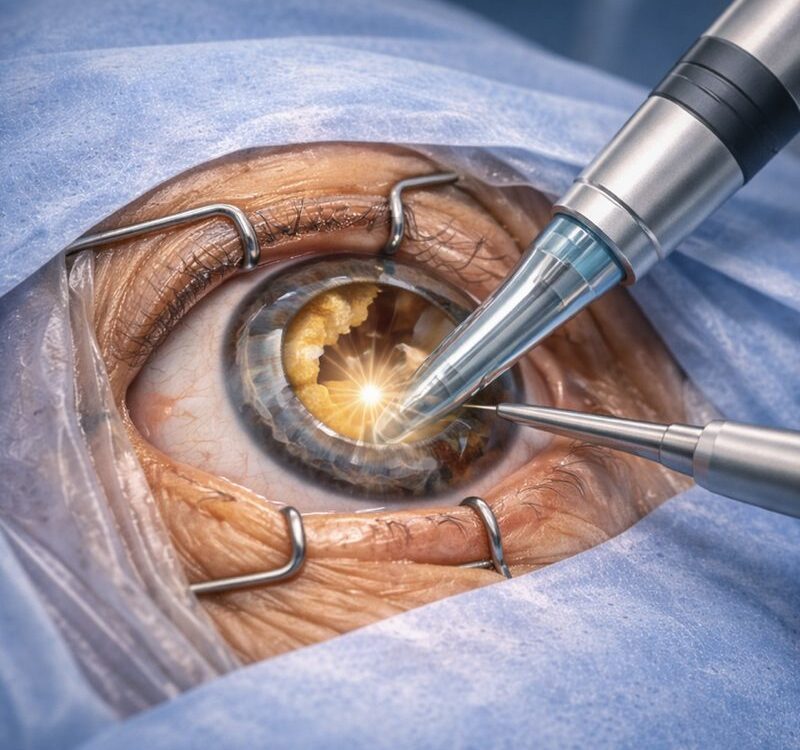
Modern cataract surgery, phacoemulsification, is elegant. After dilating drops and local anaesthesia (usually just drops, sometimes an injection around the eye), the surgeon makes a tiny 2-3 mm incision, uses ultrasound to break the cloudy lens into fragments, vacuums them out, and inserts a folded artificial intraocular lens (IOL) that unfolds into place. Stitches are rarely needed. The patient is awake, feels pressure but not pain, and typically goes home within hours. Vision often improves within a day or two. Complications are uncommon in experienced hands but real: infection (endophthalmitis), retinal detachment, lens dislocation and secondary clouding of the lens capsule, the last easily fixed with a quick laser procedure. Choosing an experienced surgeon and a hygienic facility matters more than any technology upgrade.
Costs in India: from free to premium
India’s cataract landscape spans the full economic spectrum. Government hospitals and NGO eye hospitals perform high-quality surgery free or for a few thousand rupees, often with Indian-made lenses; the famous high-volume models have safety records rivalling the West. CGHS, ECHS, railway and state insurance schemes cover surgery for beneficiaries. In private hospitals, costs typically range from 15,000 to over 1,00,000 rupees per eye depending on the lens and technology (femtosecond laser-assisted surgery costs more with debatable added benefit for routine cases). Ayushman Bharat covers cataract surgery for eligible families. The key question is not the price tag but the surgeon’s experience and the centre’s infection control; an expensive centre with a junior surgeon is worse than a modest one with a veteran.
Choosing the lens: Indian vs imported, monofocal vs premium
The IOL choice shapes visual outcome. Standard monofocal lenses give excellent distance vision; reading glasses remain necessary, and they are what most patients need. Indian-manufactured monofocals from reputed makers are optically excellent and cost a fraction of imported ones; for routine cases, the difference is negligible. Premium lenses, multifocal and toric (for astigmatism), reduce glasses dependence but cost far more, can cause halos and glare, and suit only selected patients after detailed evaluation. Be wary of upselling: a multifocal lens pushed on every patient is a revenue decision, not a medical one. Discuss your visual needs, driving, reading, computer work, and let the surgeon match the lens, not the brochure.
Recovery and aftercare
Recovery is quick but needs discipline. Antibiotic and anti-inflammatory drops are used for weeks on a tapering schedule; missing doses risks infection. Avoid rubbing the eye, heavy lifting, dusty environments and swimming for the advised period. A protective shield at night prevents accidental rubbing. Most people resume normal activity within days and get final glasses, if needed, after a month. Report immediately: severe pain, sudden vision drop, increasing redness or flashes and floaters. The second eye, if affected, is usually done weeks later. Annual eye checks continue, since cataract surgery does not prevent glaucoma, retinal or other age-related eye disease.
FAQs
Can cataract come back after surgery? The cataract itself cannot recur, but the capsule holding the lens can cloud months later (after-cataract), fixed in minutes with a painless laser.
Are eye camp surgeries safe? Reputable NGO camps with proper sterilisation are safe and have restored sight to millions; verify the organisation’s credentials and follow-up arrangements.
What is the right age for surgery? There is none; the criterion is visual disability affecting life, whether at 50 or 90.
Cataract surgery is among medicine’s most cost-effective interventions: minutes of procedure for years of sight. In India it is available free to the poorest and premium to the richest, with excellent outcomes across the spectrum when surgeon skill and hygiene lead. Cloudy vision in old age is not fate; it is a curable condition awaiting a 15-minute fix.
Compiled by the Khabar 24h Editorial Desk from publicly available sources.

Khabar 24h Editorial Desk — our explainers are prepared by the Khabar 24h editorial team using AI-assisted research tools, and every piece is reviewed by a human editor before publishing. We do not claim original reporting: our work is turning complex topics into simple, accurate summaries. Spotted an error? Write to contact@khabar24h.com — our corrections policy aims for same-day review.
More from this author →