Malnutrition in Indian Children: Stunting, Wasting and Government Schemes Explained
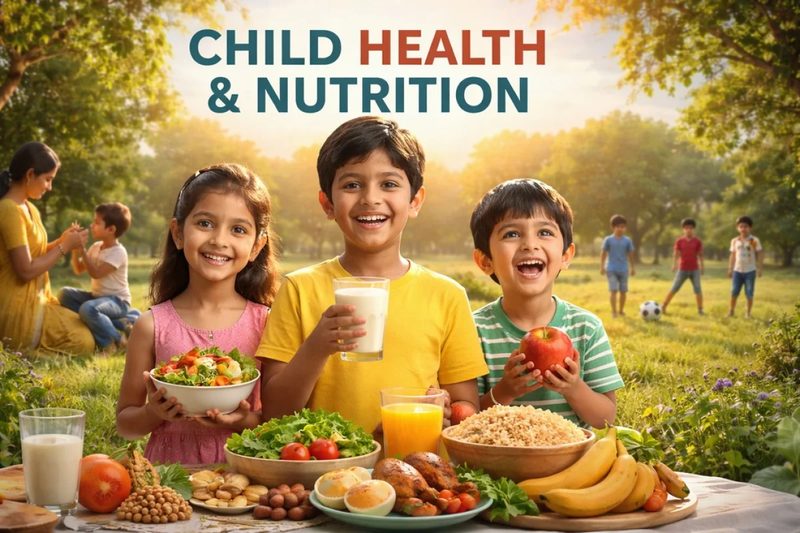
India has the world’s largest burden of child malnutrition, a paradox in a country that is also the world’s largest producer of milk and a top grain grower. National surveys show roughly a third of Indian children under five are stunted (too short for their age), about a fifth are wasted (too thin for their height), and a similar share underweight. These are not just statistics about small children; malnutrition in the first 1,000 days, from conception to age two, permanently shapes brain development, immunity, schooling and adult earning. Understanding what the terms mean, why the problem persists amid plenty, and which government schemes address it is essential for every family and policymaker.
Stunting, wasting, underweight: what they mean
The three faces of undernutrition measure different failures. Stunting, low height for age, reflects chronic deprivation: prolonged inadequate nutrition, repeated infections and poor sanitation over months and years. It is largely irreversible after age two and signals lost developmental potential. Wasting, low weight for height, indicates acute deprivation: recent severe food shortage or illness, and it carries the highest immediate mortality risk. Underweight, low weight for age, is a composite that can reflect either. Overweight and obesity increasingly coexist, the double burden, as junk food reaches villages. Micronutrient deficiencies, iron, vitamin A, zinc, iodine, hide beneath these: hidden hunger that impairs immunity and cognition even in normal-weight children. Each form needs different responses, which is why measurement, not guesswork, guides action.
Why it persists despite economic growth
The causes run deeper than food availability. Maternal malnutrition is the starting point: undernourished adolescent girls become undernourished mothers who bear low-birth-weight babies, an intergenerational cycle. Poor infant feeding practices hurt: delayed initiation of breastfeeding, prelacteal feeds, and inadequate complementary feeding after six months, often watery dals instead of energy-dense foods. Repeated infections, diarrhoea and worms, driven by poor sanitation and unsafe water, strip nutrients as fast as food provides them. Low maternal education, early marriage and closely spaced pregnancies concentrate risk. Poverty and food insecurity remain real, but information gaps matter enormously: many families have enough calories but feed children diets poor in protein, fat and micronutrients. Gender bias in feeding, documented in several states, adds a further layer.
Government schemes: the safety net
India operates one of the world’s largest nutrition safety nets.
- Anganwadi Services (ICDS): supplementary nutrition, growth monitoring, immunisation and preschool education through 1.4 million centres.
- POSHAN Abhiyaan: the national nutrition mission targeting stunting, anaemia and low birth weight with convergence across ministries.
- Mid-Day Meal (PM-POSHAN): hot cooked meals for schoolchildren, often their most nutritious meal of the day.
- Janani Suraksha/Surakshit Matritva: promoting institutional delivery and antenatal care for healthier birth weights.
- Anaemia Mukt Bharat: iron-folic acid supplementation for children, adolescents and mothers.
- Deworming days: biannual albendazole for children 1 to 19 years.
- Vitamin A programme: periodic high-dose supplementation for under-fives.
Implementation quality varies widely, but where centres function well, outcomes improve measurably.
What families can do
Government schemes work best alongside household action. Feed pregnant mothers adequately: an extra meal daily plus iron-folic acid tablets. Start breastfeeding within the first hour and exclusively for six months. After six months, introduce thick, energy-dense complementary foods, mashed dal with ghee, khichdi with oil, mashed banana, eggs where eaten, feeding frequently and responsively. Continue breastfeeding to two years. Ensure full immunisation and biannual deworming. Wash hands with soap, use safe water and sanitary toilets to break the infection-malnutrition cycle. Monitor growth at the anganwadi monthly; a faltering growth curve is the earliest warning, long before visible thinness. Seek care promptly for diarrhoea with ORS and zinc, and for any illness causing weight loss.
FAQs
Can a stunted child catch up? Some catch-up is possible with intensive nutrition and care, but much stunting after age two is permanent, which is why the first 1,000 days are critical.
Is malnutrition only about poverty? No. Information, feeding practices, sanitation and maternal health matter as much; well-off families can have malnourished children through poor feeding.
Do nutrition supplements replace meals? No. Take-home rations supplement the home diet; they cannot substitute for proper family feeding.
Child malnutrition in India is a solvable problem with known solutions: nourished mothers, exclusive breastfeeding, timely complementary feeding, immunisation, deworming, sanitation and growth monitoring. The schemes exist; the task is making them work in every anganwadi and every home, until no child’s future is stunted by hunger.
Compiled by the Khabar 24h Editorial Desk from publicly available sources.

Khabar 24h Editorial Desk — our explainers are prepared by the Khabar 24h editorial team using AI-assisted research tools, and every piece is reviewed by a human editor before publishing. We do not claim original reporting: our work is turning complex topics into simple, accurate summaries. Spotted an error? Write to contact@khabar24h.com — our corrections policy aims for same-day review.
More from this author →