How Mobile Gaming Took Over India’s Entertainment Hours
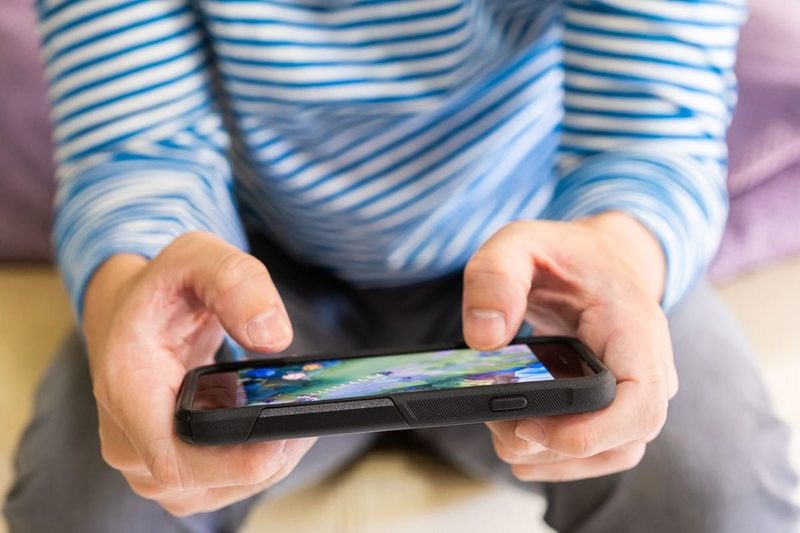
Ask India what it does for fun, and increasingly the answer involves a phone held sideways. Mobile gaming has quietly become one of the country’s largest entertainment activities, measured not just in downloads but in hours: hundreds of millions of Indians play games on their phones every month, spending more collective time gaming than many traditional entertainments command. How mobile gaming took over India’s entertainment hours is the story of a technological perfect storm that turned the humble smartphone into a national arcade.
The data revolution that made it possible
The foundation was laid by the telecom disruption of the mid-2010s, when data prices collapsed and hundreds of millions of Indians came online, many for the first time, through a smartphone. Gaming rode that wave perfectly: free-to-play titles cost nothing to try, ran on affordable devices, and offered instant entertainment without subscriptions or commitments. For first-time internet users, games were often among the first apps they loved.
Device economics helped. As capable gaming phones dropped into affordable price bands, the hardware barrier dissolved. A phone bought for calls and WhatsApp turned out to be a perfectly good gaming machine, and game developers optimised relentlessly for low-end devices, ensuring the next hundred million users could play too.
What India actually plays
Indian gaming tastes are distinctive. Battle royale and multiplayer action titles dominate the hardcore end, drawing the competitive energy that fuels esports. Casual games, puzzles, card games and fantasy sports capture the mass market, often played in short daily sessions. Real-money gaming, from fantasy sports to card games, created its own enormous economy, though regulatory scrutiny has complicated its trajectory.
Social play is the secret ingredient. Games in India are rarely solitary: friends squad up, families play together, colleagues run office tournaments. The game is the venue; the company is the point. This social texture explains why multiplayer titles retain players for years and why gaming hours keep climbing even as individual titles fade.
How the business works
- Free-to-play: games cost nothing, earning through in-app purchases of cosmetic items, battle passes and upgrades.
- Advertising: rewarded video ads that players voluntarily watch for in-game benefits.
- Real-money gaming: entry-fee competitions in skill-based games, a huge but regulated segment.
- Brand integrations: in-game events and sponsorships reaching massive young audiences.
The freemium model proved perfectly suited to Indian spending habits: a vast free audience, with a small fraction spending small amounts, adds up to enormous revenue at national scale. Developers learned to monetise gently, respecting that most players will never pay a rupee.
The cultural shift
Gaming’s mainstreaming changed its social meaning. Where gaming was once dismissed as a children’s distraction, it is now family entertainment, a legitimate career path and a shared cultural language for the young. Gaming influencers are celebrities, esports fills arenas, and game references pepper everyday conversation.
Concerns persist, screen time, gaming addiction, the blurred lines of real-money play, and regulators and the industry continue to negotiate guardrails. But the direction is set: the phone is India’s primary entertainment device, and gaming is among its primary uses.
What 5G and cloud gaming could change
Faster networks promise to reshape mobile gaming again. 5G’s lower latency makes real-time multiplayer smoother and enables more ambitious competitive experiences on phones. Cloud gaming, which streams games from remote servers, could eventually remove device constraints entirely: the humblest phone playing console-quality titles. But the Indian reality tempers the hype: data costs, inconsistent coverage and the sheer affordability of native mobile games mean cloud gaming remains a premium prospect rather than a mass revolution. More immediate is the gradual upgrade of the device base itself, as each year’s affordable phones handle richer graphics, letting developers raise visual ambition without abandoning the mass market. The likely future is hybrid: native mobile games continuing to dominate, with cloud and 5G-enabled experiences growing at the premium edge, and Indian developers, masters of optimisation, adapting faster than anyone to whatever the networks deliver.
FAQs
How many people play mobile games in India? Industry estimates put monthly mobile gamers in the hundreds of millions, making India one of the world’s largest mobile gaming markets by users.
Why is mobile bigger than PC or console gaming in India? Affordability and access: the smartphone is the first and often only computing device for most Indians, so gaming followed the device people actually own.
Do Indian gamers spend money on games? A minority does, through small in-app purchases. The market runs on massive free audiences with low per-user spending, a model that works at India’s scale.
Mobile gaming conquered India’s entertainment hours not by competing with cinema or television, but by filling the moments between: the commute, the queue, the quiet hour, one tap at a time.
Compiled by the Khabar 24h Editorial Desk from publicly available sources.

Khabar 24h Editorial Desk — our explainers are prepared by the Khabar 24h editorial team using AI-assisted research tools, and every piece is reviewed by a human editor before publishing. We do not claim original reporting: our work is turning complex topics into simple, accurate summaries. Spotted an error? Write to contact@khabar24h.com — our corrections policy aims for same-day review.
More from this author →