How Daily Soaps Are Made: Inside India’s Television Serial Factory
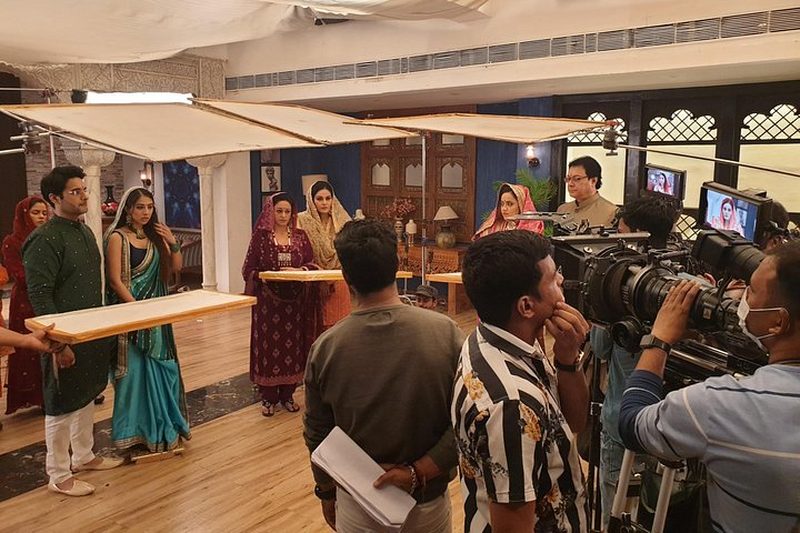
Every weekday evening, in millions of Indian homes, the same ritual unfolds: families gather around the television for their daily soap, the continuing saga of family intrigue that has dominated Indian TV for decades. What viewers experience as seamless nightly drama is produced by one of the most relentless manufacturing operations in entertainment. How daily soaps are made, inside India’s television serial factory, is a story of impossible deadlines, sprawling sets and a production machine that never stops.
The pace: an episode a day
The defining fact of daily soap production is speed. A show airing five or six episodes a week must produce roughly 22 minutes of finished drama per episode, which means shooting the equivalent of a feature film every single week, indefinitely, for years. There are no seasons, no hiatuses, no chance to pause and rethink. The factory runs on a treadmill: today’s shoot becomes tomorrow’s edit becomes the day after’s broadcast.
This pace shapes everything. Scripts are written in rolling banks a few episodes ahead of shooting, leaving writers perpetually racing the telecast. Directors shoot multiple episodes simultaneously, blocking scenes for speed rather than visual poetry. Actors memorise pages of dialogue daily and perform emotional climaxes with minimal rehearsal. The miracle is not that soaps sometimes look rushed; it is that they so often do not.
The writing engine
Soap writing is a team sport run under brutal constraints. A head writer or creative director maintains the show’s bible: the characters, their histories, the long-running story arcs. Below them, teams of writers break episodes, write dialogue and track continuity across hundreds of episodes. Storylines must balance the familiar, the love triangles, family conflicts and dramatic reveals audiences expect, with enough novelty to keep ratings alive.
Audience feedback loops directly into the writing. Ratings data, social media reaction and channel executives’ notes can redirect storylines within weeks: a popular new character gets expanded, a flagging track gets wrapped up, a dramatic twist is engineered for a festive week. The soap is a living document, rewritten continuously in response to its own reception.
Sets, crews and the shooting floor
- Standing sets: permanent household interiors where most scenes play out, dressed once and shot in for years.
- Multi-camera blocking: scenes staged to be captured efficiently from several angles at once.
- Banked episodes: a small buffer of finished episodes that protects the telecast from disruptions.
Production houses run like factories with specialised departments: art teams maintain the standing sets, costume departments manage vast wardrobes for large ensemble casts, and production managers juggle the schedules of dozens of actors. Shooting often runs in long daily shifts across multiple floors, with one unit filming while another prepares. The economics demand it: soaps are profitable only if produced cheaply per minute, so efficiency is the supreme virtue.
The business behind the saga
Daily soaps remain the economic backbone of Hindi general entertainment channels, delivering the consistent ratings that attract advertisers. Production houses are typically paid per episode by the broadcaster, with fees tied to the show’s performance. A hit soap running for years is a cash machine for everyone involved; a flop is cancelled with factory-floor ruthlessness, sometimes within weeks.
The streaming era has pressured but not killed the form. While urban audiences migrated to web series, the soap’s core audience, vast, loyal and largely beyond the metros, stayed. Producers have responded with higher production values and faster storytelling, but the fundamental product endures: nightly drama, infinite and intimate, delivered like clockwork.
FAQs
How far ahead are daily soaps written? Usually only a handful of episodes ahead of shooting, which is why storylines can pivot quickly in response to ratings and feedback.
Why do soaps run for so many years? As long as ratings justify the slot, there is no incentive to end a profitable show. Some Indian soaps have run for over a decade and thousands of episodes.
Do soap actors shoot every day? Most shoot most days, often long hours, memorising large volumes of dialogue daily. It is among the most demanding acting work in the industry.
The daily soap is television’s great endurance art: an endless story told at breakneck speed, and a factory whose product is nothing less than the nation’s evening ritual.
Compiled by the Khabar 24h Editorial Desk from publicly available sources.

Khabar 24h Editorial Desk — our explainers are prepared by the Khabar 24h editorial team using AI-assisted research tools, and every piece is reviewed by a human editor before publishing. We do not claim original reporting: our work is turning complex topics into simple, accurate summaries. Spotted an error? Write to contact@khabar24h.com — our corrections policy aims for same-day review.
More from this author →