How Sound Design Works in Indian Cinema: Beyond Dialogue and Songs
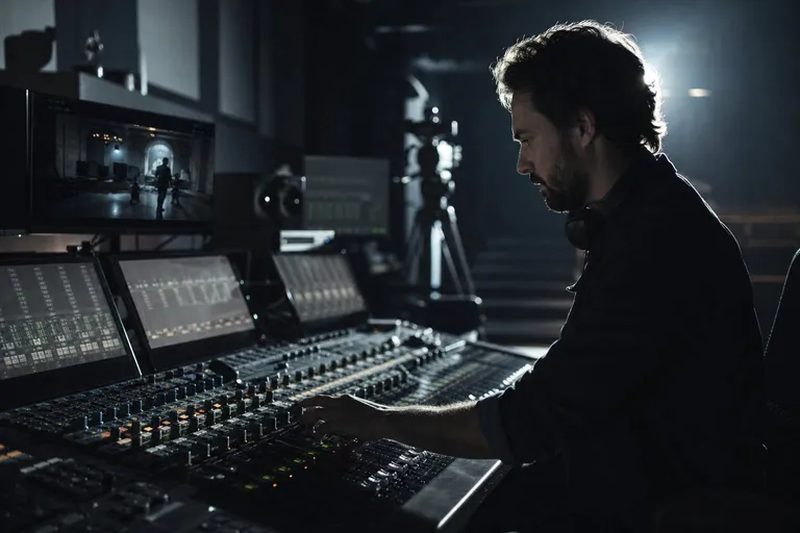
Close your eyes during a great film and you will still feel it: the rain hammering a tin roof, the distant wail of a train, the hush before a confrontation. That invisible architecture is the work of the sound designer, and in Indian cinema, where music and dialogue traditionally dominate the soundtrack, sound design has quietly become one of the most sophisticated crafts in the industry. Beyond dialogue and songs lies a world of foley, ambience, effects and silence that decides whether a scene feels real, and sound designers are its architects.
What sound design actually covers
A film’s soundtrack has several layers. Dialogue carries the story, songs carry the emotion, and the score carries the mood. Sound design covers everything else: the footsteps on different surfaces, the rustle of clothing, the traffic of a city, the insects of a village night, the whoosh of a punch, the creak of a door. Each of these sounds is chosen or created deliberately. Nothing in a finished film sounds the way it did on set; location recordings are almost always replaced or rebuilt in the studio for clarity and control.
The sound designer’s job begins with the script. Reading it, they map the sonic world of the film: what each location should sound like, how the sound should evolve with the story, where silence should do the talking. On big productions, the designer works alongside the director from pre-production, planning everything from the texture of a mythological battlefield to the intimate quiet of a bedroom drama. This planning is what separates designed sound from merely recorded sound.
How foley artists create everyday sounds
Foley is the art of recreating ordinary sounds in the studio, and it remains stubbornly handmade. Foley artists watch the film and perform the sounds live: footsteps on gravel pits, sand, wood and marble; cloth movement with different fabrics; the clink of utensils; the thud of a body hitting the ground. A single film can require thousands of individual foley cues, each timed to the frame.
Indian foley artists are renowned for their ingenuity, working with improvised materials to produce sounds no library can offer. The crunch of a particular footstep, the specific rattle of a Mumbai local train door, the splash of monsoon water on a village courtyard: these textures give Indian films their sonic authenticity. In an age of digital libraries, the best designers still insist on recording fresh, culturally specific sounds rather than reaching for generic ones.
Building ambience and effects
- Ambience beds: continuous background textures, like a market’s murmur or a forest at dawn, that place the audience inside a location.
- Designed effects: created sounds for things that do not exist, from futuristic weapons to mythological creatures, built by layering and processing recordings.
- Transitions: sonic bridges between scenes that smooth cuts or jolt the audience, a key tool of pacing.
Effects editing is where realism meets imagination. A fight scene’s impacts are layered from multiple recordings, punches, cloth rips, low-frequency thumps, each punch a small composition. Action spectacles demand enormous effects tracks with hundreds of layers. But the subtlest work often matters most: the way a room’s ambience drops out when a character receives bad news, telling the audience, without a word, that their world has just gone quiet.
The final mix: where it all comes together
The final mix balances dialogue, music, effects and ambience into a single coherent soundtrack, and it is as much art as engineering. Mixers work in calibrated theatres, shaping how loud each element sits and where it appears in the surround field. Indian films present a special challenge: songs and background scores are mixed hot, dialogue must cut through dense arrangements, and the mix has to translate across everything from single-screen theatres with basic sound to premium multiplexes with immersive formats.
Modern Indian productions increasingly mix in immersive formats that place sounds above and around the audience, and streaming has raised the bar further: viewers with good headphones now hear every detail, rewarding careful design and punishing sloppy work. The craft that was once an afterthought has become a competitive advantage.
FAQs
What is the difference between sound design and the background score? The score is composed music that underscores emotion; sound design covers all non-musical sounds, from footsteps to ambience to created effects. Both shape feeling, but through different materials.
Why does film dialogue sound different from real speech? Because it is almost always re-recorded or heavily processed in the studio for clarity, consistency and dramatic control. Location sound is a starting point, not the finished product.
What is foley named after? Jack Foley, the Universal Studios artist who pioneered the technique of performing sound effects live to picture in the early days of sound cinema.
Great sound design is felt rather than noticed: when a film’s world sounds utterly real, or its silences speak volumes, you are hearing the work of artists who sculpt with sound itself.
Source: Sound on Sound

Khabar 24h Editorial Desk — our explainers are prepared by the Khabar 24h editorial team using AI-assisted research tools, and every piece is reviewed by a human editor before publishing. We do not claim original reporting: our work is turning complex topics into simple, accurate summaries. Spotted an error? Write to contact@khabar24h.com — our corrections policy aims for same-day review.
More from this author →