How Background Scores Are Composed for Indian Films
Watch a thriller’s chase scene on mute and it is merely movement; add the score and your pulse quickens. The background score — the music beneath the dialogue, unnoticed when it works — is cinema’s emotional operating system, telling audiences how to feel before they understand why. Composing it for Indian films is a specialised craft with its own workflows, pressures and geniuses, quite distinct from writing songs.
Songs versus score: two different arts
Film songs are standalone products — marketed, streamed, remembered independently. The background score exists only to serve the film, invisible by design. This changes everything about how it is composed. Where songs showcase melody, scores manipulate psychology: building tension, releasing it, signalling character, bridging scenes. The score composer is less a songwriter than a dramatist working in sound.
In Indian cinema, the two roles are often split — a music director composes the songs while a separate background score composer handles the underscore — though some composers do both. The split recognises that the crafts demand different temperaments: the song needs the memorable hook; the score needs the invisible hand.
The spotting session
Score composition begins with the spotting session: composer and director watch the locked edit together, deciding where music should enter, what it should do, and where silence serves better. Every cue is mapped — its start point, its dramatic function, its emotional target. This blueprint governs months of work; a two-and-a-half-hour film might need 60 to 90 minutes of original score, comprising dozens of individual cues.
The composer then writes to picture, composing against the locked edit so every swell, sting and transition lands on its dramatic mark. Themes are developed for characters, relationships and ideas — the hero’s motif, the love theme, the villain’s texture — and woven through the film, evolving as the story does. The best scores reward attention: motifs introduced casually in act one return transformed in the climax.
Recording the score
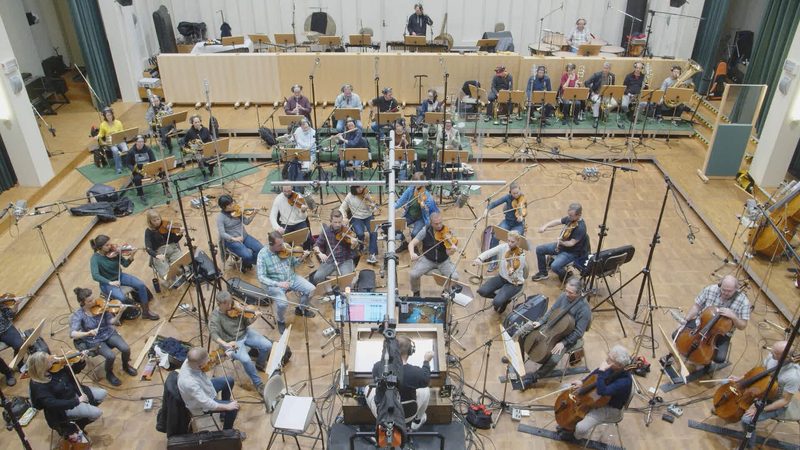
Modern Indian film scores blend orchestral recording, electronic programming and Indian classical instruments. String sections and brass might be recorded live — sometimes with orchestras in Mumbai, Chennai or abroad — while programmers build the electronic architecture and soloists record the Indian instruments that give the score its local soul: the flute’s lament, the sitar’s tension, the percussion’s drive.
The production stages:
- Spotting: mapping every music cue against the locked edit.
- Composition: writing themes and cues to picture.
- Orchestration: arranging for orchestra, electronics and soloists.
- Recording: live sessions blended with programmed elements.
- Dubbing mix: balancing score against dialogue and effects in the final mix.
Time pressure is extreme. Scores are often composed in weeks, with composers working through the night as release dates loom. The dubbing stage — where score, dialogue and effects are balanced — is where the score finally becomes inaudible in the best sense: felt, not heard.
The unsung masters
Background score composers are Indian cinema’s least celebrated essential artists. Audiences hum the songs; they feel the score without knowing who made them feel it. Yet the recent era has begun honouring them — standout scores become talking points, composers develop followings, and directors increasingly credit the score as a co-author of their films’ impact. The rise of streaming, with its long-form storytelling, has further elevated the craft: series need hours of score, creating sustained work for specialists.
The craft’s rising visibility has created a new phenomenon: the background score as a standalone product. Composers now release score albums and suites on streaming platforms, where standout themes accumulate millions of plays independent of their films. Directors increasingly market their composers as co-authors of the cinematic experience, and fan communities dissect motifs and thematic development with the seriousness once reserved for film songs. For a generation of composers who entered the industry accepting invisibility as the price of the craft, this recognition represents a quiet revolution — proof that audiences were always listening, even when they did not know what they were hearing.
FAQs
What is a spotting session? The meeting where composer and director watch the finished edit and decide where music goes, what each cue should achieve, and where silence works better.
Why do some films credit separate song and score composers? Because the crafts differ fundamentally — songs are standalone showcases, scores are dramatic servants — and specialists in each produce better results.
How much score does a film need? Typically 60 to 90 minutes of original music for a feature, comprising dozens of cues mapped to the story’s emotional beats.
The background score is cinema’s hidden architecture — the emotion you felt but never noticed being built. Its composers work in the dark so the story can shine, and Indian cinema’s finest moments owe them more than the credits suggest.
Compiled by the Khabar 24h Editorial Desk from publicly available sources.

Khabar 24h Editorial Desk — our explainers are prepared by the Khabar 24h editorial team using AI-assisted research tools, and every piece is reviewed by a human editor before publishing. We do not claim original reporting: our work is turning complex topics into simple, accurate summaries. Spotted an error? Write to contact@khabar24h.com — our corrections policy aims for same-day review.
More from this author →